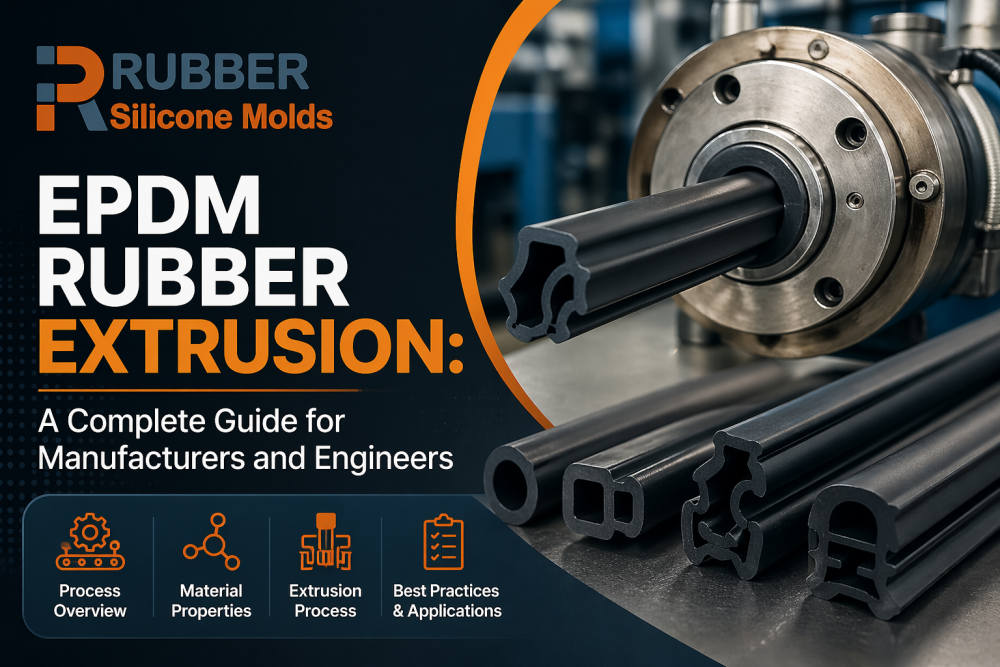
This manufacturing process turns raw polymer into consistent parts. It is used in many industries for a huge range of components. It offers a unique balance of low cost and very high consistency. This remains one of the most widely used elastomer manufacturing methods.
This guide breaks down core process steps, equipment and more. It also covers proven best practices used by leading manufacturers. The EPDM rubber extrusion ensures long lasting parts. Any small improvements to process control deliver very large gains. Most manufacturers can reduce scrap with minor adjustments.
What is EPDM Rubber?
This is a synthetic elastomer formally called ethylene propylene diene monomer. It provides very high weather resistance compared to natural rubber. It remains functional across a range of -40°C to 150°C.
It has unmatched long-term ozone and ultraviolet stability. It resists attack from most common acids, alkalis and polar solvents. It has naturally low electrical conductivity for insulating uses. It has a density between 0.86 and 0.90 grams per cubic centimetre.
The engineers can manufacture the formulations between 30 and 90 shore A hardness. Most manufacturers choose this material for long life outdoor components. It is the most common base material for EPDM rubber extrusion.
EPDM Extrusion Process
This is a continuous forming process that pushes material through a heated die. The raw compound feeds from a hopper into the barrel via a screw conveyor. The extruder barrel is split into three separate controlled heating zones.
Feed, compression and metering zones each run at different temperatures. The typical die temperature for most compounds sits between 160 and 180°C. The operating screw speed ranges from 10 RPM to 50 RPM.
The process back pressure runs between 500 and 2000 PSI during normal operation. The engineers can adjust the finished line speed between 5 and 50 feet per minute. The new extruded material is cooled with air, a water bath or a fine spray. This process is the most efficient way to produce consistent rubber extrusion profiles.
Raw Material Preparation
All compounds must be dried to a moisture content below 0.1 per cent before use. The preheating of the raw compound reduces total mixing time by 20 to 30 per cent. The carbon black loading for most compounds ranges from 20 to 60 PHR. The sulfur cure systems are the most common choice for standard applications. The peroxide cure systems are used for higher temperature operating environments.
The processing aids reduce die pressure by 15 to 25 per cent. Anti-revert agents are required for consistent curing of thick cross sections. Any poor material preparation is the cause of over 70 per cent of process defects. This step is often overlooked even by experienced extrusion manufacturers. These compounds are the most common material used for rubber EPDM seals.
Extrusion Equipment Requirements
The single screw extruders are used for almost all commercial production runs. An L/D ratio between 20:1 and 30:1 gives the best overall results. The barrier type screws provide much more consistent mixing than standard screws. The independent die heaters maintain a very consistent temperature.
The puller systems are either belt or caterpillar type designs. They need cooling tanks for most applications that range from 6 feet to 20 feet long. Many winding systems are used for the continuous production of very long parts. Flying cut off systems produce fixed length parts to very tight tolerances.
The old or poorly maintained equipment will produce very inconsistent results. This equipment can be adjusted to run almost any type of EPDM weather-stripping.
Die Design for EPDM
The right die design is the single most important factor for consistent parts. The land length should be between 6 and 12 times the profile wall thickness. The manufacturers need the internal draft angles of between 1 and 3 degrees for clean release.
The compression ratio should be between 2:1 and 4:1 for most compounds. H13 and P20 tool steels are the most common choice for die construction. Thin chrome plating on the die face reduces material friction. The final profile geometry matches the separate die heating zones.
Any small vacuum vents remove trapped air before the material enters the land. The pin type dies are used for the production of hollow profiles and tubes. Many small dies are used to manufacture high volume industrial grommets.
Process Control Parameters
The manufacturers ensure the close control of these parameters for the high quality of the final part. Melt temperature should be held between 140°C and 180°C during operation. Die swell for EPDM compounds ranges between 10 and 40 per cent. Any small adjustments to take up speed control the final finished dimensions.
The consistent back pressure has a very large effect on the final surface finish. The screw wear over time will slowly reduce output and mixing consistency. Total residence time inside the extruder ranges from 2 to 8 minutes. The typical power consumption sits between 0.15 and 0.25 kWh per kilogram.
Any small deviations from set parameters will produce out of tolerance parts. Most common process faults can be traced back to poor parameter control. The small batch changes also require full adjustment of all EPDM rubber extrusion parameters.
Quality Control Methods
The structured regular testing is required to maintain consistent part quality. The durometer testing should be carried out at a minimum every two hours. The standard dimensional tolerance for most parts is plus or minus 0.05mm. The finished part’s tensile strength ranges between 8 and 25 MPa, depending on formulation.
The compression set testing is carried out at both 23°C and 70°C. Standard ozone resistance testing is 50 pphm over a total 168 hour period. The low temperature brittleness testing confirms performance at the lower limit. 100 per cent visual surface finish inspection is required for all finished parts. Most manufacturers run these same tests for all standard rubber bellows manufacturer.
Conclusion
The EPDM rubber extrusion manufacturing scales equally well for small prototype and high volume runs. Many manufacturers overlook small adjustments. The consistent process control beats expensive equipment upgrades.
The core principles of the process have not changed in 50 years. It will remain the standard method for these parts in the future.
EPDM rubber extrusion is one of the most useful products for industrial and engineering work. If you need EPDM extrusion for your next project, contact us at +1(646)759-1040
or [email protected]. We can provide design advice and a free no obligation quote.