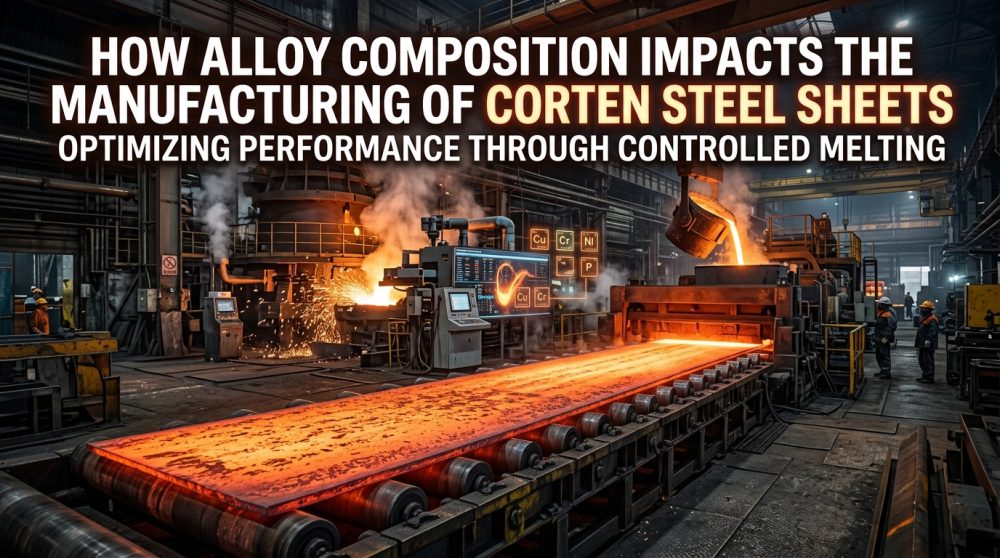
The performance of IRSM 41/97 Corten steel sheets relies upon the presence of a precise metallurgical mix of copper, chromium and nickel, which changes during the hot rolling, shape and welding of the material. This particular composition profile separates it from the structural steel baseline. Understanding these alloy behaviors allows engineers, fabricators and procurement professionals to specify the perfect material for challenging outdoor applications IRSM 41/97 Corten steel sheets require exceptional weather resistance, long-term durability and structural reliability under constant exposure.
Introduction to Corten Steel IRSM 41/97 Sheets
IRSM 41/97 is a standard set by Indian Railways for weathering steel structural steel which resists atmospheric corrosion by forming a protective oxide layer or patina. However, with IRSM 41/97 the protective layer is formed and maintained exclusively by the alloy, unlike typical painted or galvanized steel. This grade differs from the conventional carbon structural steel by copper, chromium and nickel additives, which directly control the weather resistance, mechanical strength and manufacturing behavior.
What Makes IRSM 41/97 Different from Conventional Steel?
Conventional carbon steel corrodes progressively, rust forms, falls away, and fresh metal is attacked continuously. IRSM 41/97 weathering steel behaves differently. The alloy additives stabilize the first rust into a rich, adhering protective layer that retards rather than accelerates additional corrosion. This mechanism of self-protection is a function of the alloy composition alone. The alloy composition, or the activity of copper, chromium, and nickel in the presence of ambient oxygen and moisture.
Role of Copper in Weather Resistance
The primary component responsible for the atmospheric corrosion resistance of IRSM 41/97 is copper. It forms a more dense and more stable surface oxide that is more adherent to the substrate and less likely to be re-dissolved by wet-dry cycling. The influence of copper on the patina layer can be directly attributed to the long outdoor service life of railway carriages, bridges and structural applications. The standards of IRSM 41/97 weather-resistant steel plates exporter indicate that the copper content is the major compositional variable for grade verification.
How Chromium Enhances Oxidation and Corrosion Resistance
Chromium reinforces oxidation resistance in environments beyond simple atmospheric exposure. Industrial atmospheres containing sulfur compounds, acidic pollutants, and industrial chemicals are more aggressive than rural conditions. Chromium’s contribution to the protective oxide provides resistance in these demanding environments. Bridges, industrial buildings, and railway infrastructure in aggressive atmospheric zones all benefit from chromium’s contribution to long-term surface stability without ongoing maintenance.
Importance of Nickel in Strength and Durability
Nickel’s role in IRSM 41/97 is structural. It increases the toughness of the material’s ability to absorb impact and resist crack propagation under stress. In railway wagon applications, dynamic loading, vibration, and cargo impact create stress cycles that reveal toughness limitations in lower-quality steels. Crack resistance and structural reliability under sustained and variable loading are the practical outcomes of nickel’s presence in the alloy.
Impact of Alloy Composition on Manufacturing Process
Alloy additions in IRSM 41/97 directly influence manufacturing behavior. The special behavior of deformation of the alloy should be considered for the management of hot rolling temperature to ensure the uniformity of thickness reduction without internal flaws. Good weldability but alloy composition requires attention to preheat requirements and consumable selection to preserve heat-affected zone qualities. The direct impact of steelmaking chemical accuracy on downstream manufacturing quality depends on the consistency of the dimensional stability through rolling and shaping.
Mechanical Properties Achieved Through Alloy Balancing
The balance of copper, chromium, and nickel in IRSM 41/97 produces the combination of tensile strength, yield strength, toughness, and long service life the grade is specified for. Higher strength compared to plain carbon steel enables lighter structural sections in bridges and railway wagons without reducing load capacity. Nickel maintains adequate toughness at low temperatures where wagons operate in cold climates. The overall mechanical property profile achieved through alloy balancing during steelmaking is what makes IRSM 41/97 a reliable long-service structural grade, not merely a corrosion-resistant one.
Industrial Applications of IRSM 41/97 Corten Steel Sheets
The following examples highlight where these weather-resistant plates are utilized to handle severe atmospheric and structural loads across heavy industry:
Railway Wagons
Rolling stock design relies on this grade as its primary material, combining high structural strength and weather resistance to lower long-term maintenance and lifecycle costs.
Bridges and Structural Fabrication
Continuous atmospheric weathering is effortlessly managed by the protective patina, completely eliminating the need for painting maintenance across outdoor frameworks, industrial sheds, and exposed bridge components.
Outdoor Equipment and Heavy Engineering
Mining equipment, agricultural machinery frames, and heavy engineering structures operating in harsh environments benefit from an extended service life without the need for protective surface coatings.
Why Quality Manufacturing Matters in Corten Steel Sheets
Raw material quality, specifically the accuracy of copper, chromium, and nickel additions during steelmaking directly affects whether the finished plate develops the IRSM 41/97 patina characteristics. PMI testing confirms alloy composition on each batch. Hardness and chemical testing verify mechanical property consistency. Surface and dimensional inspection confirms that plates meet geometric requirements before fabrication begins.
Choosing the Right IRSM 41/97 Steel Sheet Supplier in India
Sourcing IRSM 41/97 corten steel plates from a verified supplier with documented composition accuracy, testing records, and stock availability is the foundation of a reliable supply for structural projects. A Corten steel IRSM 41/97 sheets supplier with established inventory and export capability reduces procurement lead times and supply chain risk. IRSM 41/97 corten steel plates manufacturer capability with in-process chemical control and mechanical testing is what separates material that performs in service from material that only looks right on a basic test certificate. Panchdeep Metal, alongside other recognized corten steel IRSM 41/97 sheets stockist operations in India, maintains certified inventory with custom size availability and export documentation for both domestic and international structural projects.
Conclusion
Alloy composition in IRSM 41/97 corten steel isn’t just a material specification detail; it’s the engineering foundation of the grade’s weather resistance, mechanical performance, and manufacturing behavior. Copper drives corrosion protection. Chromium enhances oxidation resistance. Nickel contributes toughness. Together, they produce a structural grade with a long outdoor service life that conventional carbon steel can’t replicate without ongoing coating maintenance. For specifications, available sizes, and supply inquiries, explore the corten steel IRSM 41/97 product page for current stock and certification details.