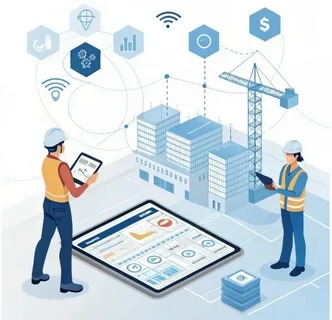
In recent years, the process of estimating the construction costs has undergone a great transformation thanks to the development of the digital construction technologies and the automated planning systems. Manual calculations, spreadsheets and frequent quantity measurements were very much a part of traditional methods. These processes would lead to delays, inaccuracies and budgeting issues in large projects.
Today’s building projects are very dependent on digital systems for budgeting, coordination and financial planning. In the current construction landscape, AI construction estimating software becomes a vital tool in organizing economic data, automating calculations, and organizing the cost workflow of construction projects. Digital platforms for estimating are becoming the go-to choice for contractors, engineers, and project managers to guarantee precise cost evaluations and efficient project operations. Intelligent estimation systems are an essential part of digital construction management and current cost planning ever since construction projects have become increasingly complex.
Current Role of AI Construction Estimating Software
AI construction estimating software currently has a significant impact on the construction industry’s budgeting process and financial planning systems.
Automated Cost Calculation Systems
The material quantity, workman-hour, and equipment expenses are automatically estimated based on the structured project data in the automated estimation systems. These systems will help to decrease manual labour and produce consistent budgeting results.
Construction companies are now turning to automated workflows for their financial operations to ensure they are well organized at various stages of a construction.
Real-Time Construction Data Processing
New estimation platforms will receive instant project updates and will have centralized financial records. Real-time tracking helps construction teams efficiently keep track of changes in costs and operations. These systems also help to eliminate communication barriers among the various departments performing projects.
Integration With Construction Workflows
The digital estimation system is now seamlessly connected with project management systems and blueprint analysis software. Unified digital environments provide integrated environments for the budgeting, scheduling and operational planning processes. This integration results in more coordinated and structured operations within construction.
Core Technologies Behind AI Construction Estimation
Today’s estimation applications leverage machine learning, cloud infrastructure and digital blueprint analysis technologies. Nowadays, connected systems are essential for efficiently handling vast amounts of project data, making AI construction estimating software rely on them.
Machine Learning in Cost Forecasting
Using machine learning models, the information from past projects is analyzed to create trends and patterns in the financial aspects of construction and to predict future costs. The systems will constantly evolve with the new project information. This helps to develop more structured cost forecasting models in various construction industries.
Cloud-Based Construction Platforms
Project files, cost system and Budget records are stored in the centralized digital environments of Cloud systems. Project details can be accessed remotely on secure online platforms by construction teams.
Smoother collaboration between contractors, estimators and project managers, too, in the cloud.
AI-Powered Blueprint Interpretation
The AI systems process digital blueprints and can automatically collect measurable construction information. Automated quantity takeoffs eliminate manual calculations and provide for quicker estimation processes. These technologies also structure the information from blueprints to budgeting outputs.
How AI Structures Modern Cost Calculations
Today’s AI building estimating software breaks down building cost projections by automating, forecasting, and using built-in financial modelling systems.
Organizing Material Cost Data
AI systems can interface with supplier databases and pricing systems to streamline the process of material cost calculations. These systems track quantities, price changes and inventory details and do it all in real-time. The automated calculation diminishes inconsistencies in budgeting operations.
Labor Cost Analysis and Scheduling
Labour estimation systems monitor the labour needs, labour timing and productivity. AI platforms can estimate labour costs based on project size and timing. AI platforms can estimate the cost of labour based on the size of the project and the timing of its operation. These systems also arrange the allocation of the workforce in various stages of the project.
Risk Analysis and Budget Forecasting
Modern estimation platforms forecast risks to the finances and consider budget variations prior to the project being launched. Predictive models model several scenarios and operational conditions. This process can help in making better financial planning and budgeting decisions.
Benefits of AI Construction Estimating Software
AI construction estimating software offers benefits in terms of operational efficiencies throughout construction estimating and project management processes.
Faster Estimation Processes
Construction data can be processed at a quicker pace and cost reports generated at a faster pace thanks to automated systems. Manual calculations are minimized, providing more efficient project planning processes.
Better Cost Accuracy
Budgeting systems that are based on data calculations are more consistent and have a reduced need for estimation error. If financial planning is done accurately, then the operation of a project will be more stable.
Improved Project Coordination
Shared digital platforms enable project teams to have onboard synced financial data. These systems provide a method of communication among departments and account for all the money spent within the department.
Challenges in AI Construction Estimation
Even with advancements in technology, there are still some challenges to AI construction estimating software. While technology has progressed, there are some challenges associated with smart construction estimation platforms.
Data Accuracy and Quality Issues
Having accurate project information continued to be crucial for the precise outputs of the estimates. A lack of data or data that are incomplete and inaccurate could impact financial analysis and planning for operations.
Integration With Legacy Systems
Existing construction software may not be up to speed with the present generation of artificial intelligence systems. During a digital upgrade, there may be some disruptions in operations that can impact data migration and system integration.
Workforce Adaptation to AI Systems
Construction professionals need to change the way they work and start using digital processes and digital estimation platforms. The transition takes practice and knowledge of technical and software issues.
Industry Applications of AI Estimating Systems
Residential Construction Projects
Digital estimation systems are employed in residential construction projects to create budgets and quantity calculations and to coordinate the scheduling of the construction projects. These are financial planning systems that structure financial planning over housing developments.
Commercial Construction Projects
Office buildings, shopping centres and multi-phase projects are the types of projects that use advanced budgeting systems in commercial construction environments. AI mechanisms efficiently handle complicated monetary frameworks.
Infrastructure Development Projects
AI-powered estimation platforms are crucial for large-scale financial modeling and planning in road construction, transportation projects, and public infrastructure development.
Future Trends in AI Construction Cost Analysis
Predictive analytics and smart construction technologies are continually shaping the future of AI construction estimating software, making it more accurate and efficient. The automated project estimation system is continually evolving, with automation and predictive analytics playing a crucial role in ensuring its accuracy and efficiency.
Predictive Financial Modeling
Future systems are to simulate a number of budgets in advance to project execution. Market conditions, along with labor demand and operational risks, will be analyzed in order to use AI forecasting tools.
Integration With Smart Construction Technology
AI estimating systems are being integrated with IoT devices and real-time monitoring systems in modern construction environments, making them more integrated and comprehensive. In the modern construction environment, AI estimation systems are increasingly linked to IoT devices and real-time monitoring platforms, creating a more comprehensive and integrated system. Systems are connected to provide efficient operational coordination.
Automation in Construction Planning
Automated reporting systems and AI-powered workflows are further cutting down on manual workflows in project management. Nowadays, digital planning systems are used to orchestrate construction operations more efficiently.
Long-Term Impact on Construction Industry
AI construction estimating software is still influencing the construction industry’s financial management, project coordination, and budgeting practices. AI construction cost management system is still driving change in the financial management, coordination, and budgeting of construction projects.
Shift Toward Digital Construction Ecosystems
Construction organisations are becoming a part of digitally connected environments more and more. Centralised platforms have been built to streamline budgeting, scheduling and project management systems into one.
Role in Sustainable Construction Planning
AI systems reduce material waste through accurate forecasting and organized resource allocation. Sustainable planning models now influence modern construction strategies.
Evolution of Construction Estimation Roles
Accurate forecasting and organized resource allocation are key to minimizing material waste with AI systems. New planning models for sustainability are now impacting on contemporary planning practice.
Conclusion
The planning of construction is still in a process of evolution due to automation, prediction and smart use of digital systems. AI construction estimating software has become an integral part of today’s construction costing solutions, allowing for more efficient project budget management and the development of project estimates.Smart project cost estimation software has become a mainstay of today’s construction costing solutions and is now used to structure modern cost estimates, organise project budgets and optimise operational efficiency across construction environments. With the ongoing growth of digital construction ecosystems, AI-based estimation systems will be integral in the future planning and construction management processes.
FAQs
What is AI Construction Estimating Software?
AI construction estimating software applies data analysis and automation to determine construction material, labour and project cost. It structures monetary planning with the help of calculative systems and projections.
What is the significance of AI in the construction cost estimation?
AI systems can handle vast amounts of project information swiftly and ensure a structured budgeting process. They can also minimize manual calculations and manage financial reporting effectively.
In what ways can AI be used to enhance construction planning?
The information and labor schedules and material prices are fed into AI platforms, which then analyze them in real-time. This offers better-structured cost forecasting and functioning coordination.
How will AI be used in construction estimation in the future?
The future systems will emphasize predictive analytics, automated planning and smart construction integration. Digital estimation platforms will continue to influence modern-day project management workflows.