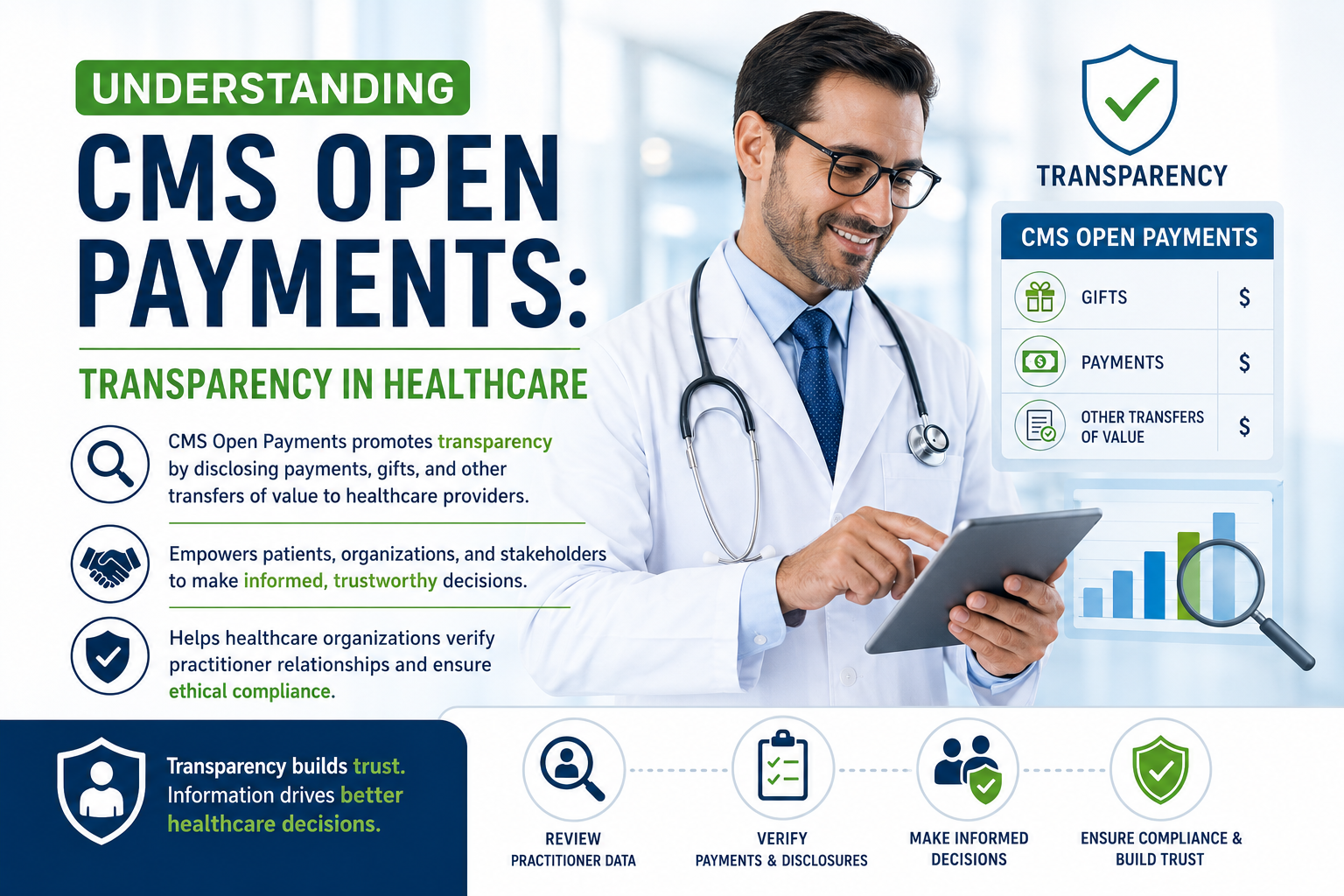
Transparency is the ideal that demonstrates workplace authenticity and reliability while building public trust in their services. CMS Open Payments is one of the ways healthcare checks and confirms that practitioners are legitimate. With the help of the disclosed list of gifts, payments, and receipts, they get from the organization they work with. Before you hire or choose someone to work with, it’s crucial that you check their history and run a thorough background check.
Therefore, transparency has become a cornerstone of modern healthcare practices. Patients, providers, and policymakers alike recognize that trust in the system depends on clear visibility into financial relationships. The CMS Open Payments initiative provides significant transparency into financial ties between healthcare providers and industry stakeholders.
What Is CMS Open Payments?
CMS Open Payments is a national disclosure initiative established under the Physician Payments Sunshine Act. It is managed by the Centers for Medicare & Medicaid Services (CMS) and discloses all the financial transactions to maintain transparency. It makes information about payments and transfers of value from pharmaceutical companies, medical device manufacturers, and group purchasing organizations publicly accessible to healthcare providers. This requires all companies to report transactions with healthcare providers for their services.
The transactions made are recorded and displayed in the Open Payments CMS to ensure that patients and regulators can see potential influences on medical decision‑making. Whether it’s a consulting fee, a research grant, or even a sponsored lunch, the program captures and publishes these details annually.
Why Transparency Matters
The interactions between health care professionals and industries need not always be perceived negatively, but definitely need to be monitored. In many ways, these collaborations have resulted in progress in research and development that benefits all concerned. Nonetheless, without transparency, such interactions may lead to conflicts of interest and influence the decision. Consider the following examples:
- Prescriptions Made: If a medical professional is receiving considerable sums from a drug company, patients may have doubts about how much influence that compensation may have on the prescriptions.
- Medical Device Usage: The payments received for specific devices may indicate that their use is encouraged during the course of treatment.
- Research Ability: Any funding received by health care professionals for research must be publicly disclosed to maintain its credibility.
CMS Open Payments makes this information available so the public can make informed decisions and monitor conflicts.
How the Program Works?
Every year, eligible manufacturers and groups of purchasing organizations need to submit detailed reports on the transactions made. These resorts include the following:
- General payments: Fees for consulting, speaking engagements, meals, travel, or gifts.
- Research payments: Funding tied to clinical trials or studies.
- Ownership interests: Equity stakes or investments held by physicians or their immediate family members.
Once companies submit the reports, CMS validates and publishes the data on the Open Payments CMS website. Which is accessible by everyone, from a physician, teaching hospital, or company, they can check the details and even raise a concern if the details don’t match. The database is vast, covering millions of transactions and billions of dollars in reported payments.
Benefits of CMS Open Payments
The program is wide-ranging and vital, offering several key benefits to patients, physicians, hospitals, and pharma companies. Here are a few of them:
- It empowers patients, as they can research their providers and detect any financial influences, whether made or not.
- Policymakers can also use this as a tool to understand organizations and inform industry practices.
- This transparency and public disclosure every year encourage companies to maintain ethical standards.
- Physicians can also use this data to understand how their services are being received in the market. They can also ensure accuracy is maintained in the data.
The Future of Open Payments CMS
With the evolution of the healthcare industry, the rules and the Open Payments CMS program will also evolve to exert even greater influence. These programs have so far saved millions of damage and people’s lives by allowing them to openly check and make decisions. So, the future development will encourage the same. Here are a few potential future developments:
- Improved usability: Streamlining the database to make it easier for patients to use.
- Integration with other systems: Integrating Open Payments data with electronic medical records or physician databases.
- Extended scope: Adding new categories of financial interactions or extending reporting obligations.
These changes will further reinforce the program’s impact in fostering trust and accountability.
Conclusion
The CMS Open Payments system is a game-changer in healthcare transparency. Disclosure of financial ties enables patients, encourages regulatory scrutiny, and builds a sense of accountability throughout the sector. While challenges remain, it highlights the need for trust in healthcare decisions. Several potentially harmful influences on patients have been avoided due to public disclosure. It’s an essential list designed to ensure transparency, safety, and ethics in the healthcare industry.
For organizations seeking to address compliance and transparency issues, tools like Venops can offer assistance. By streamlining the Open Payments CMS reporting process, we guarantee accuracy through fast, reliable algorithms. In addition, they enable healthcare providers to focus on their primary priority: providing quality services.