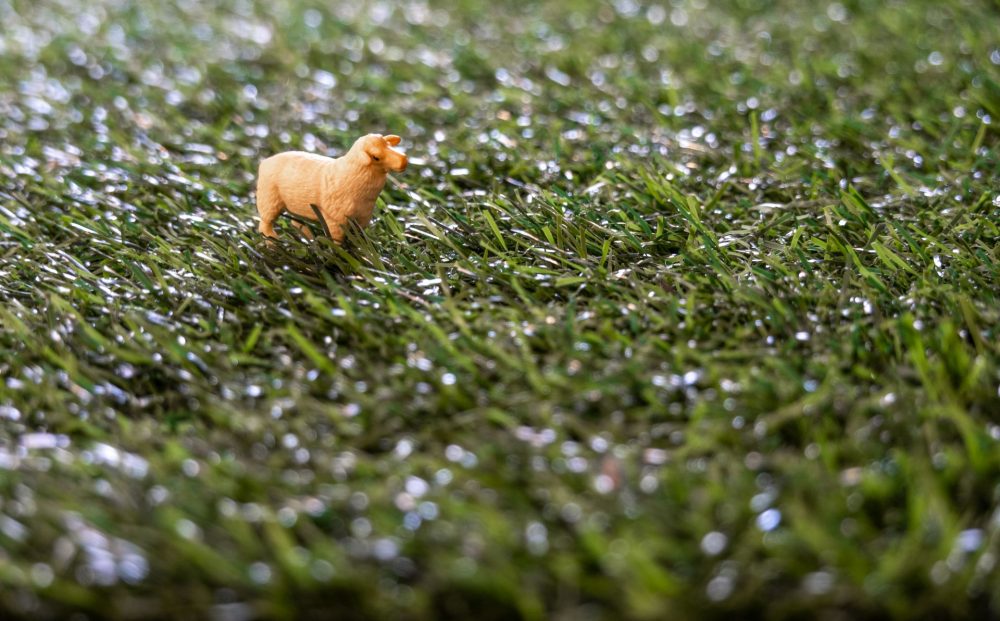
Artificial turf is everywhere now. Front yards. Municipal parks. School playgrounds. The footprint expands every season, and the appeal isn’t hard to explain—nobody wants to surrender their Saturday to mowing. But most buyers make a costly mistake. They choose based on what the surface looks like from three feet away, and that’s where they go wrong. What actually determines performance is buried inside the material stack: the fiber chemistry, what’s underneath it all, how everything gets assembled. Nail those details and you’ve got a surface that holds up for years. Miss them and you’re scheduling a replacement before year three.
Advanced Fiber Engineering
Those individual blades didn’t happen by accident. Real material science produced them. Polyethylene, polypropylene, nylon—swap the polymer and you’re essentially buying a different product. Residential installs lean heavily on polyethylene. Soft underfoot. Pleasant barefoot. Nylon runs stiffer, tougher, better at absorbing punishment. Yet most buyers never think to ask which one they’re actually getting.
Blade cross-section matters just as much. Flat blades mat down—and stay that way. Ribbed or C-shaped profiles are engineered to spring back after foot traffic crosses them. That geometry is what keeps a lawn looking alive six months in. Resilience doesn’t just happen; it’s baked into the blade’s physical form from the start.
Color gets less scrutiny than it deserves. Quality turf layers several shades of green and works in brown thatch strands to mimic the uneven tones of real grass. UV stabilizers get compounded directly into the fiber during manufacturing. Without them, sun exposure bleaches everything out. Two seasons of fading and the turf looks unmistakably fake. No maintenance routine fixes that.
The Importance of Backing Systems
Flip any turf sample over. That underside is doing the structural heavy lifting—and almost nobody looks at it. A dual-layer backing, typically a woven primary sheet bonded to polyurethane or latex, grips every fiber and holds the whole assembly together under stress. It vanishes the moment the turf goes down. That invisibility is exactly why it gets ignored.
Cheap backing fails loudly once it starts going. Fibers pull free. Surfaces buckle. Edges peel away from the ground. Good backing tolerates the thermal cycling that comes with real seasons—staying flat through a brutal July heat wave and a wet November both.
Drainage lives in the backing too. Perforations punched at deliberate intervals shed water fast, stopping puddles from forming after rain. In climates that see genuine precipitation, this isn’t a minor detail. A poorly draining installation becomes a soggy, slow-drying mess—which wipes out a big chunk of why anyone bothers with turf in the first place.
Infill Materials and Their Function
Infill sits between the blades. Silica sand, crumb rubber, cork, coconut husk—small particles broadcast across the surface and worked down into the fiber layer. Easy to overlook. Genuinely consequential.
Stability comes first. Infill props blades upright and keeps them spaced. Without it, the surface collapses flat within weeks. It also adds mass, resisting lateral movement underfoot.
Heat is the second problem infill addresses. Certain blends are formulated to absorb and release thermal energy at controlled rates, pulling surface temperatures down on hot days. Shock absorption is largely an infill story too—the right material turns a rigid base into something that actually gives. That matters for kids, athletes, anyone spending real time on the surface.
Cork and coconut husk options have been gaining serious traction. Homeowners trying to reduce synthetic content find them genuinely appealing: natural cooling properties, less plastic in the ground. A real trade-off, not a marketing line.
Base Preparation and Subsurface Technology
Nothing above ground performs if the ground underneath is wrong. Base prep is foundational—literally. Crews strip existing vegetation, slope the area correctly, then compact crushed aggregate into a firm, level platform. Everything else rests on that.
A solid base prevents settling and lateral drift. It channels water downward and away from the surface layer. Rush this step and problems stack fast: low spots, standing water, uneven wear that shortens useful life. The base disappears the moment turf goes down—which is precisely why some installers cut corners on it.
Geotextile fabric often gets laid during this phase. It blocks weeds from pushing up through the aggregate and keeps soil from migrating into the stone layer. Another component working invisibly to extend the whole system’s lifespan.
Homeowners who prioritize reliable artificial turf installation in the Bay Area or comparable regions benefit from contractors who treat base work as non-negotiable. A properly built foundation separates turf that holds up a decade from turf demanding attention by year three.
Seam Technology and Installation Precision
Large areas need multiple sections. Those sections have to meet somewhere. And when seams fail—visible ridges, misaligned blades, gaps you can feel through your shoes—the whole job reads as cheap regardless of fiber quality.
Specialized adhesives and joining tapes bond sections together. Flexibility matters as much as raw bond strength; a rigid seam cracks or separates as turf moves with the seasons. Fiber direction across the join has to align exactly. Get it off and the seam shows up like a scar cutting across the lawn.
Precision runs to every edge. Cutting cleanly around curves, fitting borders tight against fixed obstacles, anchoring the perimeter without creating surface bulges—each step demands real skill. Small errors compound. Something that looks acceptable on installation day can become glaring after a few weeks of settling.
Anchoring hardware—nails, staples, adhesive perimeters—locks the turf down without creating visible irregularities at the surface. Hidden details, all of them. But they determine how the finished surface actually feels. And how long it holds.
Conclusion
Artificial turf isn’t one product. It’s a layered system—fibers engineered for resilience, backing built for stability and drainage, infill chosen for comfort and heat management, a base prepared to carry everything above it, seams executed with genuine precision. Each element feeds the next. Weaken one layer and the whole system pays for it.
Homeowners who dig into these technical details come out ahead. They ask sharper questions, catch weak proposals early, and end up with installations that hold up under real use. Look past the surface. The technology underneath is where actual value lives—and where the decisions that genuinely matter get made.