For nearly a decade, Bali was the answer. Ask anyone planning a wellness trip, a yoga retreat, or a month of intentional living, and the answer is almost always the same. Ubud. Canggu. Seminyak. The island became shorthand for a particular kind of travel, beautiful, spiritual, restorative, and, increasingly, crowded.
Something has shifted in 2026. The conversation among serious wellness travellers has quietly moved. And the destination it has moved to is Rishikesh.
What Bali Got Right — and What It Can No Longer Offer
Bali built its wellness reputation on real foundations. The culture, the landscape, the genuine spiritual tradition, these are not invented. But over the past several years, the infrastructure built around wellness tourism has begun to outpace what made it special in the first place. Studios have multiplied. Prices have risen sharply. The intimate, unhurried quality that drew people there has become harder to find beneath the layer of retreats, influencers, and curated experiences competing for the same small stretch of hillside.
Travellers who go looking for depth are finding it harder to locate in Ubud. And so they are looking elsewhere.
Why Rishikesh Is Winning That Comparison
Rishikesh does not need to market itself as spiritual. It simply is. Sitting at the foot of the Himalayas, with the Ganga flowing through its centre, this small town in northern India has been a gathering place for teachers, seekers, and practitioners for over five thousand years. The Beatles came here in 1968. Long before that, sages came and never left.
The wellness infrastructure in Rishikesh has grown significantly in recent years, but it has grown around something genuine rather than replacing it. Ashrams still line the riverbanks. The Ganga Aarti ceremony draws both locals and visitors every evening at dusk. The Himalayan foothills begin where the town ends. The setting itself does a significant amount of the work.
For wellness travellers who want immersion rather than aesthetics, Rishikesh is increasingly the more honest choice.
The Cost Difference Is Significant
A week-long yoga retreat in Ubud now routinely costs between $2,000 and $4,000. A 23-day fully residential yoga teacher training in Rishikesh, including accommodation, three meals daily, all course materials, and a globally recognised Yoga Alliance certification, starts at $1,200.
That is not a typo. India offers a standard of wellness travel and yoga education that is genuinely world-class, at a fraction of what the same experience costs in Bali, Costa Rica, or anywhere in Europe.
Schools like Rishikul Yogshala Rishikesh, have been at the centre of this value proposition for sixteen years. Established in 2010 and certified by Yoga Alliance USA, the school has trained more than 25,000 students from over 80 countries. Its 4.8-star rating on Google and 4.6 on TripAdvisor are not the result of a marketing campaign — they are sixteen years of word-of-mouth from people who came, stayed 23 days, and went home changed.
The 200 hour yoga teacher training in Rishikesh at Rishikul Yogshala runs every month of the year in small groups of 20 to 25 students with E-RYT certified teachers who have been teaching here for over a decade. It is the kind of programme that draws professionals, career changers, and curious first-timers equally, people who want something that goes further than a weekend workshop.
The Experience Bali Promises, Rishikesh Delivers
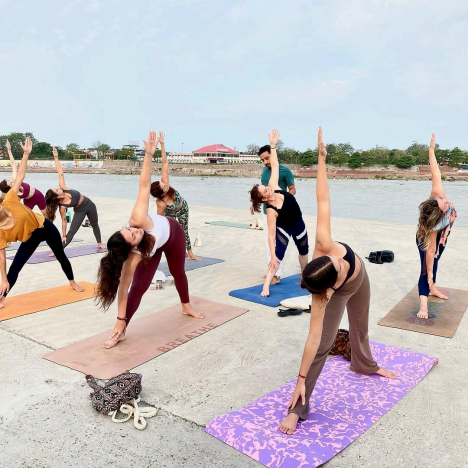
Early mornings by the river. A daily rhythm built around practice rather than productivity. Meals that are simple, fresh, and nourishing. A community of people from different countries and backgrounds, all on the same mat, working through the same practice. Evenings that end with kirtan or silence rather than a restaurant queue.
This is what wellness travellers are chasing. And as a recent report on the growth of yoga tourism confirms, Rishikesh is now where serious international students are choosing to find it — not as a trend, but as a return to what drew people to wellness travel in the first place. Read the full report here.
Bali will always have its place. But for travellers who want depth over decoration, 2026 is the year Rishikesh stops being the alternative and becomes the destination.