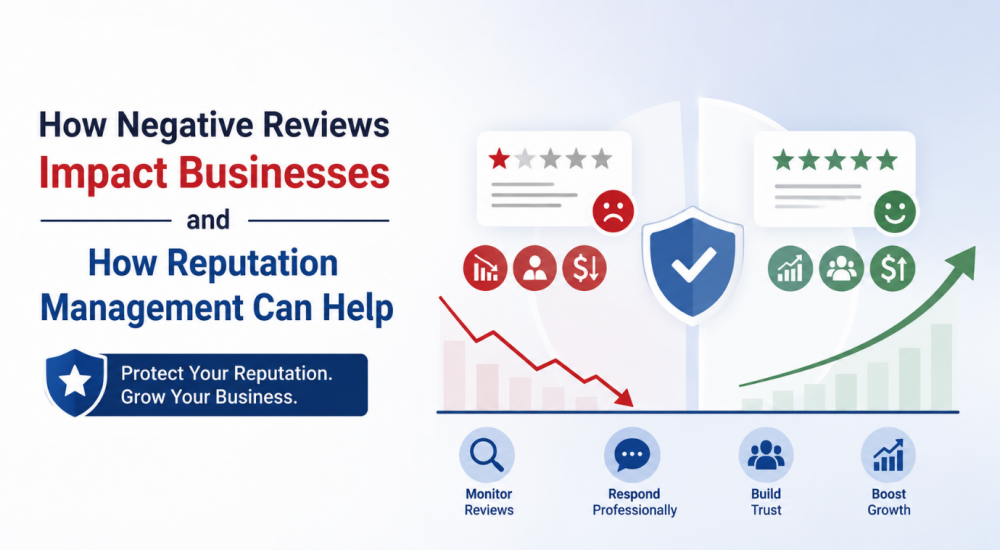
In the modern digital marketplace, customer reviews play a major role in shaping business success. Customers tend to read online reviews before making any purchase, booking a service or even deciding on a company to do business with. Positive feedback may bring new customers and boost confidence, and negative feedbacks may ruin a company in a short period of time. The insights provided in Understanding How Negative Reviews Impact Businesses can be valuable to brands that prioritize keeping their customers and ensuring long-term development.
Nowadays, companies have become more visible on the internet than ever. The social media sites, Google reviews and local business directories enable customers to publicly express their experiences. Some negative feedback can affect the potential buyers and decrease the trust towards a brand. Nevertheless, those companies that are capable of controlling their reputation will be able to recuperate with criticism and enhance relationships with customers. That is why reputation management is an inevitable aspect of online business development.
The Impact of Negative Reviews on Businesses
Knowing How Negative Reviews Impact Businesses assists businesses to acknowledge the relevance of having a good online image. Negative reviews have various implications on businesses such as customer trust, sales and brand visibility.
Loss of Customer Trust
One of the most valuable resources to any company is trust. Reading the negative review, customers can doubt about the quality of goods or services. Even a couple of negative experiences published online can cause uncertainty in the mind of a potential customer.
Online reviews are trusted by people as much as personal recommendations. When a business gets a lot of complaints concerning customer service, quality of products, delivery delays, customers can opt to go to the competitors.
Reduced Sales and Revenue
Among the largest examples of How Negative Reviews Impact Businesses is decreased sales. Prior to purchasing power, customers tend to make comparisons between businesses. Low rating and negative reviews usually cost a company some potential customers to firms that are more reputable.
The negative reviews have a direct impact on:
- Customer conversion rates
- Online inquiries
- Repeat purchases
- Brand loyalty
Businesses with poor online reputations may struggle to generate consistent revenue growth.
Damage to Brand Reputation
It might take years to establish a good reputation in a company, and it may be ruined in a short period of time because of negative online responses. Negative reviews go viral on social media and review sites, and have an impact on the perception of the population.
A negative image can:
- Lower customer confidence
- Reduce business credibility
- Impact partnerships
- Decrease market competitiveness
This is the reason why companies should be keen and concerned with customer feedback.
Lower Online Visibility
Customer reviews are taken into account as ranking businesses online. Firms whose ratings are low might be less visible in the search engine. This can minimize traffic and online interaction on the websites.
Bad Reviews may impact:
- Local SEO rankings
- Google Business Profile activity.
- Customer click-through rates
- Online brand visibility
Companies with a high level of positive feedback tend to be better ranked on the digital search engine.
Common Reasons for Negative Reviews
Unavoidable problems tend to give negative feedback to businesses. Determining these issues can assist firms in enhancing customer satisfaction.
Poor Customer Service
Customers who leave negative reviews are typically slow in responding, uncivil, or dissatisfied with their complaints that are not resolved.
Product or Service Quality Problems
Customers demand a good quality and money value. Unsatisfaction may be due to poor products or inconsistency in services.
Delayed Deliveries
Delays and failure to meet deadlines can be frustrating particularly where a business cannot communicate effectively.
Misleading Information
False advertising or false promises may disappoint the customers and lead to complaints.
Lack of Communication
No one considers customer concerns, leading to the feeling of unimportance and more negative feedback on the Internet.
How Reputation Management Can Help
Reputation management assists companies to safeguard and enhance their online reputation. It is patiently tracking customer feedback, acting in a professional manner and delivering customer experiences in ways that make them feel good.
Monitoring Customer Reviews
Different businesses ought to monitor online reviews on various platforms on a regular basis. Early monitoring enables the companies to act promptly before problems are bigger.
Important platforms include:
- Google Reviews
- Social media pages
- Business directories
- Industry review websites
Frequent monitoring assists companies to remain sensitive of customer comments.
Responding Professionally
Professional responses demonstrate the customers that the business appreciates feedback. Even that which is negative could be used as a chance to showcase excellent customer service.
Best practices include:
- Responding politely
- Offering solutions
- Apologizing when necessary
- Remaining cool and professional.
Customers like companies that are responsive to complaints.
Encouraging Positive Reviews
Customers who are satisfied may also contribute to building a strong reputation of the company by posting positive comments. Complimentary customers should be encouraged to share their experiences and this enhances the overall ratings and trust.
Reviews can be requested by businesses via:
- Follow-up emails
- Customer feedback forms
- Social media engagement
- Post-service communication
The occasional negative comments are counterbalanced by positive reviews.
Improving Customer Experience
Customer satisfaction is one of the best reputation management techniques. It is a natural fact that the better the quality of service offered by businesses, the higher the reviews they get.
Key improvements include:
- Faster customer support
- Better communication
- Staff training
- Improved service quality
- Transparent business practices
Customers who have been satisfied will refer other customers to the business.
Building a Strong Online Presence
A robust and engaged online platform enhances brand credibility. Frequent updates of content, interactions with customers and use of social media can assist the businesses to stay on a positive image.
This is where online reputation management services in Saudi Arabia can help businesses safeguard its online reputation and gain customer trust.
Why Reputation Management Matters
In very competitive markets, the online reputation may have a direct impact on the success of the business. The customer will favor a brand that has good ratings, good reviews and professional customer services.
The advantages of reputation management in businesses include:
- Increased customer trust
- Higher sales opportunities
- Better online visibility
- Stronger customer loyalty
- Improved brand reputation
Firms that do not pay attention to online feedback will be missing on great growth opportunities.
Long-Term Benefits of Positive Reputation Management
Good reputation online has long term benefits to the companies.
Better Customer Loyalty
When customers get brands that address them and offer them with the best services, they tend to be loyal to such brands.
Increased Brand Credibility
Good reviews enhance the reputation and authority of the business.
Higher Conversion Rates
Consumers have confidence in companies that are rated highly and have an excellent customer experience.
Competitive Advantage
Companies that have good reputations are more distinctive in the saturated markets.
Sustainable Business Growth
Good customer confidence helps in increasing revenues and success of the business in the long term.
Conclusion:
Knowledge of How Negative Reviews Impact Businesses is critical when it comes to businesses operating in the modern digital realm. Negative comments may decrease trust, reputation, decrease sales, and influence online presence. Reviews are an important aspect of the purchasing behaviour of customers, and thus, reputation management is a very important business strategy.
By tracking reviews, responding in a professional way, and enhancing customer experiences, businesses can ensure their reputation is safe and develop improved customer relations. Knowing the Impact of Negative Reviews on Businesses can help companies take proactive measures to ensure they have a positive online presence and can grow long-term. Managing a good reputation is not only a way of safeguarding a brand but also of ensuring good business opportunities in a competitive market such as Saudi Arabia.