Introduction
Most businesses don’t feel complicated in the beginning.
You can track things in your head. Conversations happen quickly. If something changes, everyone knows about it almost immediately. There’s no real need for structure because everything is still visible.
That changes slowly.
More people join. Work gets divided. A few new revenue streams appear. Nothing dramatic at first, but enough to make things slightly harder to follow than before.
You don’t notice the shift right away. It shows up in small ways.
When Things Stop Feeling Simple
At some point, you start relying less on memory and more on notes.
Someone is handling sales. Someone else is onboarding new users. Another person is looking at performance or support. Everyone is doing their part, but the overall picture is not as clear as it used to be.
Information begins to scatter a bit.
Some of it sits in spreadsheets. Some gets shared in chats. A few details are just remembered because they seem too small to record. That works for a while, until it doesn’t.
You might double-check a number just to be sure. Or ask the same question twice because you’re not fully confident about the answer.
Nothing is broken. It just takes more effort to stay certain.
The Limits of “We’ll Manage It Manually”
Spreadsheets feel reliable. They’re flexible, easy to edit, and familiar.
As things pick up, they start taking more time than you’d think.
What used to be a quick update doesn’t stay quick anymore. You check it once, then again, just to be sure. During busy days, small inconsistencies slip in without anyone noticing immediately.
It’s not about making mistakes. It’s about how easy it becomes for them to happen.
Over time, more energy goes into maintaining the system than actually using the information inside it.
Bringing Some Order Back
This is usually the point where businesses start adjusting how they manage things.
Not by adding complexity, but by removing repetition.
So instead of doing everything by hand, a few parts get shifted into systems that don’t get tired or inconsistent. The same rules apply every time, whether it’s the first entry or the hundredth. Updates don’t depend on reminders. Records stay aligned without constant checking.
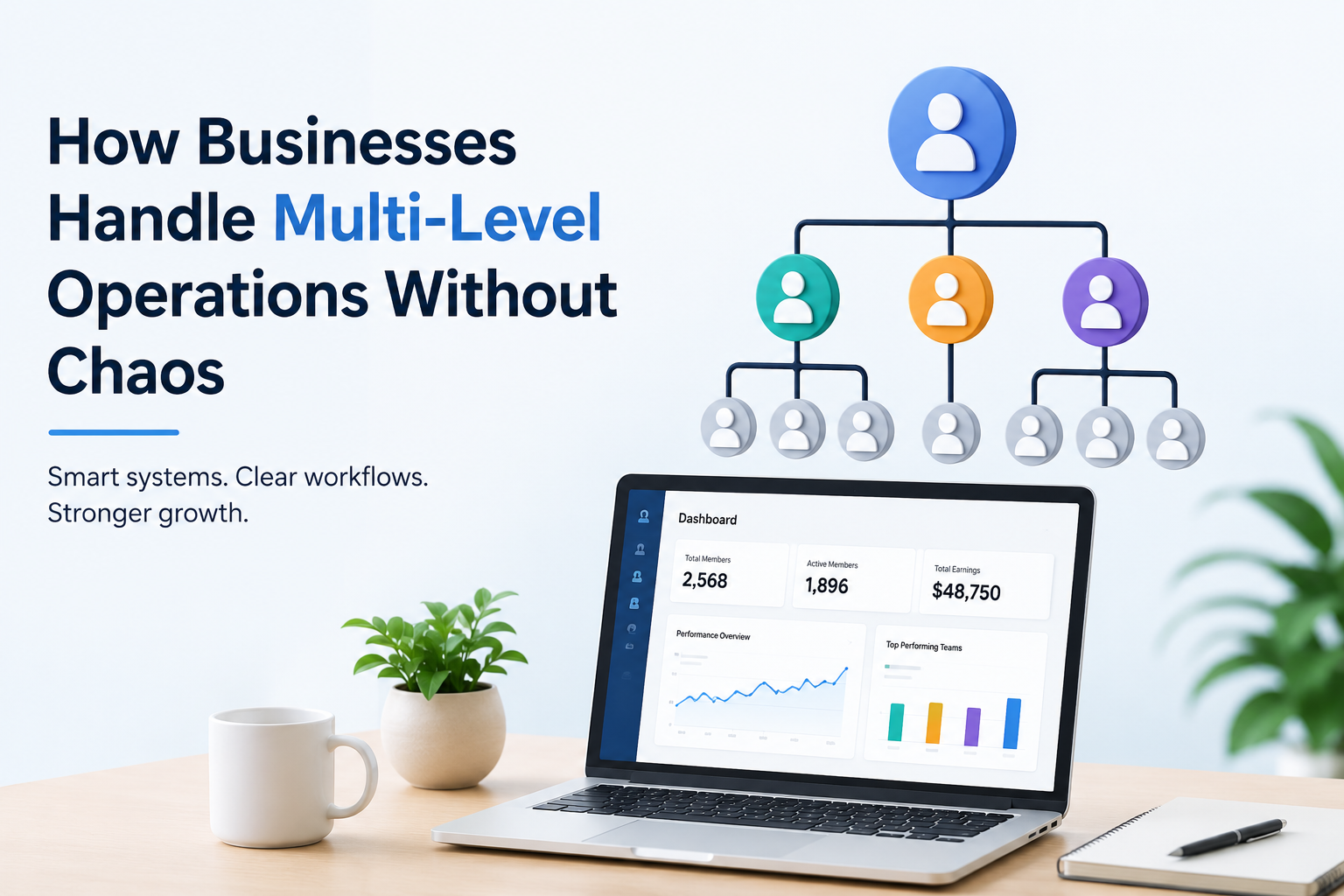
In businesses where activity flows through multiple layers or referrals, tools like MLM software often come into the picture in a quiet, practical way. Not as a major shift, just as a way to keep things from getting messy.
Seeing what Actually Happening is
One thing that changes quickly with better structure is visibility.
Before that, you’re often piecing things together. A number from one place, an update from another, and a bit of assumption to fill the gaps.
Once everything starts flowing through a central system, that guesswork reduces.
You don’t need to build reports just to understand what’s going on. You can check progress, compare activity, and spot patterns without digging.
In setups where both customer activity and network participation matter, some teams lean toward CRM MLM software to keep everything connected. It helps avoid the disconnect between “what is happening” and “who it is happening with,” which becomes more important as things grow.
Day-to-Day Work Feels Different
Another shift is less obvious, but noticeable.
Without a shared system, people depend on each other for updates. You ask, wait, confirm, and sometimes repeat the process just to be sure nothing is missed.
When information is already in place, that loop shortens.
People check things on their own. Updates are already there. Fewer interruptions, fewer follow-ups.
Work doesn’t reduce, but it flows better.
Growth without the Constant Catch-Up
As the business grows, the volume of activity increases whether you’re ready for it or not.
More entries. More interactions. More moving parts.
Without structure, every new layer adds pressure. Things need to be checked more often. Corrections take longer. Delays become more common.
With the right systems supporting the process, growth feels different.
You’re not constantly catching up. Processes continue running in the background. Calculations stay consistent. Information doesn’t drift out of sync as easily.
That stability makes scaling less stressful than it could be.
Adapting Without Starting Over
No setup stays perfect forever.
New ideas come in. Processes shift. Sometimes the structure itself changes slightly as the business evolves.
If things are too fixed, even a small change can start to feel like more work than expected.
Having something more flexible just makes that whole process a lot easier to deal with. You can adjust things, change a rule here and there, or add a new step without throwing everything off balance.
That kind of flexibility tends to matter more over time than people expect in the beginning.
Final Thoughts
Managing growth is not just about handling more work. It’s about keeping things understandable as they expand.
Without some structure, even simple tasks begin to take longer than they should. With the right support in place, those same tasks feel lighter and more predictable.
Most teams are not looking for complicated solutions.
They’re just trying to avoid confusion.
And in many cases, the difference between feeling in control and feeling overwhelmed comes down to how well the system behind the work holds everything together.