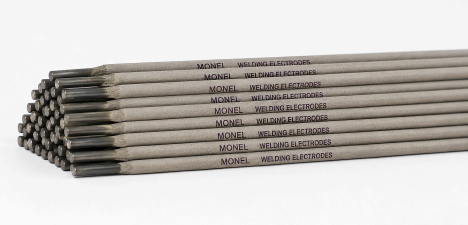
Welding electrodes are the backbone of industrial fabrication. They determine joint strength, corrosion performance, and the overall reliability of welded assemblies across critical infrastructure. Monel welding electrodes occupy a particularly important position in this landscape, offering a nickel-copper alloy composition purpose-built for environments where standard electrodes simply fail. From offshore rigs to chemical processing plants, industries that cannot afford weld failures rely on these specialised consumables. This guide covers what buyers need to understand before making a purchase decision.
Understanding Monel Welding Electrodes
What Are Monel Welding Electrodes?
Monel welding electrodes are nickel-copper alloy consumables used to join or repair Monel base metals and dissimilar alloys in aggressive service conditions. The alloy typically comprises around 63-70% nickel and 20-29% copper, with minor additions of iron, manganese and silicon. This composition delivers outstanding resistance to oxidation, saltwater corrosion and a wide range of industrial acids. Making these electrodes the preferred choice wherever standard carbon steel or stainless grades cannot deliver long-term reliability.
Common Types of Monel Welding Electrodes
The market offers several grades, most commonly Monel 400 and Monel K-500 variants, each suited to different mechanical and chemical demands. Coated electrodes, used in Shielded
Metal Arc Welding, are the most widely available form and suit general fabrication. For TIG and MIG applications, bare wire and spooled forms are available, allowing greater control in precision work. Buyers should match the electrode type not just to the base metal but to the welding method and positional requirements of the job.
Key Features of Monel Welding Electrodes
Monel welding electrodes bring a combination of properties that few other consumables can match across both mechanical and chemical performance benchmarks.
Excellent Corrosion Resistance
Such electrodes resist prolonged contact with seawater, hydrofluoric acid and alkaline chemicals without considerable deterioration, thus they are a reliable option for marine and offshore structural use.
High Mechanical Strength
Welds made are characterised by considerable tensile strength even at high pressure and temperature, which guarantees stable performance during strenuous industrial processes.
Superior Weldability
The arc burns with notable stability, which limits the risk of porosity, cracking and surface defects that compromise weld integrity in critical assemblies.
Long Service Life
Welded components are less prone to degradation due to corrosion, leading to a substantial decrease in the maintenance frequency and hence, a lower total cost of ownership during the service life.
Applications of Monel Welding Electrodes
Industries operating in chemically aggressive or high-load environments account for the bulk of global demand for Monel welding electrodes.
Marine and Shipbuilding Industry
Seawater piping systems, propeller shafts and offshore structural components rely on monel welding electrodes to resist chloride-induced corrosion over multi-decade service life.
Chemical Processing Industry
Weld joints in sulphuric acid, hydrofluoric acid and other aggressive process chemical service must retain their integrity without accelerated material loss.
Oil and Gas Sector
Monel welding electrodes are often used for the fabrication or repair of valves, fittings and pressure vessels subjected to sour gas, brine and high temperatures.
Power Generation and Heat Exchangers
The alloy is resistant to thermal cycling and oxidising atmospheres, making it useful for high-temperature tube-to-tubesheet joints and heat exchanger components.
Aerospace and Defense Applications
Structural components requiring both high mechanical strength and corrosion resistance under variable environmental conditions are routinely fabricated with these electrodes.
Important Factors Buyers Should Consider Before Purchasing
Purchasing monel welding electrodes without adequate technical evaluation is a costly mistake. These considerations will help buyers avoid common pitfalls.
● Always verify the electrode grade against the base metal specification, since mismatched grades produce joints that underperform chemically or mechanically in service.
● It is non-negotiable to review the certified material test report, as the nickel to copper ratio and trace element content have a direct impact on arc stability and weld deposit quality.
● Make sure the electrode is suitable for the position at which you will be welding, because not all Monel electrodes weld equally well in vertical or overhead positions.
● ASTM, ASME and AWS compliance is the base requirement, not a value-add. Buyers should ask for certificates before finalising any order.
● Moisture absorbed during improper storage quickly degrades the integrity of the electrode coating, causing porosity and hydrogen-induced cracking in the weld zone.
● The lower unit price rarely equates to lower total cost if substandard electrodes require rework, post-weld repairs or early component replacement.
How to Identify High-Quality Monel Welding Electrodes
Reliable monel welding electrodes exhibit consistent coating uniformity along the full electrode length. Any visible cracks, chips, or eccentric coating immediately signals a quality concern and warrants rejection. During welding, a quality electrode produces a stable, controlled arc with minimal spatter and a slag layer that lifts cleanly without aggressive chipping.
Buyers should also scrutinise documentation. Electrodes supplied without traceable mill certifications or third-party test reports should be treated with scepticism regardless of price. Inconsistent electrode diameter across a batch, poor or damaged packaging, and absent markings are reliable indicators of a supplier cutting corners on quality control.
Tips for Choosing the Right Supplier
Supplier selection carries as much weight as product selection. Working with an established name like Bhansali Nickel Alloys gives buyers access to a broad product range across multiple Monel grades and electrode sizes, reducing the complexity of sourcing from multiple vendors. Bhansali Nickel Alloys also provides technical guidance on electrode selection, which is particularly valuable when engineers are specifying consumables for an unfamiliar application.
Beyond product availability, buyers should assess whether a supplier can guarantee safe packaging and consistent delivery timelines. Monel welding electrodes damaged in transit or delayed past project schedules create serious operational consequences. A supplier with robust logistics and quality packaging standards is not a luxury consideration.
Best Practices for Using Monel Welding Electrodes
Surface preparation is non-negotiable. Grease, oxide scale, and moisture on the base metal surface will compromise even the highest-quality Monel weld, so thorough cleaning with appropriate solvents and mechanical methods before striking the arc is essential.
Welding parameters matter considerably. Monel alloys are sensitive to heat input, and excessive current produces a wide heat-affected zone that can alter the microstructure of the base metal. Post-weld inspection, including visual examination and, where specified, dye penetrant or radiographic testing, confirms that the finished joint meets both dimensional and corrosion resistance requirements.
Common Mistakes Buyers Make When Purchasing Monel Welding Electrodes
Many people go wrong by chasing the lowest price. When buyers choose monel welding rods just because they’re cheap, welds can fail, repairs increase, and parts need replacing, cancelling any savings.
It’s just as risky to ignore corrosion conditions. One rod may work well in saltwater but fail quickly in certain factory chemicals, so matching the metal to its environment is essential.
Another common mistake is skipping third‑party certifications. If electrodes don’t come with proof that they meet recognised standards, their quality remains uncertain. Buying from unverified suppliers only increases the chances of serious problems later.
Future Demand and Market Trends for Monel Welding Electrodes
Offshore energy development and the expansion of desalination infrastructure are driving sustained growth in demand for monel welding electrodes across marine applications. Chemical processing capacity additions in Asia and the Middle East are simultaneously pulling demand upward in that segment.
On the manufacturing side, advances in alloy formulation and electrode coating technology are gradually improving arc performance and reducing spatter levels, giving welders better control in difficult positions. These developments point toward a market where product quality benchmarks will continue rising, reinforcing the importance of sourcing from technically capable suppliers.
Conclusion
Choosing the right monel welding electrodes is not just about price comparison. Grade compatibility, verified certifications, storage integrity and supplier credibility have a direct impact on the quality and durability of the finished weld. For those buyers who consider these electrodes as a strategic procurement decision, not a commodity purchase, the difference will be in reduced maintenance costs and longer component service life.