Most of us don’t get to furnish a home from scratch. We inherit an armchair from grandma. We drag a vintage sideboard back from a weekend market. Or we move and just can’t replace everything all at once. The outcome? A living room that is less arranged than accidental. Part antique shop, part furniture showroom, and somehow neither.
Here’s the truth: mixing old and new furniture is not a design faux pas, and no interior designer will charge you to hear this. It’s a craft. And then when you learn a handful of principles, your mismatched room is no longer a problem, it’s a personality.
Why Mixed Rooms Usually Sound “Off”
Helpfully, before you move a single chair, here’s what clashing actually is: it’s rarely about era.
A Victorian writing desk and a minimalist IKEA bookcase aren’t at odds because one is old and the other new. They clash in scale, in presentation, in visual weight. The desk is dark, heavy, and decorative. The bookcase is light, white, and flat. Neither of them has anything to anchor onto.
At its heart, clashing is a contrast without a bridge. You construct the bridge.
Quick trick: shoot your room in black and white. Remove colour and you instantly see silhouette and scale — the true culprits of chaotic rooms.
Start With an Anchor Piece
Every well-mixed room has a hero and some supporting actors. Before you buy anything new or even rearrange things, find your anchor piece—the item with the most character, history, or visual weight.
It could be a mid-century sideboard, a reclaimed wood dining table, a brass-footed armchair or a statement light fixture. Whatever it is, it should complement everything else in the room, not compete with it.
This is where a lot of people get it wrong, they buy a new sofa to ‘go with everything’ and end up with something that goes with nothing. A neutral-tone, style-neutral sofa beside a characterful vintage credenza does not create balance, it creates visual emptiness.
Let your anchor piece be your guide. Then ask yourself: what shapes, materials and finishes feel like they belong in the same world?
The Two Connectors That Make Any Mix Work
After you have your anchor, you need connectors – repeated elements that tell the eye that all the pieces belong together.
Colour is the strongest connector. Select a colour from your old piece and repeat it at least twice in the room. A honey-oak dresser? Warm? Bring that amber hue to a throw pillow, ceramic vase and lampshade. The pieces don’t have to fit. They have to rhyme.
The second connector is
Material. Victorian cabinet brass hardware could be reborn in a modern pendant lamp. Echo a reclaimed wood table with a floating shelf. You can tie together the curtains on your modern windows with a vintage dining chair upholstered in linen. You are not repeating a style — you are repeating a finish or texture that gives continuity.
Use a mood board, even a photo collage on your phone, to make sure your connectors are real before you buy.
The Rule of Three Eras
Here’s the secret, and it’s counterintuitive: two furniture periods are at war. Three eras appear curated.
When a room is filled with Victorian antiques and flat-pack modern furniture the difference is read as a mistake — like two people who don’t belong at the same party. But throw in a third era – let’s say some 1970s rattan pieces or some mid-century Scandinavian chairs – and all of a sudden the room takes on an intentionally layered feel.
A home lived in and loved. The story is told in three eras. Two eras appear only indecisive.
Mid-century and Scandinavian pieces can be especially useful as bridges. Their clean lines and natural materials sit well amongst traditional antiques or contemporary furniture. If you’re building a mixed-era room, start there with a ‘translator’ piece.
Thinking Up, Don’t Forget The Space Itself
The furniture mix is only part of the story. The architecture, proportions and built-in features of your home – the bones of your home – are also part of the composition.
Vertical space is often wasted, especially in older homes. Tall bookshelves or statement lighting make the most of high ceilings. Built-ins or a reading nook can take advantage of awkward alcoves. And when you want to upgrade a period home without taking away its character, the smartest upgrades are those that work with the architecture, not against it.
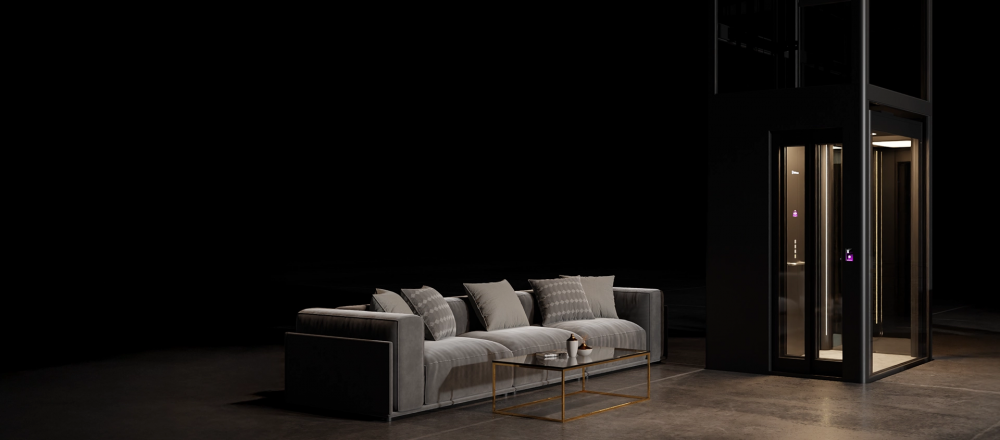
This is where practical home improvements also come into the picture. More homeowners are installing home elevators when remodelling older properties – not just for accessibility, but as a design feature bridging old and new. Elite Elevators is a company that specialises in residential lifts that are designed to match existing interiors. They know that a modern addition to a heritage home needs to feel part of the fabric, not an add-on. Your furniture should feel chosen, not dropped in, and the same goes for your furniture.
They have one thing in common – the best modern additions to older homes – they look like they have always belonged, whether it is a lift, a built-in shelf or a statement light fitting.
Shopping Rules for Deliberate Mixing
When it comes time to buy, a few rules will keep you from making expensive mistakes:
Keep your metal finishes to three. Brass, matte black and brushed nickel in the same room? Right. Add in chrome, antique bronze and rose gold and the room starts to feel restless.
Match seat heights. Without matching furniture heights, a room feels chaotic—even if the styles work well together. Sofas and chairs do not all have to match, but the range for comfort is within about 2-3 inches.
Look for transitional neutrals. Some pieces are not of any era, simple linen sofas, plain timber stools, matte black frames. These ‘neutral bridges’ are adjacent to almost anything, giving your eye a resting place.
Don’t sacrifice a piece prematurely.Before you throw in the towel on something that isn’t working, think: new legs (hairpin legs on a chunky wooden dresser can transform everything), a fresh coat of paint or swapped out hardware. Sometimes a piece that just isn’t working in its present form needs only a change in finish.
The real aim: Rooms which appear to be people
The rooms that stay with you — the ones you photograph in a hotel or screenshot from a design account — almost never look like a showroom. They look like someone who lives there. They have history and layers and the occasional surprising choice that makes you stop and look twice.
Mixing old and new furniture is how you get there. It takes a little intention, a few simple rules, and the confidence to trust that your taste — accumulated across different years, markets, and generations of your family — is worth putting on display.
Start with your anchor piece. Build your connectors. Bring in a third era. And resist the urge to make it all match.
The charm is in the contrast.