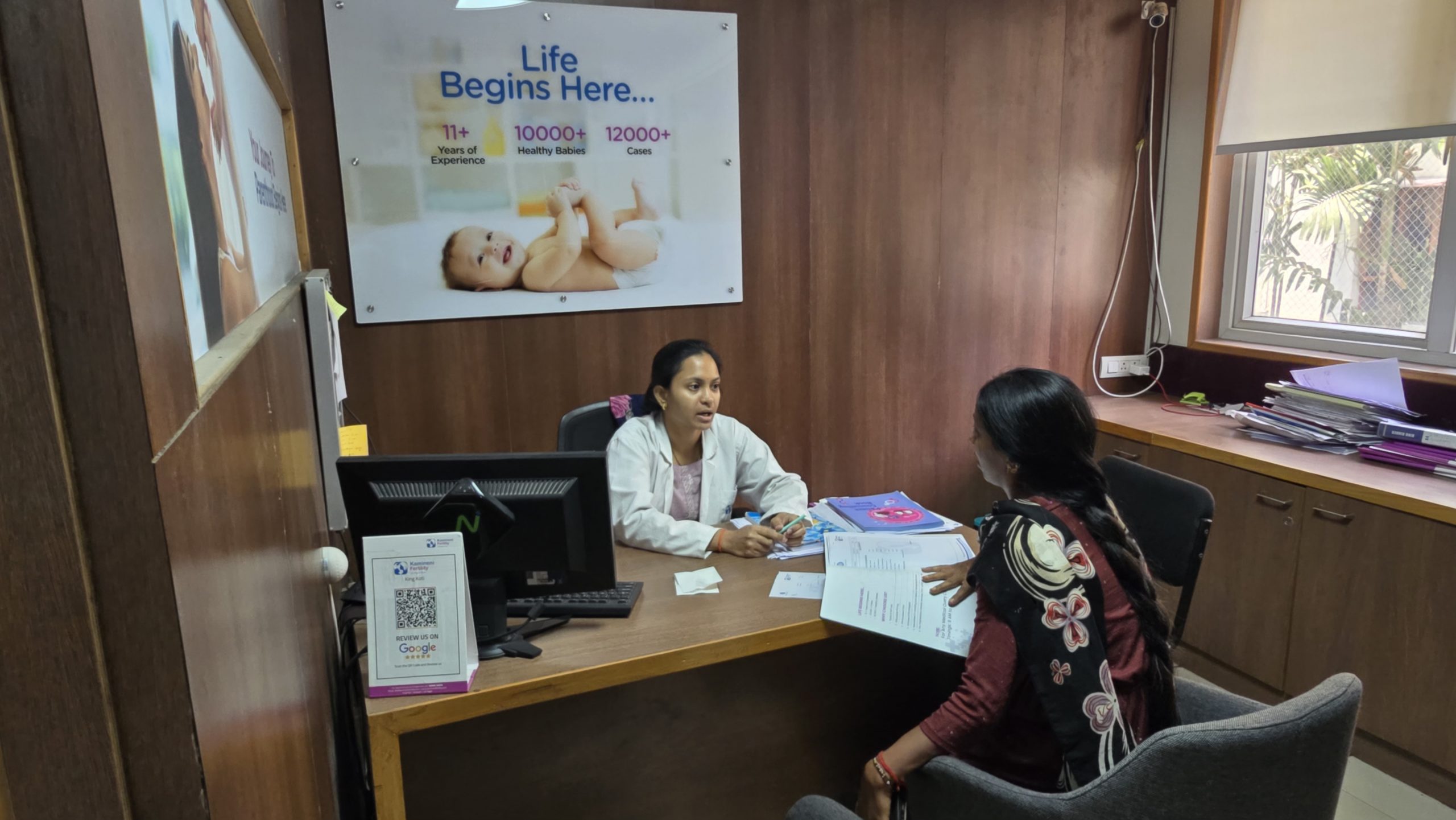
For many couples in Hyderabad, trying for a baby can go on for months, sometimes longer. When things don’t happen naturally, a doctor may bring up IVF.
In Vitro Fertilisation (IVF) is a treatment where eggs and sperm are joined in a lab. The embryo that forms is then placed into the uterus. It’s one of the most used fertility treatments in the world, and it’s helped a lot of couples become parents.
If you’re thinking about IVF, or just want to understand what it involves before speaking to a doctor, this guide walks through the whole thing, step by step.
The IVF Process, Step by Step
IVF takes the egg and sperm out of the equation of chance. Doctors bring them together in a lab where every stage gets watched, not just hoped for. Here’s how a typical cycle runs.
Step 1 – Ovarian stimulation
The woman takes hormone injections daily for 10 to 14 days. These tell the ovaries to produce several eggs instead of one. More eggs collected means more embryos to work with, and better odds of finding one that’s viable.
Step 2 – Egg retrieval
Once the eggs are ready, a doctor collects them using a thin needle guided by ultrasound. It’s done under sedation — no pain, no general anaesthesia. Most women are home the same day. The whole procedure takes under 30 minutes.
Step 3 – Fertilisation
In the lab, the eggs meet the sperm. If the sperm count is low or movement is poor, the embryologist uses ICSI : Intracytoplasmic Sperm Injection. That’s when one single sperm gets injected directly into one egg. It sounds precise because it is.
Step 4 – Embryo development
The fertilised eggs sit in an incubator for 3 to 5 days. The embryologist watches them daily. Some develop well. Some don’t. The ones that do are graded, and the best ones are chosen for transfer.
Step 5 – Embryo transfer
A doctor places one or two healthy embryos into the uterus through a thin, soft catheter. Most women say it’s no worse than a routine check-up. About 10 days later, a blood test confirmed whether it worked.
One full IVF cycle takes roughly three weeks from the first injection to the pregnancy test.
When Does IVF Actually Help?
IVF isn’t the answer to every fertility problem. But for certain situations, it’s genuinely the most effective option there is not just the most common recommendation.
Blocked fallopian tubes
The tubes carry eggs from the ovaries to the uterus. When they’re blocked, that journey never happens no matter how long you wait. IVF pulls the egg directly from the ovary and takes the process to the lab. The tubes don’t come into it.
Low sperm count or poor sperm movement
When sperm can’t reach or fertilise an egg on its own, waiting longer won’t fix it. IVF with ICSI brings a single sperm directly to the egg. It removes that barrier completely.
PCOS
PCOS disrupts how and when the ovaries release eggs. The hormone injections used in IVF stimulate egg production directly, so the cycle doesn’t depend on the ovaries doing it on their own timetable. For many women with PCOS, IVF produces a good number of eggs per cycle.
Endometriosis
Endometriosis causes tissue to grow in the wrong places and often damages the fallopian tubes or affects egg quality over time. When other treatments haven’t worked, IVF is usually what’s recommended next.
Unexplained infertility
Sometimes every test comes back normal. No clear reason. Still no pregnancy. IVF doesn’t explain why that’s happening. But it moves the process into a setting where doctors can see what happens at the fertilisation and embryo stage and sometimes that’s where the answer turns up.
Better embryo selection
Before any embryo gets transferred, the embryologist assesses its quality in the lab. A graded, healthy embryo attaches more reliably than one selected without that assessment. It’s one concrete advantage the lab setting gives you.
Couples looking for the best IVF treatment in Hyderabad should pick a centre that evaluates both partners before suggesting IVF at all. A proper diagnosis cuts out treatments that won’t work and saves months of unnecessary time and money.
What Actually Affects Whether IVF Works?
This is the part most clinics gloss over. Success rates get quoted as headline numbers. What they don’t always explain is how much those numbers shift depending on who’s walking in the door.
- Age is the biggest variable. Egg quality and quantity both drop with age not gradually. A woman’s response to stimulation and the number of viable embryos collected can look quite different at 32 versus 38. Getting evaluated sooner rather than later leaves more options open. A lot of couples wish they’d done it earlier.
- Egg and sperm quality determines whether fertilisation happens at all, and whether the embryo survives long enough to transfer. These don’t always show up in basic blood tests, which is why an embryologist’s assessment matters.
- The uterus itself matters too. Fibroids, polyps, or a thin lining can stop a healthy embryo from implanting. Most of these are fixable if they’re found before the cycle starts rather than during it.
- Ovarian reserve tells doctors roughly how many eggs stimulation will likely produce. A low reserve doesn’t rule IVF out, it means the protocol needs to be adjusted and expectations set honestly from the start.
- The embryology lab makes more difference than most people expect. Temperature control, equipment quality, and the embryologist’s experience directly affect how embryos develop over those 3 to 5 days in the incubator. Two clinics can follow the same protocol and get different results.
- Lifestyle matters more than it’s comfortable to admit. High body weight, uncontrolled blood sugar, smoking, and heavy alcohol use each reduce the odds of a successful cycle and none of these can be fixed mid-cycle once treatment has started.
A doctor at a good IVF centre in Hyderabad will go through all of this before treatment starts and give you expectations based on your own reports, not a headline success percentage that may have nothing to do with your situation.
Final Words
Kamineni Fertility is an ICMR-recognised best IVF centre in Hyderabad with over 15 years of experience. The team has evaluated and treated more than 17,000 couples and supported over 14,000 successful births.
Fertility specialists and embryologists work together in an in-house lab, following a diagnosis-first approach. Treatment gets recommended based on what the reports show not a standard protocol applied to everyone.
The centre has two branches across Hyderabad:
- King Koti: 4-1-1226, Boggulakunta, Abids, Hyderabad 500001.
- LB Nagar: OP No. 8, Kamineni Hospitals, Hyderabad 500068.
If you’re considering IVF, a fertility evaluation is the right place to start. Call Kamineni Fertility at 9390634074 to book a consultation.