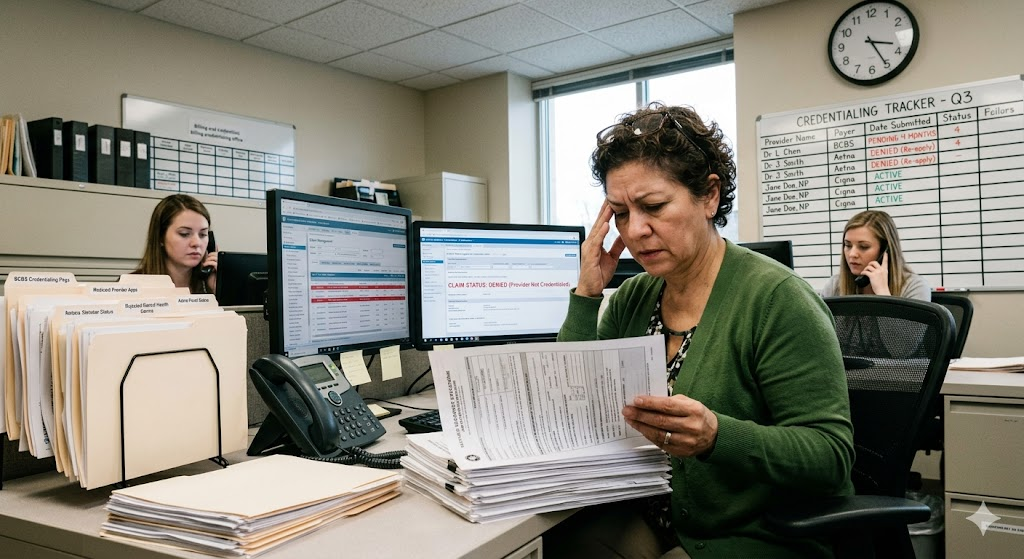
In healthcare administration financial stability mostly hangs on two core things: clinical documentation and provider approval systems. And in the middle of that, mental health billing service along with credentialing for hospitals is a real big deal, because it helps make sure healthcare providers get reimbursements that are both timely and accurate. When credentialing is handled well , mental health billing seems to run smooth-ish, with fewer mistakes overall. But if credentialing is incomplete, or it just lags , then the billing side gets hit hard, with claim denials, payment delays, and that constant admin pressure that nobody wants. So yeah, understanding how credentialing for hospitals influences mental health billing is essential, if you’re trying to improve revenue cycle performance and still stay compliant.
Understanding Mental Health Billing Service
A mental health billing service is kind of a specialized process that runs billing operations for psychiatric and behavioral healthcare providers, i t manages it end to end. It usually includes coding the patient services, sending in insurance claims, checking eligibility, and then managing the denials when they show up.
Mental health services often cover therapy sessions, counseling, psychiatric evaluations, and longer term treatment plans. Each one of those services needs solid coding plus supporting documentation, otherwise reimbursement can get messed up, or at least delayed.
A well run mental health billing service helps hospitals and clinics keep a steady cash flow. It also lowers the admin workload because claims are processed correctly the very first time. Without this organized billing approach , healthcare providers can end up with revenue leakage and slower payments that make everyone uncomfortable.
What is Credentialing for Hospitals
Hospital credentialing is like the formal check that confirms a healthcare provider’s qualifications , licenses, education, training ,and their general professional background . It basically helps make sure that only truly qualified people are the ones that provide patient care and then, bill the insurance companies.
Insurance companies usually need credentialing first, before they will say “yes” to reimbursing a provider. So it covers primary source confirmation, background checks,and enrolling with the right insurance networks.
If there is no proper credentialing for hospitals, then providers usually can’t be added to insurance panels, which kind of blocks them from billing for services outright . So credentialing ends up being this key backbone requirement in the healthcare revenue cycle .
How Credentialing for Hospitals Affects Mental Health Billing
Credentialing for hospitals really has a direct, pretty major impact on how mental health billing service operations run. If a mental health provider is not properly credentialed with insurance companies, then all those claims that get sent out will come back rejected, no matter how good the service was or how accurate the documentation looks.
So yeah there’s this strong dependency between credentialing standing and billing success. Even the most streamlined mental health billing service can not process payments if the provider is not enrolled or not approved by the insurance networks.
With proper credentialing, mental health professionals are actually recognized by payers, and that means billing teams can submit claims with more confidence. It also helps lower the risk of claim denials and can speed up reimbursement timelines a lot.
Impact on Claim Approval and Revenue Cycle
One of the most important effects of credentialing for hospitals is how it kinda steers claim approval rates. When the credentialing details are accurate, and also up to date, mental health billing service teams can send claims without too many delays, or annoying errors.
If the credentialing information is wrong or not fully there, like expired licenses, or maybe insurance enrollment is missing, then claim rejections happen fairly often. And that kinda drags the whole revenue cycle, which ends up causing real financial stress for healthcare organizations.
So, when hospitals keep credentialing in good shape, they tend to make sure billing operations stay steady, and the money flow stays consistent as well.
Administrative Challenges Due to Poor Credentialing
When credentialing for hospitals is not really properly managed , the mental health billing service teams end up dealing with a bunch of admin stuff that gets messy. Things like more claim denials , more re submissions, and honestly, a heavier load for billing staff.
If credentialing drags on , new providers cannot bill insurance companies, even when they’re actively treating patients. So it becomes lost revenue opportunities and general operational inefficiencies all at once.
And in some cases, hospitals can also get compliance risks, especially if uncredentialed providers are accidentally folded into billing submissions, even though they should not be.
Improving Billing Efficiency Through Proper Credentialing
Hospitals can pretty much boost their mental health billing service performance when they make sure credentialing is done in a timely, also accurate way for hospitals. Once credentialing gets finished before provider onboarding, billing teams can start claim submissions right after the services are delivered, with out waiting around.
Also, keeping regular updates and actively monitoring the credentialing status helps tamp down billing data errors. That tends to raise claim acceptance rates, and it also cuts down on reimbursement delays, pretty noticeably.
Finally, coordination between the credentialing side and the billing departments is essential, because without that kind of alignment it is hard to maintain a strong revenue cycle management system.
Integration of Credentialing and Billing Systems
Modern healthcare systems are, uh, increasingly weaving mental health billing service platforms together with credentialing for hospitals processes, sort of like one continuous loop. This kind of pairing makes sure that only properly verified providers end up in the billing workflow, even if someone else tries to route things the wrong way.
Also these platforms typically update provider information on their own, which cuts down on manual mistakes and makes the claim submissions way more precise. In addition, there’s real-time sight into credentialing status, so the billing teams can step in early instead of getting stuck with rejected claims, you know.
Overall this integration supports better coordination, quicker reimbursements, and a healthier financial performance for hospitals.
Conclusion
The connection between a mental health billing service and credentialing for hospitals is kinda crucial, especially when you think about the financial health of healthcare organizations. Credentialing is what pretty much decides if claims can go through without problems, and the billing side makes sure the services are actually reimbursed the right way, in the end.
When hospitals keep their credentialing steps accurate and up to date, they make the whole revenue cycle stronger, which often cuts down on claim denials, and helps cash flow move more smoothly. If credentialing and billing systems get aligned properly, providers can run with better operational efficiency and end up with more dependable financial stability.