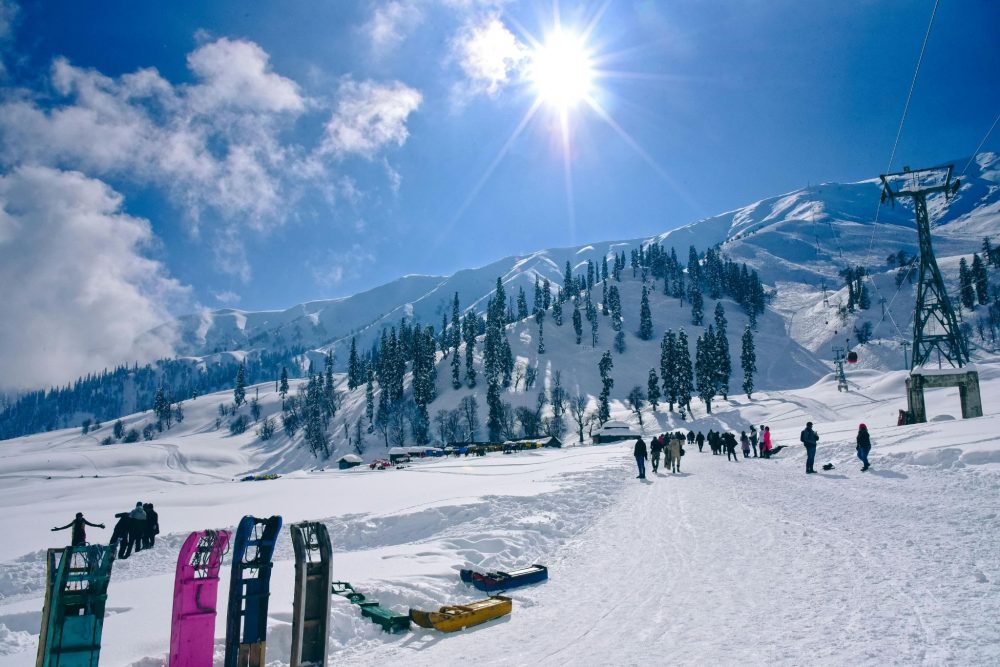
Skiing in Gulmarg and the Kedarkantha Trek offer two completely different Himalayan winters. Gulmarg gives speed, powder snow, and adrenaline. Kedarkantha gives long forest walks, cold camps, and slow mountain mornings. Picking between them depends on the kind of trip you actually want once the excitement of booking fades.
A lot of people compare these two because both happen in peak winter and both look unreal on Instagram. But the feeling on the ground changes fast once you arrive. One trip leaves your legs shaking after ski runs. The other leaves you standing quietly at sunrise with frozen fingers wrapped around a steel cup of tea.That difference matters.
Skiing in Gulmarg Feels Fast From the First Morning
Gulmarg wakes up early in winter. Snowplows move before sunrise. Ski boots scrape across hotel floors. Local ski guides stand outside cafés discussing fresh snowfall like stock traders discussing markets.
The energy pulls you in fast. Even people who never planned to ski usually change their minds after seeing the slopes for the first time. Wide white runs cut through pine forests while the mountains rise sharply behind them. Fresh snow softens every sound. Then a skier flies past at full speed and breaks the silence instantly.
That first gondola ride changes people. The climb feels slow at first. Then the valley opens beneath the cable car and the scale finally hits you. Huge slopes. Thick powder. Tiny wooden roofs buried under snow. And yes, the cold bites hard up there. Most first-timers underestimate that part.
The Snow in Gulmarg Is the Real Reason Skiers Keep Returning
Many ski destinations look nice in photos. Gulmarg feels built for skiing once you actually step onto the snow. The powder here stays soft after fresh snowfall. That matters more than beginners realize. Hard ice scares new skiers quickly. Soft powder gives you room to fall, learn, and keep trying again without feeling wrecked after two runs.
Local instructors know this well. Most beginners spend the first day learning balance and basic stopping techniques on lower slopes. Nobody looks graceful at first. Not even close. People fall sideways. Skis cross each other. Gloves fill with snow. Then something clicks.
By the second day, most beginners start chasing longer runs confidently. That moment feels addictive. Sound dramatic? Watch somebody finish their first clean downhill run in Gulmarg. The grin says enough.
Kedarkantha Trek Slows Everything Down
Kedarkantha feels calmer from the beginning. The trek does not hit you with adrenaline the way Gulmarg does. Instead, it pulls you deeper into the mountains one slow step at a time.
That slower rhythm becomes the whole point. The trail passes through pine forests thick enough to block sunlight during some sections. Snow sticks to tree branches for days after fresh weather. Boots crunch steadily across packed trails while distant mountain dogs bark somewhere near hidden villages.
Nothing moves quickly here. Trekkers often start the journey talking loudly in groups. By the second day, most people grow quieter. Long walks in cold mountain air do that naturally. Phones stay buried inside jackets because batteries drain fast in freezing weather anyway. And honestly, that helps.
Juda Ka Talab Changes the Mood of the Entire Trek
Juda Ka Talab sits like a frozen bowl inside dense forest. During winter, the lake partly freezes while snow piles around the campsite. This is usually where the trek starts feeling real. The cold sharpens after sunset. Camp staff move quickly between tents carrying buckets of hot water and steel containers full of dinner. Steam rises from rice and dal while trekkers huddle close to each other wearing three layers at once.
Then the sky clears. That part catches people off guard. City skies train people to expect dull nights. Kedarkantha does the opposite. Stars flood the sky so brightly that many trekkers stay outside longer than they should despite the cold. Bad idea sometimes. Temperatures drop hard after midnight.
Skiing in Gulmarg Demands Confidence Faster
Skiing forces quick adjustment because the mountain moves beneath you constantly. Small mistakes show up immediately. Lean too far forward and you lose balance. Panic during a turn and the skis control you instead. That sounds intimidating. It is. But that pressure also creates excitement much faster than trekking does. Within one hour, you already know whether skiing feels thrilling or terrifying.
Most people land somewhere in the middle. A ski instructor in Gulmarg once joked that beginners spend half the day falling and the other half talking about how much fun falling was. Fair point. The crashes become part of the story quickly.
Kedarkantha Trek Feels More Personal
Trekking creates space to think in a way skiing usually does not. Long sections pass quietly except for footsteps and wind through the trees. That silence affects people differently. Some trekkers love it immediately. Others struggle during the first day because they are used to constant noise, music, or screens. Then the mountains slowly reset their pace. Meals take longer. Sunsets matter more. Even basic things like warm tea feel strangely satisfying after walking through snow for hours.
The summit morning proves this best. Trekkers wake before sunrise and begin climbing in darkness using headlamps. The final stretch feels steep when snow hardens overnight. Breathing gets heavier near the top. Then the summit opens suddenly and the entire Himalayan range lights up orange as sunlight spreads across the peaks. Nobody talks much up there.
Which Trip Feels Harder?
People ask this constantly. The answer depends on what kind of discomfort bothers you more. Skiing hurts differently. Beginners fall repeatedly during the first two days. Legs burn after long runs. Cold wind hits your face constantly at higher points near the gondola station. Some people love that physical intensity immediately. Others feel exhausted after half a day.
Kedarkantha tests endurance instead. You walk for hours carrying daypacks through snow and uphill sections. Camps stay cold at night. Bathrooms become basic once the trek begins. Sleep also feels lighter at altitude for many people.
So which feels harder? For most beginners, skiing feels mentally harder at first. Kedarkantha feels physically longer.
Budget Changes the Decision for Many People
Gulmarg usually costs more once you add everything properly. Ski rentals, instructors, gondola tickets, winter gear, and flights to Kashmir raise the total quickly. The hidden costs surprise people most. Good gloves matter. Waterproof jackets matter more. Cheap sunglasses fail badly once sunlight reflects off fresh snow for hours. Headaches arrive fast after that mistake.
Kedarkantha stays cheaper overall because trekking packages bundle most things together. Food, tents, guides, and transport from the base point usually come included in one price. Still, budget trekkers make one mistake constantly. They underestimate cold-weather clothing. Wet shoes inside snow camps ruin moods fast. Really fast.
So Which One Should You Actually Choose?
Choose skiing in Gulmarg if excitement matters more to you than silence. The trip feels active from morning until evening. You learn quickly, fall often, laugh hard, and sleep heavily afterward. Choose Kedarkantha if you want the mountains to feel slower and deeper. Trekking gives you more time to absorb the landscape instead of racing through it.
Some people need adrenaline. Others need stillness. That is the real split here. And honestly, people usually know their answer already once they picture both trips clearly in their head.