Losing a tooth is causing more physical loss than most people expect. Whether it happened suddenly or you’ve been putting off the decision for a while, dental implants are probably the most asked-about solution — and honestly, for good reason. They’re the closest thing dentistry has to a real tooth. Still, there’s a lot of noise online around cost, the dental implant procedure, recovery, and whether you even qualify. So let’s walk through it plainly.
What Are Dental Implants, Exactly?
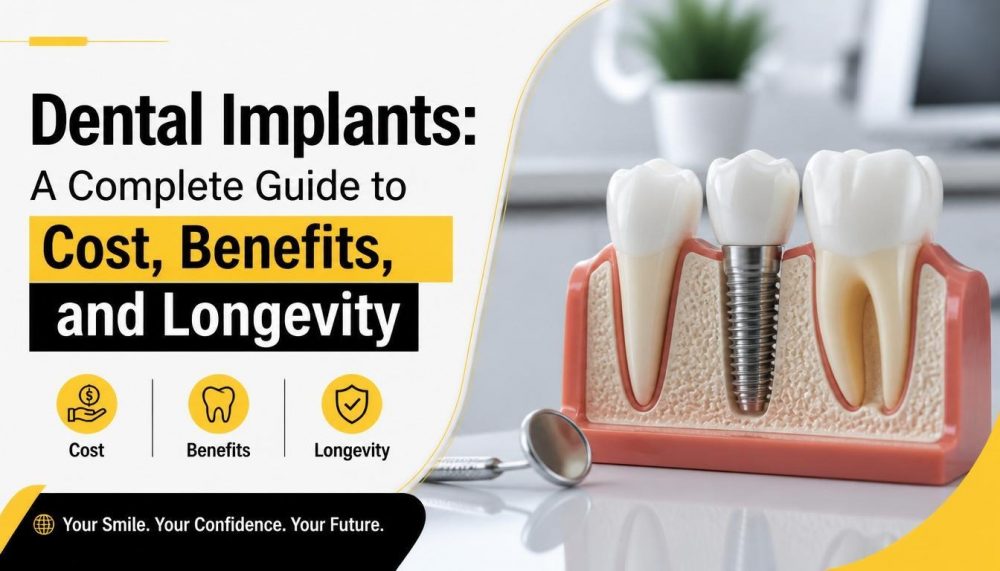
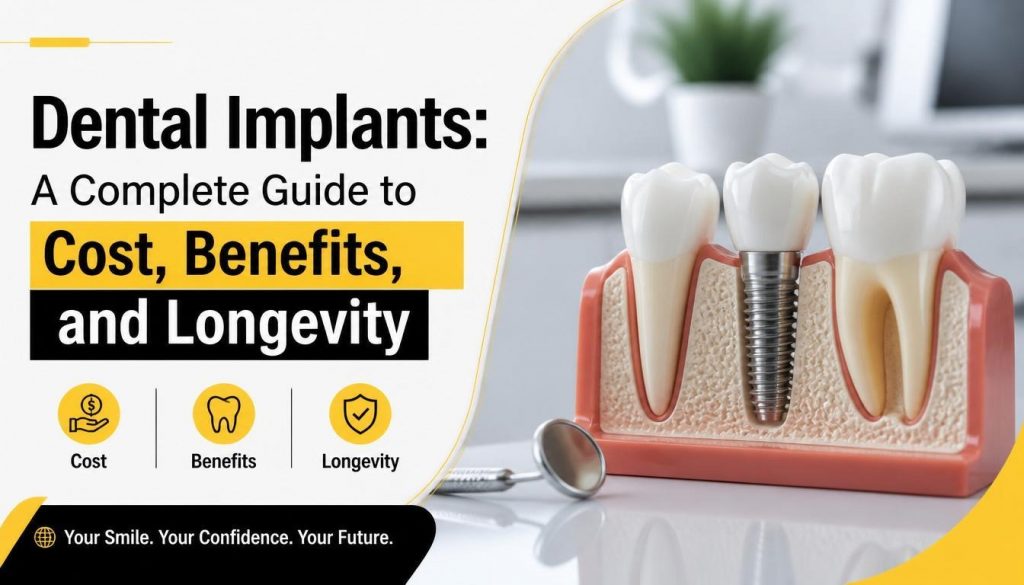
A dental implant is a small titanium post placed directly into your jawbone — it works like an artificial root. Once the bone grows around it and fuses (a process called osseointegration), a custom-made crown gets attached on top. From there, it looks and functions like a natural tooth. Most people can’t tell the difference, and neither can you when you’re chewing.
That’s what sets implants apart from the other options. Dentures can slip. Bridges involve shaving down perfectly healthy neighbouring teeth just to anchor the replacement. An implant touches none of that. It just sits in the jaw, doing its job.
Who Can Get Dental Implants?
Dental implants are a great option for many people who have lost one or more teeth. Most healthy adults are suitable candidates, but a dental examination is needed to confirm whether implants are the right choice for you. Your dentist will assess your oral health, bone structure and overall health before recommending treatment.
You may be a good candidate for dental implants if you:
- Have one or more missing teeth
- Have healthy gums free from active gum disease
- Have enough jawbone to support the implant
- Practice good oral hygiene habits
- Are a non-smoker or willing to reduce smoking during healing
- Have well-managed health conditions, such as diabetes
- Want a long-lasting and natural-looking tooth replacement
Age is usually not a barrier, as dental implants can be successful for adults of all ages once jaw development is complete.
The Dental Implant Procedure: Step by Step
Knowing what the dental implant procedure actually involves tends to calm a lot of nerves. Here’s how it goes:
1. Consultation and Imaging X-rays or a 3D cone beam CT scan give your dentist a detailed map of your jaw — bone depth, angle, spacing. This is the planning stage, and it matters a lot.
2. Implant Placement The titanium post is placed into the jawbone under local anesthetic. Patients almost always describe it as pressure rather than pain. A single implant typically takes under an hour in the chair.
3. Healing and Osseointegration This is the slower part — 3 to 6 months while the bone fuses around the implant. You won’t be walking around with a gap, though. A temporary restoration holds your smile together while everything heals underneath.
4. Abutment Placement Once healed, a small connector piece called an abutment is attached to the post. It’s a short, low-key appointment.
5. Crown Placement Your permanent crown — colour-matched, shaped to fit your bite — is secured onto the abutment. This is the final appointment, and it’s usually a satisfying one.
Start to finish, the whole process runs about 4 to 8 months. If a bone graft or extraction is needed beforehand, that adds time — but your dentist will map all of that out for you upfront.
How Much Do Dental Implants Cost in Alberta?
Fair question, and worth being direct about. A single dental implant in Alberta generally falls between $3,000 and $6,000. That range shifts depending on:
- Whether you need any prep work (bone grafts, extractions)
- The type of crown selected
- Your specific bone anatomy and case complexity
Yes, it’s more expensive upfront than a bridge or denture. But implants are built to last. A properly placed implant, looked after well, can go 20 to 30 years — sometimes longer. Bridges typically need replacing in 10 to 15 years, and they put stress on the teeth they’re attached to the whole time.
Some Alberta dental plans cover part of the cost, though it varies a lot by plan. Financing is worth asking about too. At D’Arcy Dental, the team goes over all of this during the consultation — no surprises when you get to the treatment plan.
Why Dental Implants Beat the Alternatives
Here’s a quick comparison worth keeping in mind:
| Option | Looks Natural | Preserves Bone | Lifespan | Affects Other Teeth |
| Dental Implant | Yes | Yes | 20–30+ years | No |
| Fixed Bridge | Yes | No | 10–15 years | Yes |
| Partial Denture | Somewhat | No | 5–10 years | Sometimes |
There’s one thing most patients don’t know going in: when you lose a tooth, the jawbone underneath starts to shrink. Without a root stimulating it, the bone gradually resorbs. An implant is the only replacement that acts like a root and stops that from happening. Bridges and dentures don’t.
What About Implant-Supported Dentures?
Worth mentioning, especially for patients who’ve lost several teeth or all of them. Implant-supported dentures are a big step up from conventional full dentures. Instead of relying on suction or adhesive to stay in place, the denture clips or locks onto 2 to 4 implants. It doesn’t move. Chewing is noticeably better. Most patients who switch say they wish they’d done it sooner.
This comes up a lot at D’Arcy Dental for patients around Okotoks who’ve been managing with loose-fitting dentures for years. It’s worth a conversation to see whether it makes sense for your situation.
How to Care for Dental Implants
This part is refreshingly simple. Implant care is essentially the same as caring for your natural teeth:
- Brush twice a day with a soft-bristled brush
- Floss daily, including around the implant crown
- Keep up with regular cleanings and checkups
- Skip chewing ice or anything that could crack the crown
Implants themselves can’t get cavities. The gum tissue around them, though, can develop inflammation called peri-implantitis — if hygiene gets neglected. That’s the main thing to stay on top of. Do that, and implants genuinely last.
Conclusion
Dental implants aren’t the right choice for everyone — but for most people missing a tooth, they’re the best long-term option on the table. They protect your bone, don’t disturb neighbouring teeth, and with basic care, they last. If you’re even considering it, a conversation is worth having. D’Arcy Dental in Okotoks is a good place to have it.
Frequently Asked Questions
How painful is the dental implant procedure?
Most people are surprised by how tolerable it is. Local anesthetic handles the discomfort during the procedure itself — what you feel is mostly pressure. Afterward, there’s typically some soreness for a few days, but it’s usually well-managed with regular over-the-counter pain relief.
How long do dental implants last?
With normal care and regular dental visits, implants routinely last 20 to 30 years. The titanium post can last a lifetime. The crown on top may eventually need replacing — usually after 15 to 20 years — depending on how it wears.
Does Alberta dental insurance cover implants?
It depends heavily on the plan. Some Alberta benefits plans cover part of the implant or the crown; others don’t include implants at all. It’s worth a direct call to your insurer to find out. D’Arcy Dental can also help you sort through your coverage before treatment starts.
What happens if I wait to replace a missing tooth?
Waiting has real consequences. The bone under the gap starts shrinking, neighbouring teeth drift toward the space, and the tooth above or below can shift out of alignment. The longer it goes, the more involved the eventual fix tends to be — and usually more expensive too.