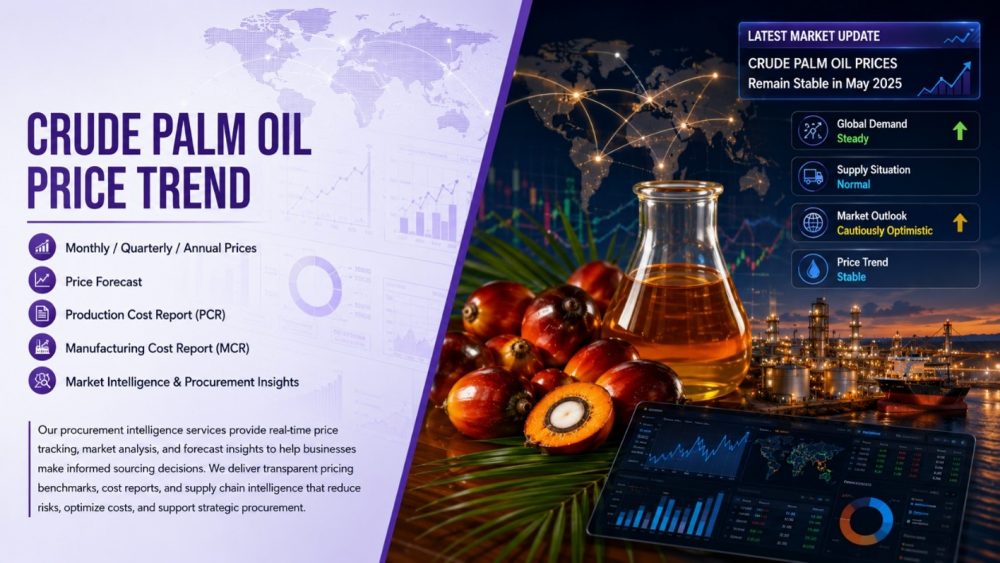
Crude palm oil (CPO) is considered as one of the most traded vegetable oils globally and it’s used widely in many different sectors including food, bio-fuels, personal care, and in many other industrial applications. The market price of crude palm oil, due to its increasing consumption in many sectors, is vital to influencing the purchasing strategies, manufacturing cost and international trade.
The Crude Palm Oil Prices of Q1 2026 illustrated the market conditions were mainly influenced by supply conditions change, international trade relationships, weather-dependent production concerns, the trend of demand for food and energy markets. The suppliers and companies that relied on palm oil observed the crude palm oil price movement in a changing world economy.
Q1 2026 Price Overview
Recent market assessments indicate the following crude palm oil pricing levels during April 2026:
| Product | Region | Incoterm Basis | Price | Last Updated |
| Crude Palm Oil | USA | CIF | USD 1,228/MT | April 2026 |
| Crude Palm Oil | Malaysia | CIF | USD 1,159/MT | April 2026 |
Transportation costs, import necessities, costs of logistics, and demand by region are some of the key reasons behind the differences in prices between Malaysia and the U.S. Malaysia, as a major global producer and exporter of palm oil, continues to be an international price benchmark.
Factors Influencing the Crude Palm Oil Price Trend
Production and Weather Conditions
Weather continues to be one of the biggest influences in crude palm oil output. Oil palm plantations are reliant on predictable rainfall patterns and conducive climatic conditions. Any alteration in such conditions due to abnormal precipitation, lack of rain or alterations in weather cycles will result in direct impact on the yields and oil recovery. In early 2026, market players closely watched output from plantations in South-East Asia and anticipated production to guide purchasing activity and price direction.
Global Demand from Food Industries
Worldwide, food and beverages remained the largest users of CPO. Common uses include cooking oils, bakeries, confectionery products, manufactured and packaged foodstuff, while its use can also be found in packaged consumer goods.
As worldwide consumption of food is expected to grow with population and increased urbanization, strong buying support will persist in demand for CPO. Demand arising from emerging markets has indeed provided constant buying support, helping to sustain the prices of the oil.
Biofuel Sector Expansion
One further factor responsible for the CPOT trends is the rise in consumption demand for renewable energy. Some nations are still implementing and further developing their mandatory biodiesel blending programs so to alleviate their dependency on fossil fuels and also as part of sustainability policies. When production of biodiesel rises, typically the demand for its primary input (palm oil) increases as well. This extra consumption can make readily available supplies scarcer, leading to an increase in the price.
Export Policies and Trade Regulations
Often government policy in the larger producing countries influences the world market for palm oil. Export taxes, duty or tax rate changes, subsidies for production or purchase and sustainability policies are just some examples of how government policy influences available supply on world markets.
In the consuming nations trade and tariffs can affect market sentiment. Tariff modifications and procurement shifts by importing countries are key developments monitored closely by traders, which usually lead to temporary price fluctuations.
Transportation and Logistics Costs
International shipping costs continue to have an affect on commodity prices in the international arena. Freight rates, fuel costs, container supply and port congestion can play a large role in determining palm oil delivered costs.
The reason the CIF price in the US is higher than the actual commodity value is also because the price includes freight and other logistics costs necessary to bring the palm oil to the US from areas where it is produced.
Regional Market Analysis
Malaysia
Malaysia continues to be one of the strongest players in the global palm oil market. The country’s wide plantation network, coupled with developed export infrastructure and a trading network, has cemented its position as a key exporter.
Malaysian crude palm oil prices in Q1 2026 balanced market forces due to the supported export demand and continued monitoring of production volumes. Consumers in Asia, Europe and North America kept importing from Malaysian exporters.
United States
US is an important market to import crude palm oil and palm based products. Food manufacturers, consumer good companies and industrial consumers demand for this product.
The CIF import price of $1,228/mt reflects both global prices and cost of importing such product into the US. US purchasers continued to explore alternative sourcing plans with fluctuations in the international market.
Market Challenges
Regardless of favorable demand trends long-term, the crude palm oil sector is challenged by a number of factors. A major theme across the producers and buyers of crude palm oil is the question of sustainability. Increased pressure regarding ethical sourcing, compliance to environmental regulations, and transparency has caused firms to expand their scope for supply chain traceability.
At the same time, availability of labor, productivity of the oil palm, and political trends add an element of ambiguity in the marketplace.
Future Outlook
Future Crude Palm Oil Price Trend, is expected to continue to be driven by production performance, increasing growth of demand on biodiesel and international trade activity and the weather condition in key producing countries.
Market players are expected to continuously observe supply and demand dynamics of Crude Palm oil from 2026 onwards. Procurement professional, traders and manufacturers should stay informed on its global movement with regard to prices and the available supply and conduct proactive purchasing.
As global demand continues to rise with increased concerns on sustainable sourcing; crude palm oil shall continue to be strategically vital commodity in the global agricultural as well as the energy sector.
Conclusion
Q12006 has showed how the crud palm oil market has evolved over time. The price of crud palm oil in Malaysia and the US indicates how the market was shaped by production, transport costs, trade policies, and changing demand levels for both food and bio fuel.
Getting a Clear Picture on Crud Palm oil Price Trend is extremely important for firms looking to manage procurement risks, refine sourcing decisions and enhance future costs. Keeping aware of the fundamental aspects of the crude palm oil market and future industry trends will help firms achieve purchasing efficiencies in the market.