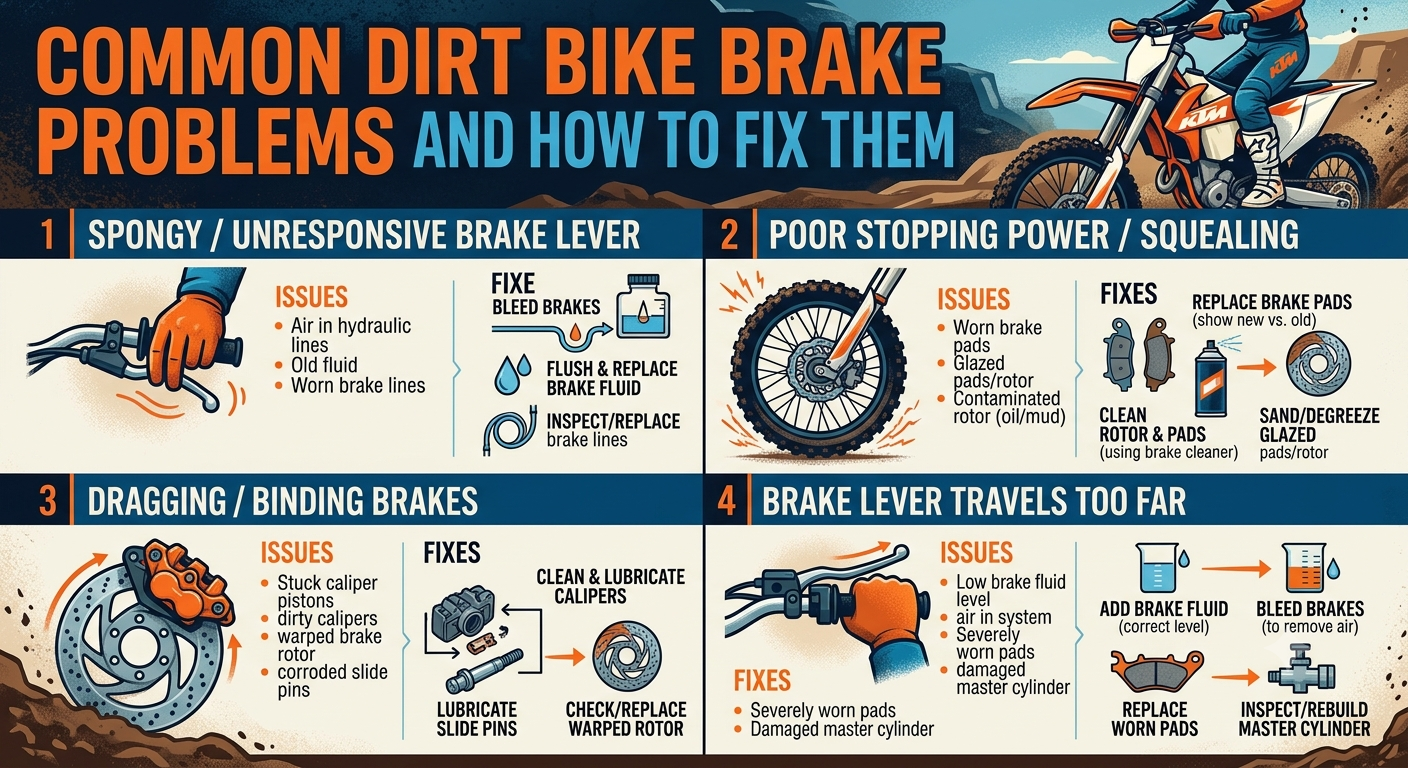
Most dirt bike brake problems in Jacksonville come down to three things: worn dirt bike brake pads, contaminated brake fluid, or a sticking caliper from sand and moisture exposure. If your brakes feel soft, squeal, or pull to one side, start by inspecting your pads and bleeding the lines before assuming you need new components. Riders pushing trails near Camp Milton, Branan Field, or the sandier stretches out toward Jennings State Forest deal with this more than most, since grit works its way into the system faster in coastal humidity.
If you’re riding regularly around Northeast Florida, brake maintenance isn’t optional – it’s the difference between a controlled stop on loose sand and an unplanned trip over the bars.
Why Jacksonville Riders See Brake Problems Faster
Florida’s climate is rough on brake systems in ways riders coming from drier states don’t always expect. The combination of humidity, sand, and salt air near the coast accelerates wear on pads, rotors, and brake lines.
Humidity and Moisture Buildup
Brake fluid is hygroscopic, meaning it absorbs water from the air over time. In Jacksonville’s humidity, that absorption happens faster than in arid climates. Water-contaminated fluid lowers the boiling point of your brake fluid, which leads to a spongy lever feel and reduced stopping power, especially after a long descent or hard braking sequence.
Sand and Grit Infiltration
Trails around Jacksonville — particularly sandy sections near the St. Johns River basin and the dune areas closer to the coast — push fine sand into caliper seals and pad surfaces. That grit accelerates pad wear and can score your rotors, which is why riders here often need pad replacements sooner than the manufacturer’s general estimate.
Salt Air Corrosion
For anyone storing or riding closer to the coast, salt in the air corrodes exposed metal components faster. Caliper pistons, brake lines, and rotor edges are all vulnerable. This corrosion is sneaky because it builds slowly, so a brake system that felt fine a month ago can develop sticking or dragging without much warning.
Common Dirt Bike Brake Problems
Spongy or Soft Brake Lever
A soft lever almost always points to air in the brake line or old, moisture-saturated fluid. This is one of the most common issues riders bring up, and it’s usually fixable without replacing parts.
Fix: Bleed the brake system fully, replace the fluid with fresh DOT 4 (check your owner’s manual for the correct spec), and inspect the line for any cracks or soft spots. If you’re using an aftermarket moto brake lever, double-check that the master cylinder pivot point and reservoir are seated correctly, since a slightly misaligned lever can mimic the symptoms of air in the line.
Squealing or Grinding Noises
Squealing typically means your pads are glazed or close to the wear indicator. Grinding is more serious – it usually means the pad material is gone and metal is contacting metal, which can damage your rotor.
Fix: Pull the caliper and inspect pad thickness. If you’re under 1mm of material, replace the pads immediately. This is where quality matters: cheap pads wear unevenly and can warp rotors faster, so many riders upgrade to performance-grade dirt bike brake pads built for trail and motocross use rather than generic street-bike substitutes.
Brakes Pulling to One Side
If your bike pulls left or right under braking, the caliper piston is likely sticking on one side, often from corrosion or dried-out seals.
Fix: Remove the caliper, clean the piston and slide pins thoroughly, and apply fresh caliper grease (not regular grease, which can break down rubber seals). If the piston won’t retract smoothly even after cleaning, it may be time to rebuild or replace the caliper.
Brake Fade on Long Downhills
Brake fade happens when the system overheats, usually from old fluid or pads that have lost their friction coefficient under sustained heat. Riders hitting longer descents on trails out past Whitehouse or through wooded sections near Cecil Field report this most.
Fix: Upgrade to higher-temperature-rated fluid and consider sintered metal pads if you frequently ride technical descents. This is also a good moment to check rotor thickness, since thin rotors hold less heat capacity and fade faster.
Vibration or Pulsing Through the Lever
A pulsing lever under braking usually means a warped rotor. This often happens after repeated heat cycling without proper cooldown or from hitting a rock or root hard enough to flex the disc.
Fix: Check rotor runout with a dial indicator if you have one, or take it to a shop for a quick measurement. Warped rotors should be replaced rather than “fixed,” since resurfacing thin dirt bike rotors usually isn’t practical.
Brake Maintenance Tips for Jacksonville Trail Conditions
Rinse After Every Sandy Ride
A simple low-pressure rinse of the brake assembly after riding sandy trails prevents grit buildup before it works into the seals. Avoid high-pressure washers directly on the caliper, since that can force water past the seals.
Check Fluid Every 3 Months
Given Jacksonville’s humidity, a 6-month fluid change interval (common in drier regions) is often too long. Every 3 months is a safer rule of thumb for serious trail riders.
Inspect Pads Monthly During Riding Season
If you’re riding weekly through spring and fall – Jacksonville’s most active off-road seasons – a quick monthly visual check on pad thickness catches wear before it becomes a grinding noise.
Choose Components Built for Off-Road Abuse
Not all aftermarket parts are built the same. Riders looking to upgrade often turn to TMV racing bike parts for components designed around the heat cycling and debris exposure that off-road braking systems face, rather than parts adapted from street applications.
When to See a Professional
Some brake issues are simple weekend fixes. Others aren’t worth the risk of getting wrong. If you’ve bled the lines, replaced pads, and cleaned the caliper but still have a soft or unpredictable lever, get the system inspected by someone who works on dirt bikes daily. The same goes for any grinding that’s been ignored for more than a ride or two – rotor damage gets expensive fast if you wait.
FAQ
How often should I replace dirt bike brake pads?
Most riders replace pads every 15-25 hours of riding time, though sandy or wet conditions common in Jacksonville can shorten that. Check thickness monthly during active riding season rather than relying on a fixed schedule.
Why do my brakes feel spongy after sitting unused for a few weeks?
Moisture absorption in the brake fluid is the usual cause, especially in Florida’s humidity. A fluid bleed and replacement typically resolves it.
Can I use street motorcycle brake pads on a dirt bike?
No. Street pads are formulated for different heat ranges and surface conditions. Off-road-specific pads handle dust, mud, and intermittent heavy braking better than street compounds.
What’s the difference between organic and sintered brake pads?
Organic pads offer smoother initial bite and are gentler on rotors but wear faster in dirty conditions. Sintered pads last longer and perform better in wet or muddy trails, which makes them a common choice for Jacksonville’s sandy, humid environment.
Is it normal for brakes to squeal after riding through water or mud?
Some temporary squealing after wet conditions is normal as the pads dry out. Persistent squealing after a few dry rides usually means it’s time to inspect pad wear.
Conclusion
Brake problems on a dirt bike rarely come out of nowhere – they build up from moisture, sand, and heat cycling, all of which Jacksonville riders deal with more than most. Catching the early signs, a soft lever, a faint squeal, or slight pulling to one side, saves you from bigger repairs and safer rides on the trails around Northeast Florida. Whether you’re maintaining stock components or upgrading to performance parts, staying ahead of brake wear keeps you in control when it matters most.