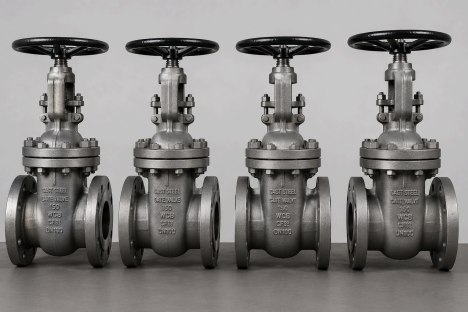
Flow control systems depend on the right valves to manage fluid and gas distribution safely. Choosing between a cast steel gate valve and a forged valve is a decision industrial buyers face regularly. This choice has implications for system performance, operational life, and facility safety. Companies consult an experienced Cast Steel Gate Valves Supplierfor solutions to specific applications. This guide explains the structural differences, pros and cons, and performance metrics of both kinds so you can make a clear purchase decision.
Understanding Cast Steel Gate Valves
The body is made by pouring molten steel into a mould. Once it cools and solidifies, it gets machined and assembled. Materials are application dependent and include common choices such as carbon steel, stainless steel, duplex, and Inconel.
These valves are available in large sizes, typically 2 inches up to 24 inches, and sometimes beyond. Flow resistance is low, and the pressure drop across the valve is minimal. That is why they are widely used in oil refineries, water treatment plants, and power stations.
One limitation worth knowing is that the casting process can leave small internal voids in the metal. In standard applications, this is not a problem. In extremely high-pressure systems, it can be.
What Are Forged Valves?
Forging presses solid metal under heat and mechanical force. Instead of pouring liquid metal into a mould. That process densifies the grain structure and makes it more homogeneous throughout the material. It has no voids or air pockets.
Forged valves are mostly produced in smaller sizes, under 2 inches in most cases. Forging large diameters is technically difficult and expensive. You will find forged gate, ball, and globe valves in high-pressure steam lines, hydraulic systems, and petrochemical plants where the operating conditions are more demanding.
Cast Steel Gate Valves vs Forged Valves: Core Differences
● Manufacturing process: Casting uses liquid metal in a mould. Forging shapes solid metal under pressure. That difference in process affects everything else.
● Strength and Durability: Forged valves are able to better withstand higher pressures and sudden temperature changes. They have that strength because the grain structure is continuous and dense. Cast valves are durable enough for most standard conditions but can crack under thermal shock.
● Size Availability: Forged valves are limited to smaller diameters. If you need a large-diameter valve, casting is likely your only practical option.
● Cost Comparison: On cost, cast valves are more affordable upfront, especially at larger sizes.
● Maintenance Requirements: Forged valves are more expensive initially, but tend to require less maintenance. The gap closes over time. Cast valves usually are bolted on so they are easier to fix. Forged valves are less likely to fail, but if they do, it could take longer to get back online.
● Surface Finish and Precision: Surface finish is another difference. Forged valves come out with higher dimensional accuracy. Cast valves often need additional machining to get the sealing surfaces to the required standard.
Factors to Consider Before Buying Industrial Valves
Start with operating pressure and temperature. Those two numbers will narrow your options quickly. Water, crude oil, and corrosive chemicals each have different requirements for material selection.
You need to look at corrosion resistance, initial price, long-term maintenance and if the valve meets standards like API or ASME. Think about where it will be installed. It should provide safe and easy access for future maintenance, especially in tight areas or offshore installations.
Which Industries Prefer Cast Steel Gate Valves? Oil and gas industry: Large cast valves manage bulk crude transport.
Petrochemical plants: Cast valves handle high-volume chemical flow at moderate pressures.
Water treatment systems: Large-diameter gate valves regulate heavy fluid flow across municipal networks.
Power generation facilities: Cooling water lines use these valves to keep initial costs lower.
Marine and offshore applications: Ships use cast valves made from durable alloys for ballast systems.
Industries work with an experienced Cast Steel Gate Valves Supplier like ISTEEL to get customised alloy designs for specific needs.
When Should You Choose Forged Valves?
High pressure and high temperature are the main reasons. If your system runs under those conditions, forged valves are the safer and more reliable option. The dense, void-free metal structure reduces the risk of through-wall leaks, which matters a lot in critical lines.
Small-diameter hydraulic systems and high-pressure steam lines typically require forged valves. Anywhere leakage control is non-negotiable, the material integrity of forged metal makes a practical difference.
Common Mistakes Buyers Make While Selecting Valves
Choosing on price alone is the most common mistake. A valve that fails early will cost more in downtime and replacement than a correctly specified one bought at a higher price upfront.
Ignoring pressure and temperature ratings causes valves to fail faster than they should. Material compatibility gets overlooked too. The wrong grade in a corrosive environment will degrade quickly regardless of how well the valve is built. And buying from suppliers who cannot verify
material quality or certifications often results in components that do not meet the required standards.
How to Select the Right Valve for Your Application
Work from your technical specifications first. Flow rate, operating pressure, temperature range, pipe diameter, and connection type. Get those clear before looking at products.
Check that valves meet the relevant certifications, API 600, API 602, or ASME depending on your application. Ask about wall thickness, hydrostatic testing, and what non-destructive examination methods are used during production. A supplier like ISTEEL with solid manufacturing experience can recommend the right material grade for your conditions rather than just pointing you to whatever is in stock.
Why Material Quality Matters in Industrial Valves
Basic carbon steel works fine under standard conditions. It corrodes or weakens over time in an aggressive environment and fails before it is expected to. Super Duplex, Monel or Titanium are higher grade materials and they perform much better in corrosive conditions (and last longer).
The cost difference between standard and premium materials upfront is usually smaller than people expect. Replacing a valve that has failed mid-operation, including downtime and labour, often costs more than the savings made on the poor quality material.
Conclusion
Cast valves suit large-diameter, low to medium-pressure systems. Forged valves are better for smaller, high-pressure, high-temperature setups where material integrity is critical. Match the valve to your system requirements, check the certifications, and make sure your supplier can back up the material quality with proper documentation.