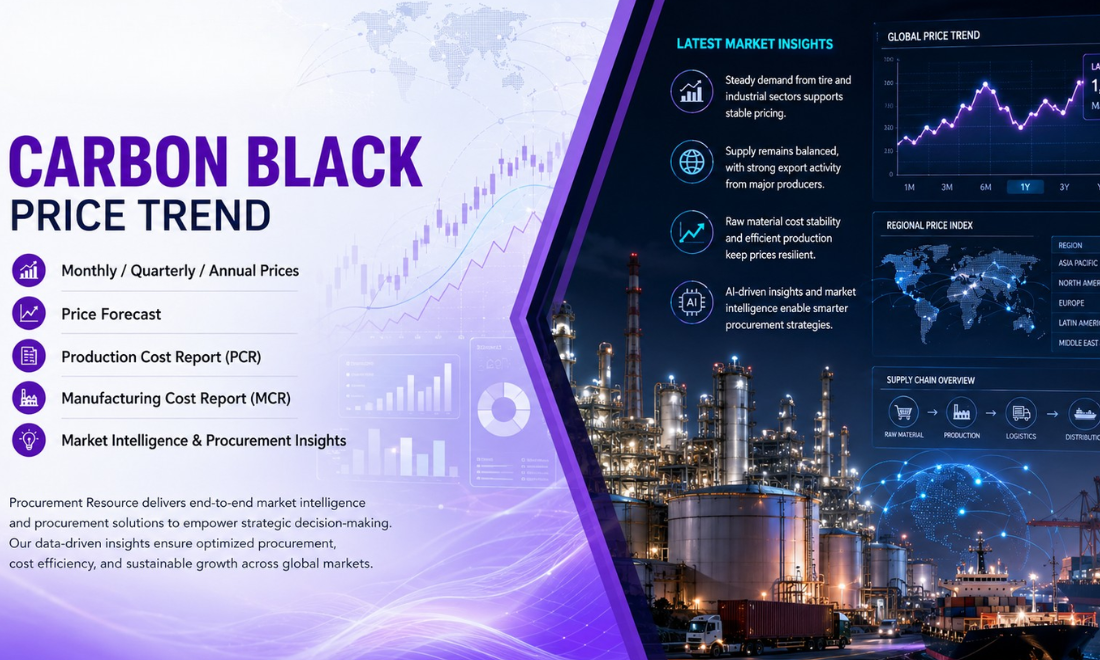
Carbon black is one of the most ubiquitous industrial materials used globally, and it’s an essential component in the manufacturing of a wide array of products, including tires, rubber goods, plastics, inks, coatings, and a host of specialized applications. Given its pervasive use across diverse industries, understanding the Carbon Black Price Trend is crucial for manufacturers, procurement professionals, traders, and investors who rely on this commodity for informed decision-making.
The first quarter of 2026 saw considerable price shifts in the global carbon black market across major producing regions. The pricing landscape was influenced by a confluence of factors, including the cost of raw materials, energy expenses, supply chain dynamics, industrial consumption trends, and regional economic performance. A comprehensive understanding of these market forces is vital for businesses planning future procurement strategies and operational logistics.
Q1 2026 Carbon Black Market Overview
As of April 2026, carbon black prices demonstrated notable regional disparities among the key markets:
* China (FOB): USD 1,233.83 per metric ton
* India (FOB): USD 1,283.71 per metric ton
* United States (FOB): USD 1,929.13 per metric ton
The United States emerged as the most expensive market for carbon black among these major players, primarily due to higher manufacturing costs, increased energy expenditures, and elevated labor rates. In contrast, China maintained a competitive position, driven by its large-scale manufacturing capabilities and well-established supply chains. India, meanwhile, saw stable pricing, supported by robust domestic demand and consistent industrial activity.
Factors Influencing the Carbon Black Price Trend
1. Feedstock Costs:
The production of carbon black relies heavily on petroleum-derived feedstocks like coal tar and heavy aromatic oils. Fluctuation in crude oil prices directly impacts manufacturing costs, often leading producers to pass on these increased expenses to consumers in the form of higher market prices.
2. Tire Industry Demand:
As the largest consumer of carbon black globally, the tire industry significantly influences market demand. The production of vehicles and the replacement tire market play a pivotal role in driving the consumption of this commodity. Strong demand from the automotive sector typically translates into higher carbon black prices due to the increased purchasing needs of tire manufacturers.
3. Energy and Utility Expenses:
The carbon black manufacturing process is highly energy-intensive. Rising electricity, natural gas, and fuel costs can have a substantial effect on the overall economics of production, pushing prices upward, particularly in regions facing escalating energy expenses.
4. Supply Chain Conditions:
Transportation availability, freight rates, port congestion, and the efficiency of logistics systems continue to affect global commodity markets. Disruptions in the supply chain can constrain product availability and drive up procurement costs, thereby influencing regional pricing dynamics.
5. Environmental Regulations:
Across the globe, governments are enacting more stringent environmental regulations. The need to comply with these regulations can lead to increased operational costs for manufacturers due to investments in cleaner technologies and emissions control equipment, which, in turn, can influence overall market pricing.
Regional Market Analysis
* China:
China stands as one of the world’s leading producers and consumers of carbon black. The country’s vast manufacturing capacity and integrated supply network enable it to maintain competitive pricing. Stable industrial demand and a balanced supply-demand equilibrium supported relatively moderate prices during Q1 2026. Export activity also contributed to market stability.
* India:
The Indian carbon black market experienced growth driven by an expanding automotive manufacturing sector, infrastructure development, and industrial expansion. Domestic demand remained healthy throughout the quarter, underpinning price stability. Continued investment in manufacturing capacity and industrial growth promises a positive long-term demand outlook for the country.
* United States:
The U.S. Market registered the highest carbon black prices among the regions analyzed. Elevated production, labor, and energy costs were the primary drivers behind this trend. Despite these cost pressures, steady demand from the automotive and industrial sectors helped maintain market fundamentals.
Industry Applications Driving Demand
Carbon black finds application in a wide range of industries:
- Tire manufacturing
- Rubber goods production
- Plastic compounds
- Printing inks
- Paints and coatings
- Wire and cable products
- Specialty industrial materials
The diverse nature of these end-use sectors provides consistent demand for carbon black across various economic cycles. Even when a particular sector experiences a slowdown, demand from other industries typically offers market support.
Future Outlook
The future trajectory of the Carbon Black Price Trend will be closely tied to global economic expansion, trends in energy markets, and the pace of industrial production. Continued growth in automotive manufacturing, infrastructure projects, and general industrial activity is expected to support demand throughout 2026.
Market participants should remain vigilant of crude oil price movements, environmental regulatory changes, and evolving supply chain conditions, as these factors will continue to play a significant role in shaping pricing dynamics in the coming quarters. Businesses that can effectively track market trends and procurement opportunities will be better positioned to manage costs and maintain a competitive edge. Strategic sourcing, supplier diversification, and market intelligence will remain key components of efficient procurement planning.
Conclusion
The Carbon Black Price Trend in Q1 2026 was shaped by the interplay of feedstock costs, industrial demand, energy expenditures, and regional market dynamics. While China and India offered relatively competitive pricing, the United States faced significantly higher prices. As the global industrial landscape continues to evolve, carbon black will undoubtedly remain a vital commodity, with its pricing influenced by both local and international market forces.
For manufacturers, procurement teams, and all industry stakeholders, staying abreast of carbon black market developments is paramount for informed purchasing and strategic decision-making.