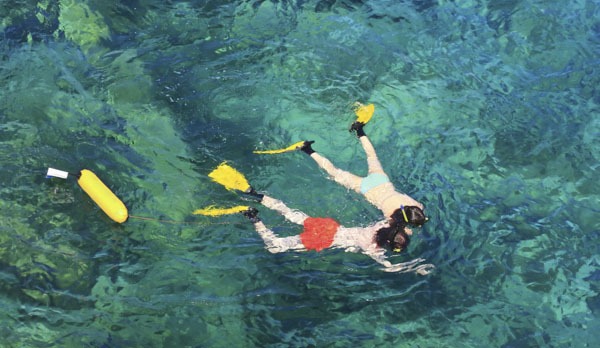
Short answer: You don’t need a boat tour. Honolua Bay is accessible by foot, costs nothing to enter, and the reef along the left wall is honestly good enough that plenty of experienced snorkelers never bother with a guided trip. But there’s a real argument for booking one too and it depends almost entirely on who you are as a swimmer and what the ocean is doing that morning.
First, Understand What You’re Actually Walking Into
Honolua Bay doesn’t look like a typical Maui snorkeling spot because it isn’t one. There’s no beach. No parking lot. No bathroom. You pull off Highway 30 somewhere near mile marker 32, squeeze into whatever gap exists along the road shoulder, and follow a dirt path through thick bamboo until the trees break open and you’re standing above a rocky cove with absurdly clear water below you.
The whole bay is a marine conservation district Honolua-Mokuleia Bay Marine Life Conservation District, if you want the full name. No fishing, no taking anything, strict rules about commercial activity inside the boundary. That legal protection has been in place long enough to actually work. The reef here isn’t just “pretty good for Hawaii.” It’s the kind of underwater environment that makes people stop mid-swim to just hover and look around, slightly overwhelmed.
That’s the context. Keep it in mind when people tell you it’s overrated, or when you read a review complaining about the rocky entry those people either went on a bad swell day or expected Ka’anapali Beach and got something completely different.
Getting There on Your Own
Parking is the first obstacle and honestly the most frustrating part of any independent visit. The road shoulder near the trailhead holds maybe fifteen or twenty cars if everyone’s being considerate. On a summer weekend morning, those spots can be gone before 8 AM. Coming at 7 or earlier isn’t being neurotic, it’s the difference between an easy morning and circling the highway feeling increasingly annoyed.
The trail itself is short, maybe ten to fifteen minutes of walking. Mostly flat, nothing technical. After rain it gets legitimately muddy, not inconveniently muddy, but actually slippery in spots, especially through the bamboo section where the canopy traps moisture. Flip-flops are fine on a dry day. After any overnight rain, you want something with actual grip.
The bay opens up at the bottom. Rocky shoreline, a small freshwater stream trickling in on the left side, and water that goes from ankle-deep to over your head within about thirty feet of the rocks. Entry is on the left. Always the left. The right side of the cove catches more surge and is the side where people bash their shins and decide Honolua Bay isn’t for them. The left side, near that stream, is sheltered enough that on calm days you can walk in slowly, drop your face in, and immediately start seeing fish.
What the Water Actually Looks Like
The coral wall along the left side of the bay begins almost immediately. You don’t have to swim far or deep. Most of what makes Snorkeling in Honolua Bay remarkable happens in ten to twenty feet of water, close enough to the surface that natural light makes everything vivid.
Hawaiian green sea turtles are the most consistent sighting. The bay has what seem to be resident individuals who occupy the same coral alcoves on a near-daily basis. Float quietly above one and it will likely ignore you completely. Chase it or crowd it and it moves off but usually at a pace that suggests mild inconvenience rather than genuine alarm.
Yellow tang school in numbers you don’t often see at more trafficked spots. Parrotfish are everywhere and the loud grinding sound they make while feeding on coral is audible underwater and slightly unsettling until you know what it is. Moorish idols, surgeonfish, humuhumunukunukuapua’a, Picasso triggerfish. Octopuses more commonly than you’d expect, tucked into rocky crevices along the reef, identifiable by a glint of eye and a subtle shift in color when they realize you’ve seen them.
Between December and April, humpback whales use Maui’s coastal waters for breeding season. From inside Honolua Bay you can sometimes hear whale song underwater at a low resonant frequency that travels through the water and registers somewhere between sound and sensation. It’s one of those things that doesn’t translate well in description but tends to stop people completely when it happens.
Why Some People Should Just Book the Tour
Here’s the honest version: a Honolua Bay snorkeling tour isn’t a compromise for people who can’t handle the real thing. It’s genuinely a different experience with access to parts of the bay that shore snorkelers can’t safely reach.
Tour boats leave from Lahaina Harbor and come in from the ocean side, dropping anchor or drifting outside the conservation boundary while guests enter from a platform or ladder. No rocky scramble. No surge-timing. muddy trail in water shoes before you’ve even gotten wet. For anyone with bad knees, anyone traveling with kids under ten, or anyone who’s never snorkeled before and doesn’t have a strong baseline for reading ocean conditions the boat entry alone is worth what you pay.
The outer and central areas of the bay look different from what shore snorkelers see. The reef extends and deepens as you move away from the left wall, and that deeper structure hosts different coral formations and species. Spinner dolphins use the mid-bay area for socializing and rest; they’re visible from boat-based trips more reliably than from shore, simply because of where they tend to congregate.
A good guide changes the experience in ways that are hard to quantify until you’ve had one. Knowing which specific fish is in front of you, understanding why the conservation district’s protection has produced the reef density it has, getting pointed toward an octopus you would have swum past all of that comes from someone who’s in that water regularly, not from a laminated fish ID card clipped to your snorkel vest.
Maui Honolua Bay tours also carry safety infrastructure that independent snorkelers don’t have access to. Emergency oxygen on board, crew watching the water, experienced judgment about when conditions are changing. On a morning when the bay looks fine but is starting to build, a good operator reads that and adjusts. Going solo, you’re making that call yourself.
Picking an Operator That’s Worth the Money
The range in quality among Honolua Bay snorkeling tour operators is wide. Groups of thirty people in the water simultaneously tend to scatter marine life and reduce the experience to treading water in a crowd. Small groups under sixteen, ideally closer to ten allow actual naturalist guidance rather than just supervision.
DLNR operating permits are required for commercial activity in the conservation district. It’s a basic compliance question worth asking before you book, and a reputable operator will answer it without hesitation.
Morning departures are meaningfully better than afternoon ones. The wind picks up consistently along Maui’s west coast through the day. By early afternoon the surface chop has increased, visibility has dropped, and what was a glassy morning snorkel looks considerably less appealing. The 7 AM boats get the bay at its best.
Operators who talk about reef-safe sunscreen requirements during the pre-trip briefing, who enforce no-touching policies in the water, and who seem to genuinely care about the marine conservation district rather than treating it as a selling point those are the ones who deliver consistently better experiences, and their reviews reflect it.
The Conditions Question Nobody Talks About Enough
Honolua Bay has a split personality that the tourism brochure version glosses over.
From roughly May through September, the bay is protected from significant swell by its north-facing orientation and the seasonal weather patterns that define Hawaiian summer. Conditions are consistently calm, visibility is at its best, and the rocky entry is genuinely manageable for a confident swimmer. This is when snorkeling in Honolua Bay is at its most forgiving.
From November through March, the same bay becomes one of the world’s more celebrated surf breaks. North Pacific swells arrive with real power, and when the surf is up, which is often, and sometimes dramatically, the cove that looked gentle in summer turns into surging, churning water over those same rocks you’d be trying to scramble across. Shore entry becomes dangerous above three or four feet of surf. On significant swell days, it’s simply not a snorkeling destination.
Winter isn’t off-limits. It’s conditional. If north swell shuts Honolua Bay down on your travel dates, it’s worth knowing that Molokini and Turtle Town on Maui’s south shore operate in completely different swell patterns, often calm when the northwest coast isn’t.
The whale song and surface whale sightings that happen between December and April are genuinely extraordinary, and plenty of calm winter mornings offer perfect conditions. You just have to check the forecast the night before, every time, without skipping it because the sky looks blue from your rental car window.
Surfline runs a dedicated Honolua Bay forecast. NOAA’s marine forecast covers the broader area. Either one, checked the evening before, tells you what you need to know before you make the drive up the northwest coast.
The Gear Situation
Everything comes with you because nothing is available at the bay. That’s the complete gear situation for independent snorkeling in Honolua Bay.
A mask that fits properly matters more here than at a sandy beach entry. The rocky approach and surge at the entry point mean you’re dealing with water on your face before you’re even fully in. A mask that leaks or fogs ruins the session faster at Honolua Bay than it would somewhere more forgiving. If you’re renting, dive shops in Lahaina will fit you properly rather than handing you whatever size is on the rack. Fins are genuinely worth it the reef extends across a lot of horizontal distance and fins let you cover it without wearing yourself out.
Reef-safe sunscreen is not optional. Hawaii law prohibits oxybenzone and octinoxate-containing sunscreens in marine conservation areas. The chemicals in conventional sunscreen measurably damage coral, which is why the law exists, and the fine for noncompliance is real. Mineral-based options with zinc oxide or titanium dioxide are legal and effective. Apply well before getting in the water.
A dry bag for your phone and keys is necessary rather than cautious. There is nowhere to leave valuables at the trailhead with any real confidence. Bring water more than you think because the walk back up to the road in full sun with wet gear and a dry mouth is unpleasant in a very avoidable way.
The Real Comparison
Independent snorkeling at Honolua Bay and a guided tour are not the same experience wearing different price tags. They access different parts of the bay, offer different kinds of support, and suit different kinds of travelers.
Going on your own makes sense if you’re comfortable in the open ocean, can read swell conditions with some reliability, don’t mind the logistics of early arrival and trail navigation, and want an experience that’s quieter and more self-directed. The reef accessible from shore is excellent, genuinely among the best snorkeling in Honolua Bay and the experience of arriving on foot, walking that bamboo trail at first light, and sliding into the water before the day crowds arrive is something a boat tour can’t replicate.
Booking a Maui Honolua Bay tour makes sense if you want outer reef access, guided marine identification, boat entry that removes the rocky shore equation, or you’re traveling with people whose comfort in the ocean varies. It also makes sense if you’re visiting in winter and want someone else managing the conditions judgment on a day-to-day basis.
Both options lead to the same reef ecosystem, one of the most intact and accessible in Hawaii with the same turtles, the same parrotfish, the same conservation district protection that makes all of it possible. The fish have no opinion about how you got there.
FAQ
Is Honolua Bay good for snorkeling beginners?
On a genuinely calm day in summer, the left-side entry is manageable for a confident beginner swimmer. If you’re not comfortable in the open ocean or haven’t snorkeled much, a guided tour with boat entry is the safer and more enjoyable choice.
Does it cost anything to snorkel Honolua Bay independently?
Nothing. No entry fee, no parking fee, no conservation district charge. The bay is publicly accessible.
How early should you arrive for shore snorkeling?
7 AM or earlier during peak season. The road shoulder parking fills fast and there’s no overflow option nearby.
Are there sharks in Honolua Bay?
Whitetip reef sharks appear occasionally and are harmless to snorkelers; they’re cautious animals that avoid contact with humans. No aggressive incidents have been reported at this location.
When is the best time of year?
May through September for the most reliable calm conditions and best visibility. December through April for whale season, with the understanding that conditions must be checked daily before visiting.
How does a Honolua Bay snorkeling tour compare to going independently?
Tours offer boat entry, outer reef access, naturalist guidance, and safety infrastructure. Independent visits offer quieter water, more personal freedom, and zero cost. Neither is objectively better. The right choice depends entirely on your experience level and what you want from the visit.