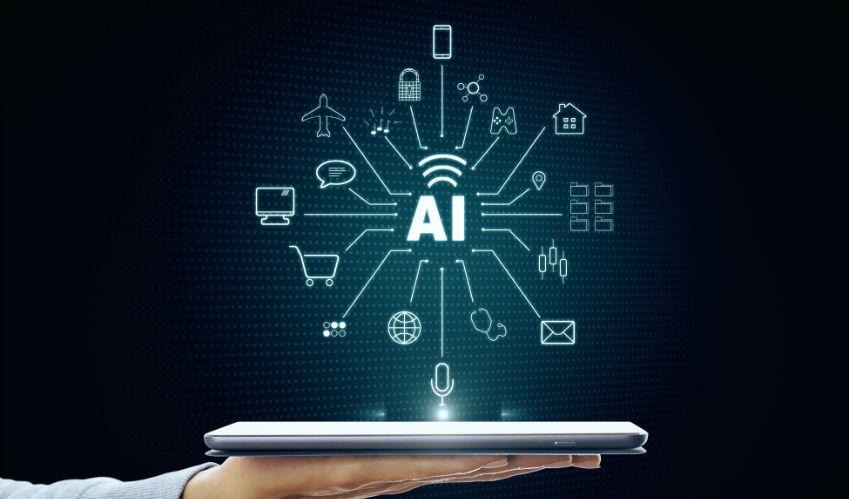
Artificial Intelligence (AI) has evolved from a futuristic concept into a transformative force that is reshaping industries, economies, and everyday life. From virtual assistants and recommendation systems to autonomous vehicles and advanced healthcare solutions, AI is influencing how businesses operate and how people interact with technology. As organizations increasingly embrace digital transformation, artificial intelligence is becoming a critical tool for improving efficiency, enhancing customer experiences, and driving innovation.
The rapid advancement of AI technologies has created new opportunities across various sectors, including healthcare, finance, retail, education, manufacturing, and logistics. By enabling machines to perform tasks that traditionally required human intelligence, AI is helping businesses streamline operations, reduce costs, and make data-driven decisions with greater accuracy.
Understanding Artificial Intelligence (AI)
Artificial Intelligence refers to the simulation of human intelligence in machines that are programmed to think, learn, analyse data, and solve problems. AI systems can perform a wide range of functions, including speech recognition, image analysis, natural language processing, predictive analytics, and decision-making.
Unlike traditional software that follows predefined instructions, AI systems can learn from data and improve their performance over time. This capability allows organizations to automate complex processes and uncover valuable insights that would otherwise be difficult to identify.
Today, AI is commonly categorized into several branches, including machine learning, deep learning, computer vision, and natural language processing. These technologies work together to create intelligent systems capable of handling increasingly sophisticated tasks.
The Growing Impact of AI Across Industries
One of the primary reasons for the widespread adoption of artificial intelligence is its versatility. Businesses across industries are leveraging AI to improve productivity and gain a competitive advantage.
In healthcare, AI assists medical professionals in diagnosing diseases, analysing medical images, and developing personalized treatment plans. Financial institutions use AI-powered algorithms to detect fraud, assess risks, and optimize investment strategies. Retail companies employ AI to understand customer behaviour, recommend products, and improve inventory management.
The manufacturing sector has also experienced significant benefits through predictive maintenance, quality control, and process automation. By identifying potential equipment failures before they occur, AI helps reduce downtime and increase operational efficiency.
Similarly, educational institutions are using AI-driven learning platforms to create personalized learning experiences for students. These systems adapt educational content based on individual learning styles and performance levels, helping learners achieve better outcomes.
AI and Business Innovation
Artificial intelligence is not only improving existing processes but also creating entirely new business models. Companies are increasingly integrating AI into their products and services to enhance customer engagement and deliver personalized experiences.
Chatbots and virtual assistants, for example, have become common tools for customer support. These AI-powered solutions provide instant responses, handle routine inquiries, and improve customer satisfaction while reducing operational costs.
AI is also playing a crucial role in data analytics. Modern businesses generate vast amounts of information daily, and AI helps transform this data into actionable insights. By analysing customer preferences, market trends, and operational performance, organizations can make more informed strategic decisions.
Furthermore, AI-driven automation allows employees to focus on higher-value tasks by reducing the time spent on repetitive activities. This not only improves productivity but also supports innovation and business growth.
Challenges and Ethical Considerations
Despite its numerous benefits, artificial intelligence presents several challenges that organizations must address. Data privacy, security, transparency, and ethical decision-making remain important concerns as AI adoption continues to expand.
One of the most significant challenges involves ensuring that AI systems operate fairly and without bias. Since AI models learn from historical data, any existing biases within the data can potentially influence outcomes. Organizations must therefore prioritize responsible AI development and implement measures to ensure fairness and accountability.
Another important consideration is workforce transformation. While AI creates new opportunities, it also changes the nature of many jobs. Businesses and educational institutions must invest in reskilling and upskilling initiatives to help employees adapt to evolving workplace requirements.
The Future of Artificial Intelligence (Ai)
The future of artificial intelligence appears exceptionally promising. As computing power increases and AI technologies become more sophisticated, businesses will continue to discover innovative applications across various sectors.
Emerging technologies such as generative AI, autonomous systems, and advanced robotics are expected to further expand the capabilities of intelligent machines. These advancements have the potential to revolutionize industries, accelerate scientific discoveries, and improve quality of life on a global scale.
The increasing importance of AI is also reflected in market growth projections. According to insights highlighted by Expert Market Research, the global artificial intelligence market attained a value of approximately USD 3.19 trillion in 2025. The market is projected to grow at a CAGR of 32.40% between 2026 and 2035, reaching nearly USD 52.80 trillion by 2035. This remarkable growth demonstrates the increasing reliance on AI technologies across industries and their role in shaping the future digital economy.
Why Businesses Should Embrace AI
Organizations that successfully integrate artificial intelligence into their operations are likely to gain significant advantages in the years ahead. AI can improve efficiency, enhance customer experiences, support innovation, and enable better decision-making.
However, successful AI implementation requires a strategic approach. Businesses must invest in quality data, skilled professionals, and appropriate technological infrastructure. Additionally, maintaining transparency and ethical standards will be essential for building trust among customers and stakeholders.
As competition continues to intensify in the digital era, adopting AI is no longer simply an option—it is becoming a necessity for organizations seeking long-term growth and sustainability.