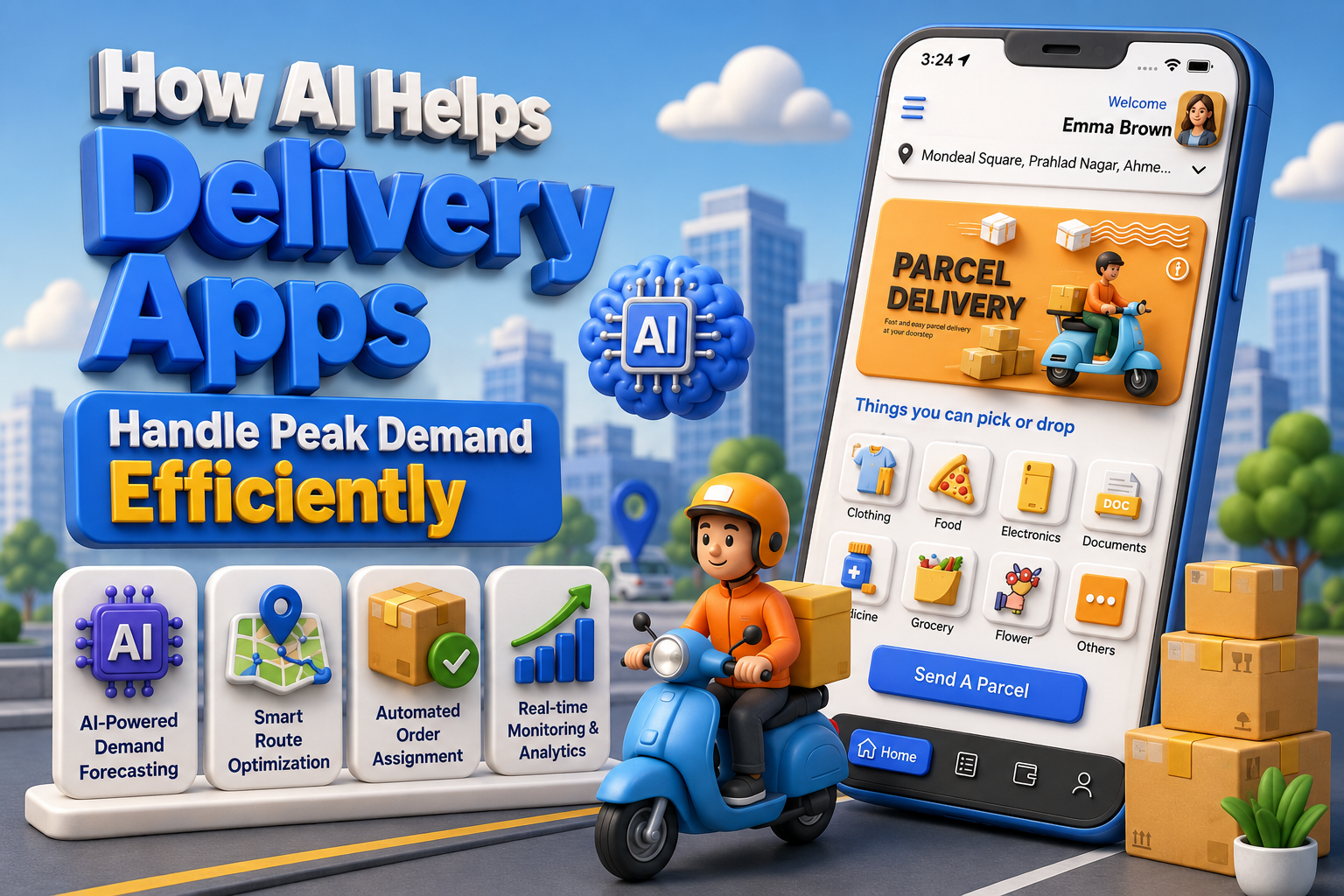
All of us have experienced when the clock ticks 12 PM or 8 PM, and your dashboard lights up like a Christmas tree and when it is raining heavily. At those times, people suddenly realize that they need to order groceries, medicines, and other things. Then, your Delivery App are put under serious pressure. These are the moments that truly test how strong your system is. Customers expect fast delivery, real-time tracking, and zero confusion. But behind the screen, managing this surge is no small feat.
This is when you really get to know whether your system can handle all that pressure. Your clients want prompt service, immediate tracking options, and no hassles at all. However, under the surface, managing all of this is quite a challenge.
Effective management of peak demand is not simply an issue of speed. Rather, it involves being proactive, efficient, and ensuring that every component of your system works seamlessly. This is because in the Delivery Apps environment, any single negative experience may be enough for your client to switch to your competitor.
Why Peak Demand Management Is Critical for Delivery Apps
The world of quick commerce has always been focused on speed. Most of the popular Delivery Apps guarantee 30-minute or shorter deliveries. Although such promises sound impressive, they also mean that the margin for errors is practically. Customers don’t think about traffic or rider shortages. They only care about one thing getting their order on time. If Delivery Apps fail to perform during peak hours, the impact can be serious:
- Missed delivery timelines
- Cancelled orders
- Overloaded customer support
- Negative reviews and customer churn
And the truth is that customers may forgive once, but they rarely forget. Consistency is what builds trust and that keeps your users coming back to Delivery Apps.
What Triggers Peak Demand in Delivery Apps?
Peak demand is not random. It follows patterns, and understanding these patterns is key to success. Common peak times for Delivery Apps include:
- Morning and evening rush hours when people are busy.
- Late-night orders, especially on weekends.
- Festivals and special events.
- Public holidays.
- Bad weather conditions when people prefer staying indoors.
Think of it like waves in the ocean. If you know when they’re coming, you can ride them. If not, they will knock your order.
Why Peak Hours Efficiency is the Make or Break Your Delivery Appps?
The promise of fast delivery under 30 minutes, creates a sensitive contract with the customer. During demand spikes, even a 10-minute delay can feel like a lifetime wait. In the business world, you know that consistency is important, not just speed, is what keeps the wheels turning. If your Delivery Apps can’t scale smoothly during these “crunch times,” you’re looking at a domino effect of disasters:
- Missed ETAs and Cancelled Orders: Nothing kills loyalty faster than a “cancelled” update after a 40-minute wait.
- Rider Burnout: Overworked riders are unhappy riders, and high churn in your fleet is an expensive problem to fix.
- The WISMO Wave: “Where Is My Order?” queries will flood your support team, creating a secondary jam.
- The Review Sting: One bad experience during a rush often results in a permanent “delete” of the app by your users.
In reality, the company’s internal data shows that order delays during peak seasons cause a considerable portion of first-time customer churn. First impressions last forever.
Challenges That Delivery Apps Face During Peak Periods
There are numerous challenges that Delivery Apps have to contend with when dealing with peak season demands.
Order Volume
With an excessive number of orders coming in at the same time, it makes management a difficult process. It requires striking a balance between demand and supply.
Rider Scarcity
Should there be insufficient delivery partners to handle the volume, delays will surely happen. This is one of the primary problems faced by Delivery Apps during peak times.
Traffic Delays
Having plenty of delivery partners may be helpful, but traffic issues could arise. Improper routing can cause order delays immediately.
Technical Issues
High user activity can put pressure on app servers. If your system crashes or slows down, it directly impacts customer experience.
Rider Fatigue
Delivery partners often work longer hours during peak demand. Over time, this leads to exhaustion, which affects performance and safety.
Real-Time Decision Pressure
Managing operations during peak hours requires quick decisions. Dispatchers and systems must act instantly to avoid delays.
The Solution: Integrating AI Surge Pricing Systems
The “old way” of managing surges was through manual tweaking and guesswork. But who can be bothered with that in the heat of the action?
But now, one needs to incorporate their Surge Pricing Software within their Delivery Apps. Thanks to the power of machine learning, the software does all the hard work for you by looking at past data, analysing traffic, and adjusting prices based on weather changes.
If one is a start up owner, or a new business, developing such apps will be quite tricky. For that reason, people prefer buying a white-label delivery apps script since these provide you with a similar “pro level” as big billion-dollar enterprises do.
Predict Demand Using Data
Unlike the unsuccessful apps, successful ones predict the surge and not just respond to it. Through the analysis of past trends, weather conditions, and local events, you can anticipate the surge.
Conclusion
Dealing with peak demand in Delivery Apps is not about putting more effort into work. Indeed, peak periods and unexpected surges will always come.
However, with appropriate systems and strategies, and by prioritizing your customers, you will be able to do everything smoothly and without stress. The bottom line is that peak demand should never be a problem because success in Delivery Apps depends on not only delivery but consistency during peak times too.
Learn how to deal with peak times, and your business will be able to prosper during these moments.