Here’s a number that should bother you: nearly 1 in 3 tenants say safety concerns influenced their decision to move out of their last home. Not rent. Not noisy neighbors. Safety.
Property managers have more on their plate than ever. Fixing pipes, handling complaints, chasing rent that’s already a full-time job. But today, tenants also expect you to keep them safe. And if something goes wrong and you weren’t prepared, that’s on you legally and financially.
The good news is that property management security doesn’t have to be complicated. You don’t need to overhaul everything at once. You just need to know where to start and what actually works.
Why tenant safety is a top priority for property managers
Let’s be direct about something. Ignoring safety on your property is not just careless. It can cost you in court.
Property managers have what’s called a “duty of care.” That means if a tenant gets hurt because of a known security problem you didn’t fix, a judge can hold you responsible. This has happened. Real landlords have lost real lawsuits because they knew about a broken gate or a dark parking lot and did nothing about it.
Beyond the legal side, there’s the money side. When tenants don’t feel safe, they leave. Finding a new tenant costs time and money advertising, background checks, cleaning, repairs. One empty apartment for two months can wipe out months of profit. And if word gets around that your building isn’t safe? Good luck filling it.
Tenants today look up reviews before signing a lease. They ask specific questions about security. They talk to current residents. A property with a bad safety reputation loses good tenants and struggles to attract new ones. Property value follows the same pattern safer buildings are worth more. It’s that simple.
Conducting a property security assessment
Most property managers think they know their building. Then they do a proper security walkthrough and realize they’ve been missing obvious things.
Walk your property at night. Not at 6 PM actually at 9 or 10 PM. You’ll notice lighting problems you never saw during the day. Dark patches in parking lots. Corners where someone could easily hide. Entry points that are supposed to be locked but aren’t really.
After that, pull your incident reports. Look for patterns. If you’ve had three noise complaints and two loitering reports near the same stairwell over six months, that stairwell is a problem area. Most managers don’t connect these dots because they look at each report individually instead of together.
And talk to your tenants. Honestly, this step gets skipped more than it should. Your tenants walk through the building every day. They know which door doesn’t close properly, which hallway feels unsafe, which neighbor has been acting strange. A short anonymous survey with just five questions will tell you more than three walkthroughs combined.
The whole point of this assessment is simple: before you spend money, know where the actual problems are.
The role of security guard in residential areas
A camera records a crime. A guard stops one. That’s the real difference.
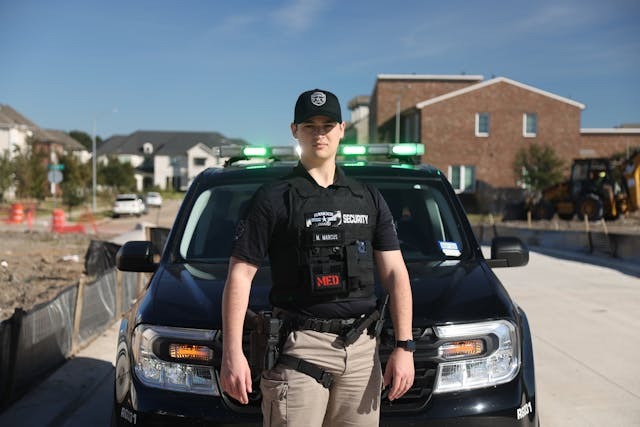
Professional security guard services put trained people on your property who can look at a situation and decide what to do. A camera can’t ask someone why they’re sitting in the parking lot at midnight. A guard can. And sometimes that’s enough to prevent something bad from happening.
Guards are trained for things most people aren’t prepared for. Unauthorized access. Medical emergencies. Arguments between neighbors that are getting out of hand. Suspicious behavior that hasn’t crossed any legal line yet but probably will if no one steps in. That last category is where a lot of property crime actually gets stopped not after the fact, but before.
There’s also something called deterrence. When a would-be criminal sees a uniformed guard actively walking the property, they typically move on. They pick somewhere easier. That’s not a theory, it’s well-documented. Opportunistic crime happens where people think they won’t get caught.
For tenants, seeing security guard services working on their property changes how they feel about living there. Not just actual safety, the feeling of safety. And when people feel safe where they live, they stay. That’s good for your vacancy rate, your lease renewals, and your reputation.
Benefits of onsite guards for day-to-day safety
Onsite guards don’t just show up during emergencies. They make a difference in small, everyday ways that add up over time.
The visible presence alone does a lot of work. When someone sees a guard at the entrance or patrolling the grounds, behavior shifts. Tenants feel calmer. Visitors are more careful. People who might’ve caused trouble think twice.
Access control is another big one. In buildings where only residents and approved guests are supposed to enter, you need someone who can actually tell the difference. A guard who recognizes regular faces and questions unfamiliar ones is doing something cameras and key fobs can’t fully replace. Technology can log who entered. A guard can stop who shouldn’t.
Day-to-day, onsite guards also handle the gray-area situations. The neighbor was blasting music at 11 PM. The strange car that’s been sitting in visitor parking for four days. The person wandering the hallways who doesn’t seem to live there. These aren’t 911 calls. But they’re not nothing either. A trained guard handles these before they become real problems.
Coverage schedules depend on your property. Some buildings genuinely need guards around the clock. Others find that evening and overnight shifts cover the most vulnerable hours at a much lower cost. There’s no universal answer; it depends on when your incidents actually happen.
How vehicle patrol services enhance perimeter security
For a small building with one parking lot, a walking guard covers the ground fine. But large residential communities, the ones with multiple buildings, long fences, and big open parking areas are a different situation entirely.
Vehicle patrol services exist for exactly this reason. A patrol car making regular rounds covers far more ground than a person on foot. It reaches the back corners of parking lots, checks entry and exit gates, and can get to a problem spot in seconds instead of minutes.
There’s also the visibility factor. A patrol vehicle is hard to miss. It signals to anyone on the property that someone is watching the perimeter, not just the front door. For properties where vehicles, equipment, or materials are left outside overnight, this kind of coverage makes a real difference.
And vehicle patrol services don’t have to replace guards; they work well alongside them. While an onsite guard manages the front entrance, a patrol vehicle handles everything outside that immediate area. Together, they cover the whole property without leaving blind spots.
Cost-wise, vehicle patrols are often more flexible than stationary guards. Many security companies let you schedule patrol visits based on the times your property needs it most, which keeps costs down without cutting coverage where it matters.
Integrating technology with human security
Technology is useful. It’s just not enough on its own.
CCTV cameras are the starting point for most properties. They record everything, which is valuable for investigations and insurance claims. But a recording only helps after something has already gone wrong. For cameras to actually prevent crime, someone needs to be watching them or at least reviewing footage regularly enough to notice patterns.
Smart access control systems take things further. Key fobs, video intercoms, and mobile entry apps mean that restricted areas stay restricted. When an unauthorized person tries to get in, the system flags it immediately instead of just letting it happen.
Lighting is one of the most underrated tools in property security. Well-lit parking lots, stairwells, and walkways remove the hiding spots that opportunistic criminals rely on. Motion-sensor lights work especially well in low-traffic areas where keeping lights on all night isn’t practical.
Digital incident reporting ties everything together. When guards log events in real time time, location, description, photos property managers get a usable record of every shift. Over time, those records show patterns that would otherwise be invisible. They also protect everyone if a legal situation comes up later.
But here’s the thing that gets lost in conversations about technology: none of these tools make decisions. They extend coverage. They create records. The person who actually responds when something happens is still the most important part of any security setup.
Building a safety culture within the community
Security isn’t only the job of guards and cameras. It works better when the whole community is part of it.
Start by telling tenants what’s in place. A lot of property managers install security systems and never mention them to residents. That’s a missed opportunity. When tenants know there are cameras in the parking lot, guards on evening shift, and a clear process for reporting concerns, they feel more confident — and they use the system.
Have an emergency response plan and actually share it. What do tenants do if there’s a fire? A break-in while they’re home? A medical emergency in a common area? A one-page guide slipped under doors or posted in the elevator answers these questions before the emergency happens.
Encourage reporting. A lot of small incidents go unreported because tenants assume someone else already did it, or they don’t want to seem like they’re overreacting. Make it easy. Give them a number to text or an email address that goes straight to management. Reassure them that early reports are welcome.
Clear signage matters too. “Area under 24-hour camera surveillance.” “All visitors must check in at the front desk.” These signs do two things: they remind tenants that security is active, and they tell the wrong kind of people that this isn’t an easy building to mess with.
Choosing the right security partner for your property
This is where a lot of property managers make a mistake. They look at price first and everything else second.
Start with licensing. Any security company operating on your property must be licensed and insured. This isn’t a formality, it’s your protection too. If an unlicensed guard gets into an incident on your property, you could share the liability.
Ask about training. Not just what guards learn when they’re hired, but what ongoing training looks like. De-escalation, emergency response, specific protocols for residential communities these things need refreshing. A guard who was trained three years ago and hasn’t done anything since isn’t the same as one who trains quarterly.
Ask for references from similar properties. A company that mostly handles warehouse security or shopping centers may not understand residential communities at all. The dynamics are different. Tenant relationships, community rules, privacy expectations all of it requires a different approach.
Watch out for companies that pitch a standard package without asking about your property first. A good security partner wants to understand your layout, your past incidents, your budget, and your specific problem areas before suggesting anything. If they’re handing you a brochure instead of asking questions, keep looking.
Set reporting expectations upfront. You should receive regular incident logs, patrol records, and summaries of each shift. If a company is vague about this or slow to deliver reports, that tells you something about how they operate.
Conclusion
There’s no single thing that makes a residential community safe. It’s always a combination of honest assessment of where problems actually exist, the right mix of security guard services and vehicle patrol services, technology that supports the guards instead of replacing them, and a community where tenants know what’s in place and feel comfortable using it.
Property managers who make security an ongoing priority not something they think about after an incident build something valuable over time. Lower turnover. Fewer legal problems. Tenants who stay, pay, and tell their friends. That’s what good property management security looks like in practice.
If you haven’t walked your property with fresh eyes recently, that’s the place to start. Look for what’s missing. Ask your tenants what worries them. Check your incident history for patterns you might have missed.
And if what you find tells you it’s time to bring in professional help, don’t wait for something to go wrong first.