Most people assume energy healing is something you have to be spiritual for: crystals on the nightstand, incense burning, the whole thing.
But the truth is, Reiki asks for none of those. It’s quieter than you’d expect, and a lot less mystical than the name suggests. It’s a healing practice that works with energy in the body. It’s based on the belief that energy flows through the human body. When that flow is disrupted, it can lead to physical and emotional distress.
Reiki has been around for over a century. It originated in Japan and has slowly made its way into mainstream health settings as something people turn to for stress, chronic pain, anxiety, and daily exhaustion. This guide breaks down what Reiki actually involves and what a first-timer should know going in.
What Is Reiki Healing?
Reiki is a form of energy healing that originated in Japan. The word “Reiki” comes from two Japanese words, “rei,” meaning “universal,” and “ki,” meaning “life energy”; together they point to the energy that runs through every living body. The practice was formalized by Mikao Usui in 1922, though energy healing in various forms has existed across cultures for thousands of years.
According to Reiki practitioners, that energy needs to keep moving. When something disrupts it (a physical injury, emotional pain, or prolonged stress), it begins to stagnate. And when it stagnates long enough, it starts showing up as discomfort, illness, or a body that simply won’t recover the way it should.
This is where Reiki comes in. Through light touch, practitioners work to clear those blockages and get energy flowing again. When that flow is restored, it can:
- Ease physical pain
- Bring the body into deeper relaxation
- Support faster and more natural healing
What has kept it alive for this long among people isn’t any mystery. It’s the way people feel after a Reiki session. It’s known to bring the body into deep relaxation, which on its own does more than most people expect.
The Benefit of Reiki Healing
Reiki works with the body’s own energy, helping it move where it has been stuck, settle where it has been restless, and recover where it has been worn down. Practitioners call this energy ‘ki’ and believe it runs through every part of us, affecting how we feel physically and emotionally.
Most people notice the relaxation first, not the kind that comes from a nap. But something deeper, a release the body doesn’t usually get on its own. People taking the session report:
- Reduced anxiety and emotional heaviness
- Better sleep and less physical tension
- A stronger sense of overall well-being
- Improved ability to cope with pain
People living with long-term conditions (chronic illness, fatigue, and emotional burnout) often add Reiki to their routine, not because it fixes the problem, but because it makes everything else easier to carry. However, results vary from person to person, and for many, the shift they feel after a session is reason enough to come back.
If you’re wondering whether it could work for you, the best place to start is understanding what actually happens during a session.
What A Reiki Session Looks Like
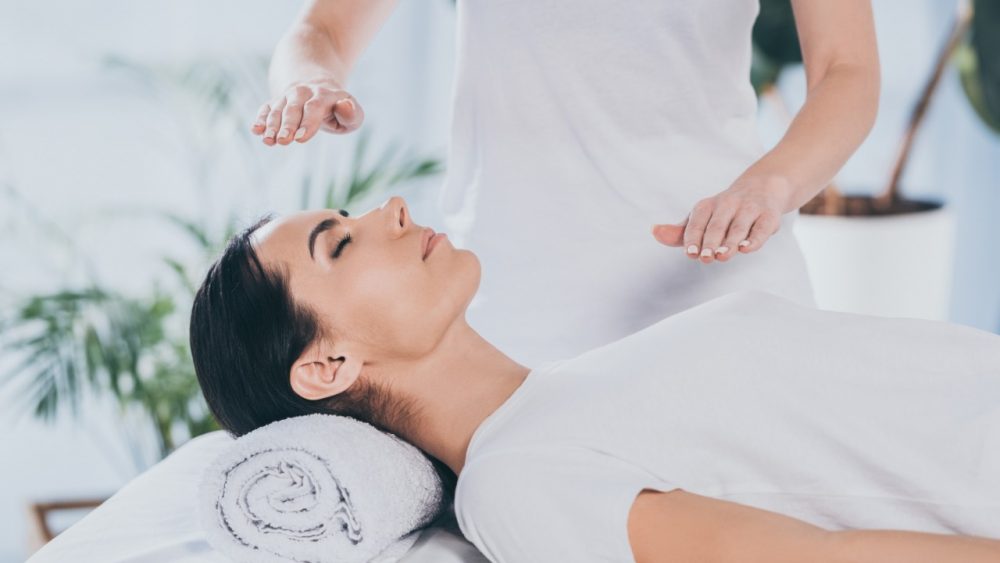
Walking into a Reiki session for the first time, most people don’t know what to expect, and that uncertainty is usually bigger than the experience itself. You come in fully clothed, with nothing to prepare and nothing to bring. The room is quiet. You settle into a chair or lie down on a table, and the session begins with the simplest instruction you’ll receive: just relax.
The practitioner places their hands lightly on or just above different areas of the body (the head, torso, and limbs), moving through each position slowly and with intention. Where there’s a specific injury or point of pain, the hands hover close without making direct contact. Each position is held for around three minutes, with the practitioner moving on once they sense the energy in that area has settled.
Some people notice warmth spreading through an area they didn’t realize was tense; others feel a faint tingling or a heaviness that gradually lifts. Some also feel nothing dramatic at all, just a quietness that crept in somewhere between lying down and losing track of time.
A session typically lasts between 45 and 90 minutes. People come for different reasons: curiosity, recovery, stress, or simply a need for stillness in a life that rarely offers it. Most leave feeling quieter than when they walked in.
How Does Reiki Actually Work?
Reiki is based on the existence of a universal life force energy (called “ki”) that flows through the living body. When that flow is interrupted by stress, injury, or emotional pain, the body struggles to recover on its own. A Reiki therapist acts as a channel for this energy.
Through light touch or hands held just above the skin, they guide it toward areas where it has stagnated. They don’t create the energy or give you theirs; they simply direct it.
Each session follows the energy, not a fixed routine. The practitioner moves through different areas of the body, staying where they sense a blockage and moving on when the energy settles. What happens after that is up to the body.
Is Reiki Safe for You?
Reiki is one of the lowest-risk practices you can try. There’s no physical manipulation, no medication, and no invasive contact. For most people, the biggest risk walking in is falling asleep on the table.
It’s particularly worth considering if you’re
- Managing chronic stress, anxiety, or emotional burnout
- Recovering from illness or surgery alongside medical treatment
- Living with chronic pain or fatigue that hasn’t fully responded to conventional care
- Simply looking for a way to slow down and reset
Where it becomes a concern is when people treat it as a replacement for medical care. Reiki works alongside conventional treatment, not instead of it. Choosing it over prescribed medication or a necessary procedure is where the real risk lies.
If you’re managing a health condition, speak to your doctor before adding it to your routine.
How to Find a Reiki Practitioner?
Finding a practitioner you feel comfortable with is half the experience. The space matters, the approach matters, and so does having someone who understands that every person walks in carrying something different.
At Insumataq Studio, that’s exactly what you get. Sessions are designed for people who are new to energy healing and those who’ve been at it for years. It’s held in an environment that takes the work seriously without making it feel intimidating. If you’ve been sitting on the fence about trying Reiki with our certified reiki therapist, this is a good place to start.
Our studio brings together Reiki, breathwork, somatic movement, and other healing modalities, all under one roof, for people who want their healing to go somewhere. Talk to us to book your Reiki Healing session near your location.
Conclusion
Reiki doesn’t ask you to have it all figured out before you walk in. It doesn’t ask for belief, a diagnosis, or a reason compelling enough to justify trying something new. It asks for an hour and a willingness to see what happens when the body finally gets to stop. All it asks for is a small window of time and the willingness to pause long enough for your body to shift out of constant alert.
Many people walk in uncertain and leave with a quiet sense of clarity they didn’t expect, not through anything dramatic, but through a genuine moment of ease. Their muscles soften, breath slows, and the mind stops racing ahead. This experience alone changes how you relate to stress, to your body, and to what healing can actually feel like.
If that kind of reset feels overdue, Insumataq Studio offers a space designed with intention, focus, and respect for the process. You can explore it for yourself at our studio and schedule your first session when you’re ready.
Frequently Asked Questions (FAQs)
1. How do I know if I actually need Reiki right now?
It may be worth trying if you feel mentally overloaded, physically tense, emotionally drained, or stuck in a cycle where rest does not feel restorative.
2. What kind of results should I realistically expect after one session?
After a single session, most people experience a noticeable sense of relaxation, reduced tension, and calmness.
3. How often should someone book Reiki sessions to see consistent benefits?
Frequency depends on individual goals and stress levels. Some people book occasional sessions for general relaxation, whereas others choose regular sessions to maintain consistent stress relief.
4. What makes one Reiki studio or practitioner better than another?
Key factors include the practitioner’s training, professionalism, communication, and the overall environment. A well-structured session in a calm, focused space often leads to a more effective and comfortable experience.
5. How is Reiki different from massage or meditation?
Reiki does not involve muscle manipulation like massage or require active mental focus like meditation. It’s a passive experience where the individual remains still while the practitioner facilitates relaxation through light touch or no-touch techniques.