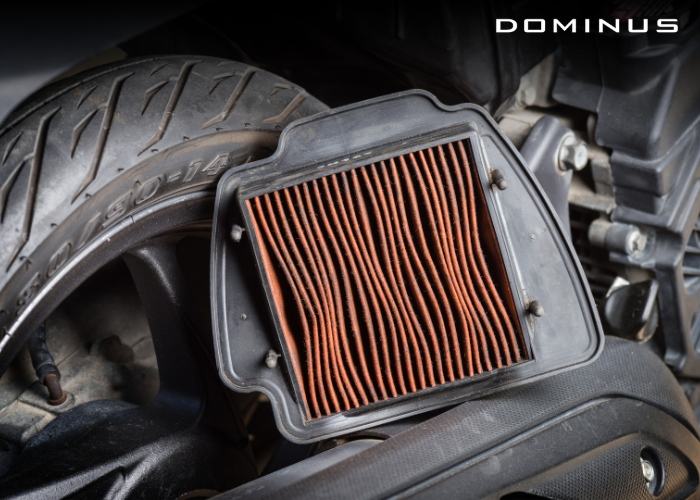
Most motorcycle air filters need inspection every 3,000–6,000 miles and full replacement every 10,000–15,000 miles under normal riding conditions. If you’re riding a dirt bike on Jacksonville’s off-road trails or through sandy coastal terrain, that timeline drops sharply – you may need to clean your foam air filter after every single ride. Riding conditions matter more than mileage when it comes to air filter health.
Why Air Filter Maintenance Actually Matters
Your motorcycle’s engine is essentially an air pump. For every gallon of fuel it burns, it pulls in roughly 12,000 gallons of air. Every bit of that air passes through your air filter first.
When that filter gets clogged — with dust, pollen, salt particles, or the fine sand that’s everywhere on Jacksonville’s trails and beachside roads — your engine starts running rich, loses power, and burns more fuel than it should. Ignore it long enough and you’re looking at accelerated cylinder wear and a repair bill that dwarfs what a new filter costs.
This isn’t abstract. Riders in Northeast Florida deal with a specific combination of humidity, airborne salt, and sandy soil that accelerates filter loading faster than the national average. What works for a rider in the dry Southwest doesn’t necessarily apply here.
How Often Should You Change a Motorcycle Air Filter?
The honest answer is: it depends on what you’re riding, where you’re riding it, and what type of filter you’re running.
Street Motorcycles
For a street bike ridden primarily on Jacksonville’s paved roads — US-1, I-95, the beaches — a paper or cotton gauze filter typically lasts 10,000 to 15,000 miles before replacement. That said, you should pull it for a visual inspection every 3,000 to 6,000 miles, or roughly every oil change interval.
A good rule of thumb: if you can hold the filter up to sunlight and light barely passes through, it’s time.
Dirt Bikes and Dual-Sport Riders
This is where the timeline gets aggressive. Riders hitting trails around Gold Head Branch State Park or the Ocala National Forest — both common day trips from Jacksonville — are pushing through a steady mix of fine sand, clay dust, and decomposing leaf matter. That combination loads a foam filter fast.
For dirt bike air filter cleaning, the standard recommendation is after every ride in dusty or sandy conditions. That’s not excessive caution — it’s just the reality of riding in Florida’s sandy soil. A dirty filter on a two-stroke or high-revving four-stroke can cause a lean condition and piston damage within a single hard ride.
Dual Conditions (Weekend Trail, Daily Street)
If you’re riding the same bike on pavement during the week and trails on weekends, skew toward the more aggressive dirt bike schedule. The filter doesn’t know which roads it was on — it only knows what it filtered.
Foam vs. Paper vs. Cotton: Which Filter You Have Changes Everything
Foam Air Filters
Foam filters dominate the dirt bike world for good reason — they’re designed to be cleaned and reused. A quality foam filter treated with the right filter oil can trap extremely fine particles while still flowing enough air for performance riding.
Can you reuse a foam air filter? Yes — and you’re expected to. Most foam air filter replacement schedules assume a filter will be cleaned 20 to 30 times before it needs to be retired. Look for tears, hardening, or sections where the foam has compressed permanently. Those are your signals to replace rather than clean.
For dirt bike air filter cleaning, the standard process involves washing with a dedicated filter cleaner (not gasoline — it degrades the foam), rinsing thoroughly, allowing complete drying, and then re-oiling before reinstallation. The oiling step is non-negotiable. A dry foam filter flows well but filters poorly.
Paper Filters
Common on street bikes and standard motorcycles. Paper filters are not reusable in any meaningful sense — you can gently tap dust off them in a pinch, but washing destroys the media. When they’re done, they’re done. Foam air filter replacement is more economical over a bike’s lifetime than repeatedly buying paper replacements.
Cotton Gauze (Performance) Filters
Brands like K&N popularized these. They’re washable, reusable, and flow more air than paper. They do require periodic cleaning and re-oiling. In Jacksonville’s humid climate, make sure they’re fully dry before re-oiling to avoid moisture getting into your intake.
What Happens If Your Air Filter Is Dirty?
Ignoring motorcycle air filter maintenance has a cascade of consequences:
Reduced power and throttle response. A partially blocked filter restricts airflow, which leans out your fuel mixture and kills horsepower. You’ll feel it first at higher RPMs.
Poor fuel economy. Your ECU or carburetor compensates for the lean condition by pulling more fuel. You burn more and go less far.
Carbon buildup. Inconsistent combustion from a starved engine produces more unburned carbon, which deposits on valves and piston crowns over time.
Engine damage in severe cases. On high-performance engines and dirt bikes especially, a badly clogged filter can allow unfiltered air to bypass the media entirely, pulling fine abrasive particles directly into the combustion chamber. That’s accelerated bore wear — an expensive problem.
A Real-World Example From the Trail
A common scenario local shops see: a rider picks up a used dirt bike, rides Croom Motorcycle Area hard for a weekend, and brings the bike in because it’s running rough and cutting out under load. Nine times out of ten, the air filter hasn’t been touched. The previous owner rode it, didn’t clean the filter, and the bike’s been struggling ever since.
After a proper foam air filter cleaning and re-oil, the bike runs like new. Twenty minutes of maintenance would have prevented weeks of frustrating riding.
FAQ: Motorcycle Air Filter Maintenance
How often should I change a motorcycle air filter?
Street motorcycles typically need a new filter every 10,000–15,000 miles, with inspections every 3,000–6,000 miles. Dirt bikes ridden on Florida’s sandy trails may need foam filter cleaning after every single ride.
Can I reuse a foam air filter?
Yes. Foam filters are specifically designed for repeated cleaning and re-oiling. A well-maintained foam filter can last through dozens of cleaning cycles before needing foam air filter replacement. Always inspect for tears or permanent compression before reinstalling.
What happens if an air filter is dirty?
A clogged filter restricts airflow, causing a lean fuel mixture, reduced power, worse fuel economy, and increased engine wear. In severe cases — particularly on dirt bikes — it can allow abrasive particles to bypass the filter media entirely and enter the engine.
Conclusion
Motorcycle air filter maintenance isn’t glamorous, but it’s one of the highest-return tasks in routine bike care. For Jacksonville riders dealing with coastal humidity, salt air, and sandy trail conditions, the stakes are a little higher than average. Stay on top of your filter schedule, clean your foam filters properly, and replace them when the material shows its age.
If you’re not sure what condition your filter is in – or if your bike has been running rough and you can’t figure out why – bring it in for an inspection. Sometimes the fix is simpler than you’d expect.