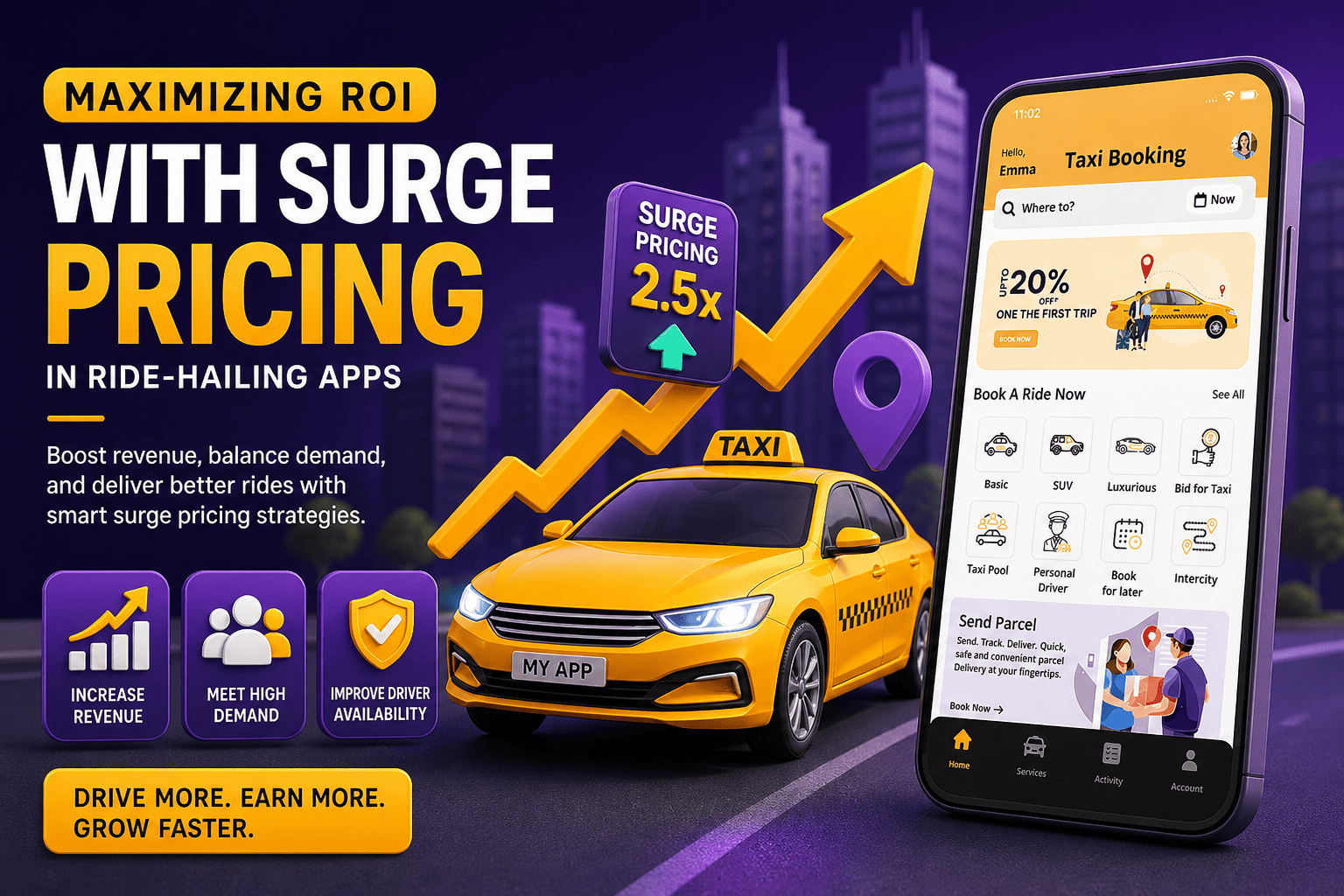
Anyone who has opened a ride-hailing app during a rainstorm and watched the fare jump knows dynamic pricing exists. Most riders accept it, grumble briefly, and book anyway. What fewer people understand is how the system actually decides that number, and more importantly, how much revenue it quietly generates when configured properly.
For taxi business owners running a white-labeled platform, dynamic pricing isn’t a luxury feature. It’s one of the most direct levers between a break-even operation and a profitable one.
What Dynamic Pricing Actually Is
Dynamic pricing, often called surge pricing, is a fare adjustment system that raises or lowers ride costs based on real-time conditions. When demand for rides in a specific area outpaces available drivers, fares go up. When driver supply is high and demand is low, fares normalize or drop slightly to attract bookings.
The logic isn’t complicated. What makes it powerful is the speed. The system recalculates continuously but in near real-time based on data the app is already collecting.
The Data Points Driving the Price Calculation
Inside an Uber clone app, dynamic pricing doesn’t run on intuition. Several inputs feed the algorithm simultaneously:
Driver availability in a zone
The system tracks how many drivers are active, idle, or mid-ride within a defined geographic area. Low driver count in a high-demand zone triggers a multiplier.
Incoming ride requests
Request volume per zone per minute is monitored constantly. A spike registers immediately and the fare adjustment kicks in before most riders even open the app.
Historical demand patterns
The system learns Friday evenings, Monday mornings, public holidays, and local events patterns over time. Predictive surge can begin before the actual spike hits, positioning fares ahead of demand rather than reacting to it.
Weather and external conditions
Rain, extreme heat, public transport disruptions correlate strongly with ride demand spikes. More sophisticated Uber clone platforms factor weather API data directly into pricing triggers.
Traffic and route complexity
Longer estimated travel times in heavy traffic affect fare calculations in platforms using time-plus-distance pricing models.
How the Multiplier Actually Works
When surge conditions are met, the base fare gets multiplied. The multiplier is set and capped by the platform operator through the admin panel.
This is where Uber clone operators have an advantage Uber itself doesn’t. The operator decides:
- What threshold of driver-to-request ratio triggers surge
- What the minimum multiplier starts at
- What the maximum cap is
- Which zones have surge enabled and which don’t
- Whether riders see a surge warning before confirming
Uber’s algorithm is a black box to its operators. A white-labeled clone platform puts those controls directly in the admin panel, adjustable without any developer involvement.
Why Riders Accept It
Surge pricing works commercially because of a specific behavioral pattern. When a rider genuinely needs a ride price sensitivity drops significantly. The alternative isn’t a cheaper ride. The alternative is no ride, a long wait, or an unsafe situation.
Platforms that display surge notifications transparently before booking confirmation see lower cancellation rates than those that bury the surged fare. Riders who feel informed rather than ambushed are more likely to confirm. That distinction matters for operator revenue and a confirmed surged ride beats an abandoned standard-fare booking every time.
Some Uber clone App include a surge countdown timer showing how long elevated pricing is expected to last. Counterintuitively, this increases bookings. Riders who see “surge ends in 8 minutes” often book immediately rather than waiting, even though waiting was the rational choice.
The Direct Impact on Operator Profit
Commission-based platforms earn a percentage of every fare. Multiplied across hundreds of rides during a peak period, that difference is significant. Operators who disable or ignore dynamic pricing because it “feels unfair to riders” are essentially leaving that revenue on the table during the exact windows when demand is highest.
There’s a driver incentive angle too. Higher fares during surge periods attract more drivers to high-demand zones. More drivers means shorter wait times. Shorter wait times means more completed rides. More completed rides means more commission revenue. Dynamic pricing, when configured properly, is self-reinforcing.
In markets where multiple ride-hailing platforms operate, dynamic pricing configuration is a competitive differentiator. A platform that surges too aggressively loses riders to competitors during peaks. A platform that never surges leaves revenue unclaimed and struggles to attract drivers during busy periods which then causes wait times to increase, which then loses riders anyway.
The balance isn’t complicated but it does require attention. Operators who review their surge data monthly end up with a progressively better-tuned system than those who set it up at launch and never revisit it.
Who can Launch an Uber Clone in 2026?
Dynamic pricing comes built into established Uber clone platforms. A new platform in a tier-2 city has different surge thresholds than one operating in a metro airport corridor. A platform targeting corporate clients has different tolerance levels than one serving budget-conscious daily commuters. The admin panel controls exist precisely so operators can tune the system to their reality rather than applying generic defaults and hoping for the best.
Revenue from dynamic pricing requires configuration, monitoring, and occasional adjustment. But among all the monetization levers available to a ride-hailing operator, it’s one of the few that generates more revenue from existing rides without acquiring new riders or adding new drivers. That’s a rare thing in any business. Worth understanding properly before the app goes live.