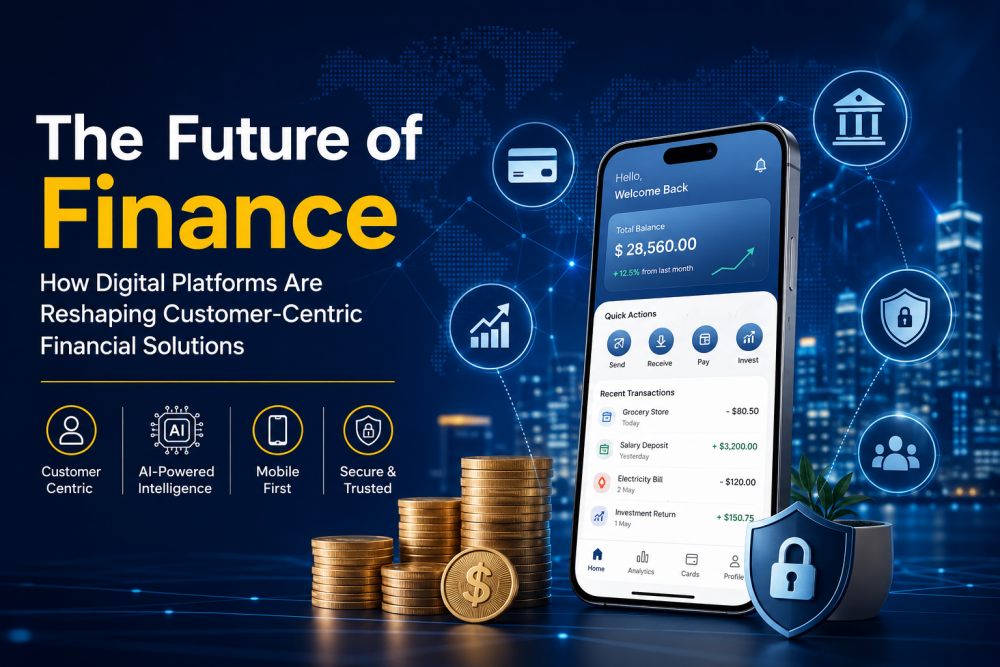
The finance industry is experiencing one of the most significant transformations in its history. Traditional banking institutions, investment firms, and lending organizations are no longer the sole gatekeepers of economic opportunity. Today, digital platforms are redefining how individuals and businesses interact with money, creating more accessible, personalized, and efficient experiences.
As technology evolves, finance is shifting from a product-driven model to a customer-first ecosystem. Consumers now expect seamless digital experiences, instant access, and personalized support—similar to what they receive from leading e-commerce or entertainment platforms. This expectation has pushed organizations to rethink how they build, deliver, and scale financial solutions.
This digital revolution is not just about modernization. It is about creating trust, transparency, and flexibility in a rapidly changing world.
The Evolution of Finance in a Digital-First World
Historically, financial institutions relied heavily on physical branches, paperwork, and manual processes. Customers had limited options and often faced long wait times for approvals, support, or transactions.
Digital transformation changed everything.
Mobile banking apps, cloud computing, artificial intelligence, and blockchain technologies have introduced a new era where users can manage accounts, invest, borrow, and transfer funds instantly from anywhere.
More importantly, these tools have lowered barriers to entry. Startups and emerging fintech companies can now compete with established institutions by offering niche, highly targeted services that solve real customer pain points.
This has created a more competitive marketplace—one where innovation wins.
Why Customer Experience Is Now the Competitive Advantage
In modern finance, trust alone is no longer enough.
Consumers expect:
- Faster onboarding
- Frictionless transactions
- Personalized recommendations
- Transparent pricing
- 24/7 support
- Mobile accessibility
Organizations that fail to meet these expectations risk losing customers to agile digital competitors.
The rise of customer-centric design has pushed finance companies to focus on user journeys rather than internal processes. Every touchpoint—from sign-up to payment confirmation—must feel intuitive.
Successful digital finance platforms understand one simple truth: people do not compare your service to your direct competitors; they compare it to the best digital experiences they’ve ever had.
Embedded Finance: The Invisible Revolution
One of the biggest shifts in the industry is embedded finance.
This concept allows non-financial platforms to integrate payment processing, lending, insurance, and other banking functions directly into their ecosystems.
Examples include:
- Ride-sharing apps offering instant driver payouts
- E-commerce stores providing “buy now, pay later” options
- SaaS platforms integrating invoice financing
- Marketplaces offering seller wallets
Customers no longer need to visit separate institutions for every financial need. Instead, services appear exactly when and where they are needed.
This convenience is driving massive adoption.
Businesses that embrace embedded models gain stronger customer loyalty and unlock new revenue opportunities.
Personalization Through Data Intelligence
Modern finance is increasingly powered by data.
Every digital interaction creates valuable behavioral insights. When used responsibly, this data helps organizations understand:
- Spending habits
- Savings patterns
- Risk profiles
- Customer preferences
- Financial goals
With machine learning, platforms can transform this information into meaningful recommendations.
Imagine receiving:
- investment advice aligned with your life stage,
- spending alerts based on your habits,
- or automated savings strategies designed for your goals.
This level of personalization makes finance feel less transactional and more supportive.
Consumers are beginning to expect intelligent financial guidance—not just tools.
Automation Is Eliminating Operational Friction
Operational inefficiencies have historically slowed financial growth.
Manual underwriting, compliance checks, customer verification, and support requests consumed time and resources.
Automation is changing that.
Today’s platforms use AI-driven workflows for:
- identity verification
- fraud detection
- loan approvals
- chatbot support
- claims processing
- recurring payments
The result?
Faster service, lower costs, and better scalability.
Companies that automate intelligently can serve more customers without sacrificing quality.
That is a major competitive edge.
Building Trust in Digital Finance
Technology alone does not guarantee adoption.
Trust remains the foundation of every financial relationship.
Digital platforms must prove they can protect:
- personal data
- transaction integrity
- regulatory compliance
- account security
Consumers need reassurance through:
- multi-factor authentication
- transparent privacy policies
- visible security standards
- responsive customer support
Trust is earned through consistency.
Even the most innovative platform will struggle if users feel uncertain about safety.
Organizations that prioritize security by design create long-term loyalty.
The Growing Role of Financial Services in Platform Ecosystems
As businesses evolve digitally, the integration of financial services into broader digital ecosystems has become a major growth driver.
Rather than operating in isolation, organizations are embedding banking tools, lending products, insurance modules, and payment solutions into everyday platforms to create seamless user experiences.
This approach delivers two advantages:
- It improves customer retention by increasing convenience.
- It creates additional monetization opportunities for businesses.
Whether it is an e-learning platform offering installment payments or a logistics app providing instant driver settlements, embedded financial services are becoming an essential part of modern digital infrastructure.
This trend is expected to accelerate significantly over the next decade.
Fintech Startups Are Challenging Legacy Models
Traditional financial institutions often face internal challenges:
- outdated systems
- rigid regulations
- slower decision-making
- legacy infrastructure
Fintech startups, on the other hand, are built for agility.
They can:
- test ideas faster
- iterate products rapidly
- launch globally
- adapt to customer feedback
This startup mindset has introduced innovations like:
- neobanks
- decentralized finance platforms
- AI investment tools
- digital lending marketplaces
Legacy institutions are responding through partnerships, acquisitions, and internal innovation labs.
Collaboration—not competition—may define the next phase of growth.
Financial Inclusion Through Digital Innovation
One of the most powerful benefits of digital finance is inclusion.
Millions of people worldwide remain underserved by traditional banks due to:
- geography
- income limitations
- lack of documentation
- infrastructure gaps
Mobile-first financial tools are changing this reality.
With only a smartphone, users can now:
- open accounts
- transfer funds
- access credit
- save securely
- build financial histories
This expands economic opportunity globally.
Technology is helping finance become more democratic.
That impact extends far beyond profit.
The Role of AI in Future Financial Decision-Making
Artificial intelligence is becoming a strategic partner in finance.
Beyond automation, AI enables:
- predictive risk analysis
- portfolio optimization
- fraud prevention
- behavioral forecasting
- customer retention modeling
This means businesses can move from reactive decision-making to proactive strategy.
For customers, AI offers smarter guidance.
For organizations, it offers better efficiency and reduced uncertainty.
The next generation of finance will be deeply intelligent.
What Businesses Must Do Next
To remain competitive, organizations need to rethink their digital strategy.
That includes:
1. Prioritize User Experience
Technology should feel simple—even when it is complex behind the scenes.
2. Invest in Scalable Infrastructure
Cloud-native architecture supports long-term growth.
3. Focus on Compliance Early
Regulatory readiness prevents costly delays.
4. Embrace Strategic Partnerships
Collaboration accelerates innovation.
5. Build for Flexibility
Customer expectations change quickly.
Adaptability is essential.
Conclusion
Finance is no longer confined to bank branches, long forms, or rigid processes.
It is becoming embedded, intelligent, and deeply customer-centric.
Organizations that embrace digital transformation today are not simply upgrading systems—they are redesigning how trust, access, and value are delivered.
The future belongs to businesses that understand one key principle:
Great financial experiences are no longer optional—they are expected.