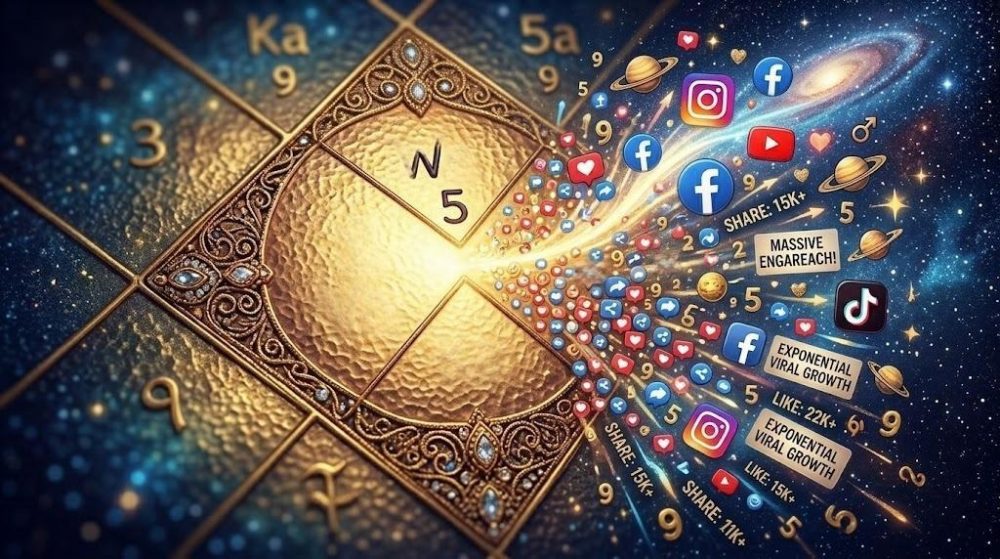
The digital space is a mess of noise. But astrology brands? They’ve cracked a viral code that’s actually pretty simple – and it all starts with two words: Free Kundli.
Scroll through Instagram or Facebook for five minutes. You’re almost guaranteed to hit an astrology page asking: “Want your free kundli? Drop your birth details below!” What looks like a random nice offer is actually a brilliant growth strategy. These brands have mastered turning ancient Vedic wisdom into modern viral content. And that free kundli hook? It’s the engine driving the whole thing.
Why “Free” Is Still the King of Social Media
Human psychology reacts to “free” like nothing else. Decades of research prove that giving something away for $0 spikes engagement and trust instantly. Astrology brands caught on fast. By using a free kundli – a birth chart rooted in Vedic astrology – as their lead magnet, they give away real, massive value for nothing. But here’s the thing. Unlike a boring discount code, a kundli feels personal. It’s got your name, your birth time, and your planets. That intimacy is what makes you stop scrolling.
The Algorithm Hack: Turning Comments into Fuel
Here’s the deal on how these posts actually explode. A brand drops a killer visual – maybe a glowing moon or a cool zodiac wheel – and the caption says: “Comment your birth date to get your free kundli in your DMs!”
The second people start flooding that comment section with birth info, the Instagram and Facebook algorithms go into overdrive. They see that massive spike in activity. They assume the post is “hot.” And then? They blast it out to thousands of new feeds. It’s a total snowball effect. You don’t even need a big ad budget when your followers are basically doing the distribution work for you.
It’s all about that “micro-commitment.” You type out your birth details. Now, you aren’t just a random scroller. You’re an active participant.
Moving the Party to the DMs
Once the user comments, the brand slides into the DMs. This is the pivot. You aren’t just another face in the crowd anymore. You’re in a private, one-on-one conversation.
The brand sends the chart, but they don’t just leave it there. This is the perfect time to offer a free astrology chat or a deeper look into a specific problem like a career mess or a breakup. Since the brand already handed over a free kundli for nothing, you actually trust them. It turns a “cold” scroller into a “warm” lead in about thirty seconds.
Shareability: The Secret Multiplier
A free kundli isn’t just a lead magnet. It’s built to be shared. People love talking about their placements. When you get a kundli that hits home, your first instinct is to screenshot it and put it on your stories. And when brands make these reports look “aesthetic”? They’re basically getting free billboards every time a user hits share. It’s a closed-loop system that keeps feeding itself.
Facebook Groups: The Parallel Universe of Reach
Instagram is for the visuals, but Facebook Groups are for the depth. Savvy brands build groups like “Vedic Astrology India” and keep a free kundli offer as a pinned post. Because Facebook’s algorithm loves group chatter, these posts stay at the top of feeds for days. It’s constant visibility without spending a single rupee.
The Data Game
There’s a strategic layer here that most people miss. Every birth date and location submitted for a free kundli is a data point. Brands build rich profiles for hyper-targeted follow-ups. Birthday reminders. Transit alerts. Personalized predictions during a rough Saturn return. This data makes the marketing feel like a real relationship.
The Bottom Line
This viral strategy isn’t just for astrology – it’s a masterclass in value-first marketing. Give something away that feels tailor-made. Create a social action that feeds the algorithm. Build trust before you ask for a dime. Astrology brands just happen to have a 5,000-year-old tool sitting in their toolkit to do it perfectly.
In an era where you usually have to “pay to play” on social media, the brands winning organically are the ones giving something real away first. The stars might be aligned, but it’s the strategy that’s doing the heavy lifting.