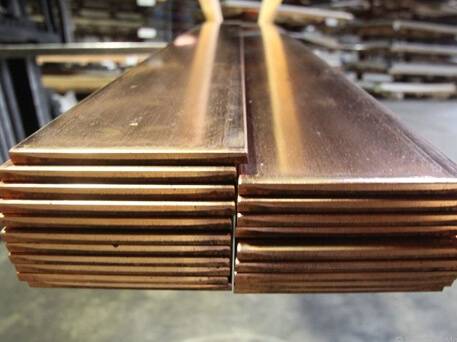
The Case for Copper Over Competing Metals
Aluminum is lighter. Steel is cheaper. Brass has its uses. So why copper? Electrical conductivity is the obvious answer: copper sits at the top among non-precious metals, beating aluminum by a considerable margin. That gap matters most at scale. When you’re transmitting high currents across a large installation, even small efficiency losses compound into meaningful energy waste and heat generation. Copper minimizes both. Thermal conductivity follows the same logic. Systems stay cooler, and cooler systems last longer and fail less.
Then there’s corrosion resistance. Copper doesn’t rust. In humid environments, chemical-heavy industrial settings, or outdoor grounding applications, this isn’t a minor convenience; it’s the difference between a component that lasts decades and one that needs replacing after a few years. And copper is ductile enough to be shaped, bent, and formed without cracking, which makes fabrication far less painful than working with more brittle alternatives. One more thing worth mentioning: recyclability. Copper can be melted down and reused without losing any of its properties. That’s unusual for a metal with this level of performance.
Applications Across Electrical and Industrial Sectors
The electrical applications are the obvious ones: power distribution, switchboards, transformers, motor windings, earthing systems. In renewable energy, solar arrays and wind installations especially, copper manages both energy transfer and grounding. It’s not a coincidence that the expansion of renewable infrastructure has driven copper demand up considerably over the past decade.
Industrial applications go further than most people expect. Copper is a critical material for the automotive manufacturing industry, especially for Electric Vehicles, in power electronics and charging systems. HVAC systems use copper bars in heat exchangers. Building and bridge construction integrate copper into grounding networks. Anywhere you need reliable conductivity under mechanical stress, copper bars tend to show up.
Material Standards and Supplier Quality
This is where the supplier conversation becomes important. Copper bars that meet ASTM and IEC specifications aren’t just following bureaucratic rules; those standards exist because performance varies significantly based on purity, dimensions, and finishing. Inconsistent grain structure or trace impurities in a batch may not be immediately obvious but can lead to underperformance such as heat build-up or premature failure down the line.
Reputable copper bar suppliers test each batch, hold traceability and supply material certification without having to be asked. If a vendor is unwilling to share documentation, that’s information worth acting on.
Certifications, quality reports and open sourcing records should be table stakes, not premium add-ons. Large-scale projects often require specific dimensions or alloy compositions that standard stock doesn’t cover, and the better suppliers offer technical support to adapt not just sell from a catalogue.
Industry Outlook and Future Demand
Copper demand isn’t slowing down. Electric vehicles, grid modernization, offshore wind, battery storage all of it relies on copper in substantial quantities. Recycling programs are scaling up in response, which helps offset some of the pressure on raw material supply, but responsible sourcing is increasingly part of how major suppliers differentiate themselves.
For engineers and procurement teams, none of this changes the core calculation. Copper bars remain the most reliable, efficient, and durable option for the applications that depend on them. The question isn’t whether to use copper, it’s which supplier you can trust to deliver consistent quality when the project actually depends on it.