There’s a specific feeling you get when you walk into a freshly cleaned home. The air seems lighter. The floor isn’t sticky. Everything is where it should be. And without even thinking about it, you exhale.
It’s one of those small things that makes a surprisingly big difference.
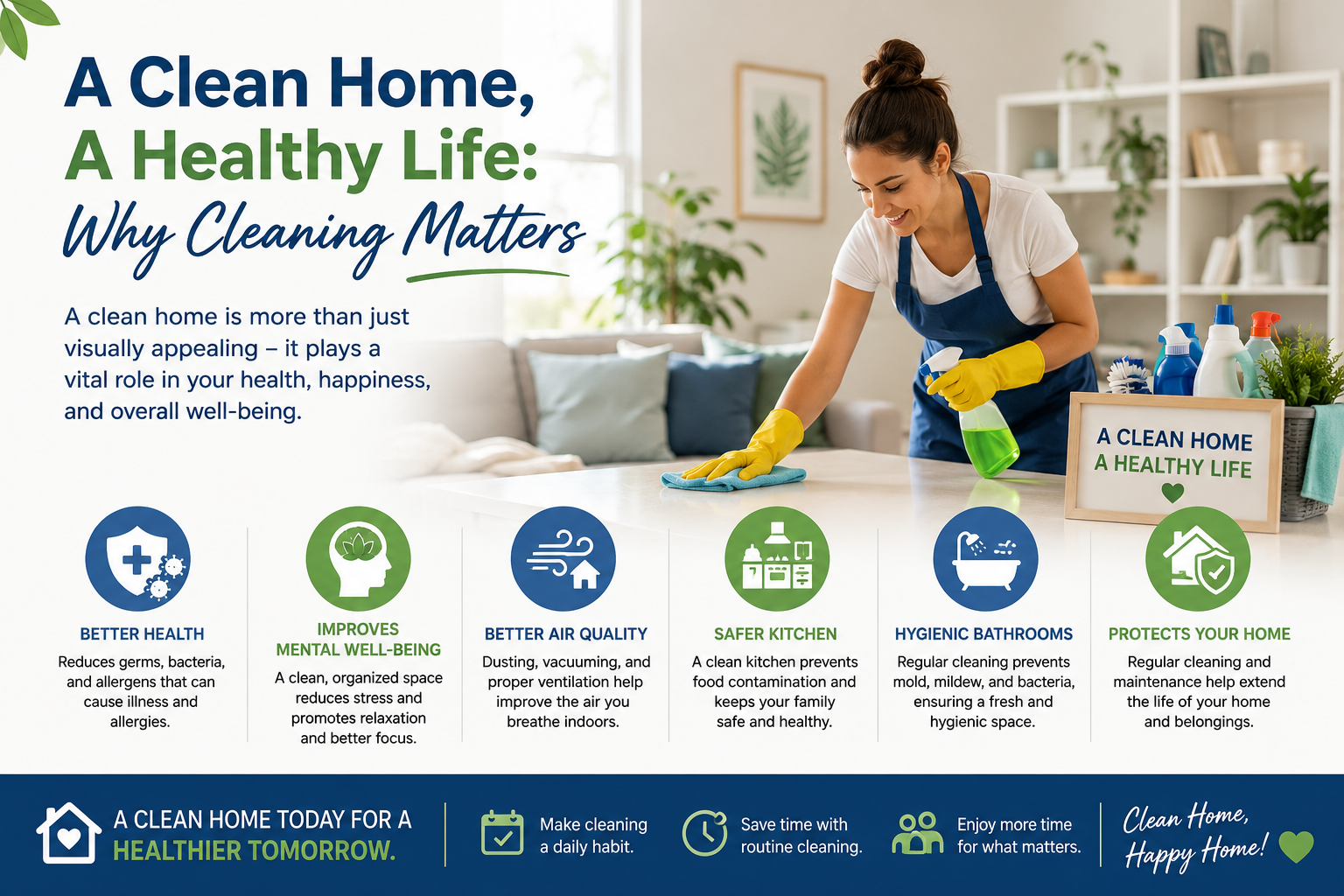
But here’s what most people don’t think about cleaning isn’t just about how your home looks. It’s about how it affects your body, your brain, and honestly, your quality of life day to day. That connection doesn’t get talked about enough, so let’s actually dig into it.
A Messy Home Is Affecting Your Health More Than You Know
You don’t have to see dirt for it to be there.
Dust, allergens, pet hair, mold spores these things accumulate quietly on surfaces, inside carpets, behind furniture, inside air vents. Over weeks and months, they build up to a point where the air you’re breathing at home is genuinely worse than it should be. For kids and older adults especially, this stuff adds up fast. Allergies get worse. Breathing gets harder. You just feel off, and you can’t figure out why.
Regular cleaning breaks that cycle. Wiping down the surfaces you touch most door handles, light switches, kitchen counters, bathroom taps reduces the spread of bacteria and germs in a real, measurable way. It’s not about being a neat freak. It’s just basic protection for your household.
What Clutter Does to Your Brain
This one doesn’t get nearly enough attention.
A messy space isn’t just an eyesore. It’s a stressor. Research consistently shows that cluttered environments raise cortisol levels your body’s main stress hormone. When you’re surrounded by mess, your brain reads it as unfinished business. It stays in a low-grade alert state, always aware of what needs to be done, never fully switching off.
That’s exhausting. And it shows up as trouble sleeping, difficulty concentrating, and that vague sense of irritability or overwhelm that you can’t quite pin down.
The flip side is also true. People sleep better in tidy rooms. They focus more easily in organized spaces. Coming home to a clean environment after a hard day actually lets you rest instead of adding to your mental load.
Cleaning your home is, in a very real sense, cleaning your head.
Your Indoor Air Quality Is Probably Not Great
Most people assume outdoor air is the polluted stuff. But indoor air can actually be worse especially in homes that aren’t cleaned regularly.
Dust mites, pollen tracked in on shoes, pet dander, mold from moisture in bathrooms and kitchens all of it floats through the air and settles into your carpets, curtains, and upholstered furniture. Without regular vacuuming and dusting, it just circulates.
For anyone in your home dealing with asthma or seasonal allergies, this isn’t a minor inconvenience. It’s a daily health issue that gets worse the longer it’s left unaddressed. Keeping filters clean, vacuuming regularly, and letting fresh air in when you can makes a real difference not just to comfort, but to how people feel physically.
The Kitchen: Your Most Important Room to Keep Clean
Kitchens are where things go wrong fastest if cleaning gets skipped.
Food residue on counters. Juice from raw meat. A sponge that’s been sitting wet on the sink for two weeks. These aren’t just gross they’re active breeding grounds for bacteria like salmonella, E. coli, and listeria. A lot of stomach bugs that people chalk up to “something going around” actually start right in the kitchen.
Wiping down surfaces after cooking, regularly sanitizing cutting boards, taking out the trash before it overflows, cleaning the inside of your fridge every month these aren’t difficult habits. But the difference they make to food safety in your home is significant. Healthy eating starts before the food even goes on the stove.
Bathrooms: The Room That Suffers Most When Ignored
Warmth and moisture make bathrooms the fastest room in the house to get unhygienic.
Mold grows in grout, mildew builds up in the shower, bacteria multiply around the toilet and sink. Leave it a few weeks and it becomes both a cleaning project and a genuine health concern. The smell alone tells you something’s off.
The good news is bathrooms are also the easiest to maintain with small, consistent effort. A quick wipe of the sink and toilet a couple of times a week. Squeegeeing the shower after use. Washing the bath mat regularly. None of this takes long but it keeps the space actually clean rather than just looking clean on the surface.
Cleaning Also Protects What You’ve Paid For
This one is easy to overlook when you’re not in the mindset of thinking about cleaning as maintenance.
Dirt and grime that gets left to sit does real damage over time. Floors get scratched from grit being walked across them. Carpets deteriorate faster. Appliances work less efficiently when they’re caked with buildup. Grout in tiles stains permanently. Furniture fabric breaks down.
Staying on top of cleaning is, in practical terms, protecting your investment in your home. It costs far less to clean regularly than to repair or replace things that were let go too long.
You Don’t Need to Spend Hours on It
Here’s the part that trips most people up they think cleaning means setting aside an entire Saturday. So they keep putting it off until it becomes a massive job, which makes them dread it even more.
The reality is different. Fifteen to twenty minutes of daily upkeep prevents almost all of that.
Making the bed in the morning. Washing dishes after meals instead of letting them pile up. Wiping the counter after cooking. Putting things back where they belong before you sit down. These aren’t big tasks. But done consistently, they mean you rarely face the kind of overwhelming mess that feels like it’ll take half a day to fix.
Small and consistent always beats occasional and intense.
When Life Gets Busy: Professional Cleaning Is Worth Considering
Some seasons of life just don’t leave much room for anything extra.
That’s where professional house cleaning services come in not as a luxury, but as a practical solution. Good cleaners know which areas get missed during routine tidying, they have the right products for different surfaces, and they can do in a couple of hours what would take most people an entire weekend.
Whether it’s a regular maintenance visit or a one-off deep clean before something important, it’s a way to keep your home in good shape without burning through your limited personal time.
The Bottom Line
Cleaning your home isn’t really about appearances, though that’s part of it. It’s about breathing cleaner air. Sleeping better. Feeling less stressed. Keeping your family healthier. Protecting the things you own.
It’s one of the lowest-effort, highest-impact things you can do consistently for your wellbeing – and the results compound over time. A home that gets regular attention just feels different to live in.
And that feeling? It’s worth the effort.