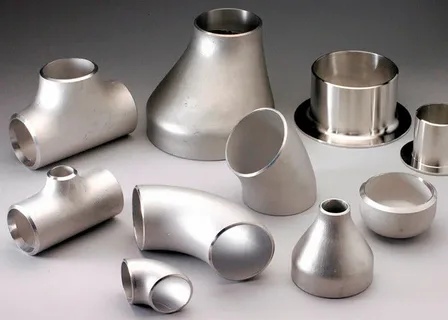
Alloy 20 Buttweld Fittings are high-performance nickel-iron-chromium alloy fittings built for aggressive chemical service. If you’ve been specifying Corrosion-Resistant Buttweld Fittings for sulfuric acid or similar applications, Alloy 20 is often preferred for this purpose. These fittings are supplied for industries where material failure isn’t just a cost issue, it’s a safety issue.
What Are Alloy 20 Buttweld Fittings?
Alloy 20 was developed due to failures in sulfuric acid handling systems. It’s a nickel-based alloy with substantial iron, chromium, copper, and molybdenum content, built to resist attack from sulfuric acid across a broad concentration range, something standard Stainless Steels can’t consistently manage.
In procurement specifications, you’ll see these referred to as Alloy 20 Pipe Fittings, UNS N08020 Buttweld Fittings, or Nickel Alloy 20 Fittings. All refer to the same base material. These fittings connect into piping systems using butt-welding, making them suitable for pressure-rated, leak-free joints in critical service lines.
Chemical Composition of Alloy 20
The corrosion resistance comes directly from the alloy’s composition:
- Nickel (Ni): 32 to 38%
- Chromium (Cr): 19 to 21%
- Iron (Fe): Balance
- Copper (Cu): 3 to 4%
- Molybdenum (Mo): 2 to 3%
Copper helps specifically against sulfuric acid. Molybdenum improves resistance to pitting and crevice corrosion in chloride environments. Chromium stabilizes the passive film. Together, these elements also reduce susceptibility to stress corrosion cracking. Columbium is added in small amounts to stabilize against sensitization during welding.
Mechanical Properties
Typical values for Alloy 20:
- Tensile Strength: 621 MPa (90 ksi) minimum
- Yield Strength: 241 MPa (35 ksi) minimum
- Elongation: 30% minimum
- Hardness: Brinell 217 max
The alloy retains usable strength at elevated temperatures, though it’s selected for corrosion resistance, not high-temperature structural service. It work-hardens during cold forming, which needs to be accounted for in production. Welding behavior is good, and machining is manageable with proper tooling and coolant.
Types of Alloy 20 Pipe Fittings
Alloy 20 fittings are produced in the standard buttweld configuration range. Here’s what’s typically available:
- Alloy 20 Elbows
90-degree and 45-degree elbows, short and long radius. Used wherever a pipeline changes direction. Long-radius is more common in process piping for lower pressure drop.
- Nickel Alloy 20 Tees
Equal and reducing tees for branching flow. Frequently used in distribution headers and sampling connections in chemical plants.
- UNS N08020 Reducers
Concentric and eccentric types for transitioning between pipe sizes. Eccentric reducers are used in pump suction lines and horizontal runs where drainage matters.
- Alloy 20Stub Ends
Used with lap joint flanges so the expensive alloy is only where it contacts the process fluid. The backing flange handles the mechanical load.
- UNS N08020 Cross Fittings
Four-way intersections used in specific manifold and distribution configurations.
- Nickel Alloy 20 Caps
End caps for terminating pipe runs or isolating a line during testing or maintenance.
- Alloy 20 Bends
3D and 5D radius bends for gradual direction changes. Less turbulence than standard elbows, relevant in erosive or slurry service.
Key Benefits of Nickel Alloy 20 Fittings
- Exceptional Corrosion Resistance
Alloy 20 resists sulfuric acid, phosphoric acid, nitric acid and many organic acids where standard grades corrode rapidly. Most of the acidic process environments are covered by combinations of nickel, copper and molybdenum.
- Performance in Sulfuric Acid Environments
316L stainless has limits in sulfuric acid service at mid-concentrations and elevated temperatures. Alloy 20 was specifically formulated for these conditions, and in many acid systems, it’s the default material.
- Good Mechanical Strength
Enough tensile and yield strength to meet standard pressure piping requirements without oversized wall thicknesses. It’s not a material that trades strength for corrosion performance.
- Resistance to Chloride Stress Corrosion Cracking
Austenitic stainless steels crack in chloride environments under tensile stress. Alloy 20’s higher nickel content substantially reduces this risk. Relevant anywhere chlorides coexist with acid service.
- Long Service Life
In properly specified applications, these fittings will last far longer than standard stainless grades. They need less replacements, and face fewer unplanned shutdowns.
- Easy Fabrication and Welding
Welds without requiring post-weld heat treatment in most cases. Columbium stabilization protects the heat-affected zone. Field repairs are straightforward.
Applications of UNS N08020 Buttweld Fittings
- Chemical Processing Plants: Chemical processing plants primarily use these buttweld fittings. These include sulfuric acid production, pickling systems, and chemical synthesis. Alloy 20 is written into the material standards of many chemical companies for these services.
- Petrochemical Industries: Units handling acidic streams with sulfur compounds. These are hydrotreating, alkylation, and sour water systems.
- Pharmaceutical Manufacturing: Corrosion resistance plus cleanability requirements. Aggressive acid cleaning cycles are less damaging to this material.
- Food Processing Equipment: Acidic products or aggressive cleaning regimes that would degrade standard grades.
- Marine Applications: It is used in environments with saltwater combined with process chemicals. Chloride resistance is the key factor here.
- Power Generation: Flue gas desulfurization, acid handling in water treatment, and select heat exchanger services use the UNS N08020 Buttweld Fittings.
- Acid Handling Systems: these fittings are used in the storage and transfer of concentrated and dilute acids, tank farms, loading lines, and acid distribution headers.
Standards and Specifications
Alloy 20 Buttweld Fittings are manufactured to recognized standards:
- ASTM B366 / ASME SB366: Primary standard for factory-made wrought fittings in nickel alloys
- UNS N08020: Base alloy designation
- ANSI/ASME B16.9: Dimensions and tolerances for buttweld fittings
- MSS SP-43: Lightweight nickel alloy buttweld fittings
- NACE compliance: Where H2S or sour service conditions apply
Fabrication and Welding of Alloy 20 Fittings
All three processes, GTAW, GMAW and SMAW are compatible with this material. Typically matching filler metals such as ERNiCrMo-3 are used. Post-weld heat treatment is normally not required. Interpass temperature control during welding matters. Overheating in the weld zone can reduce corrosion resistance locally. Machining needs sharp tooling and good coolant. Proper fabrication practice is not optional here. A fitting with correct composition but poor processing can lose significant corrosion resistance.
How to Select the Right Alloy 20 Buttweld Fittings
Start with the process fluid and check corrosion data for your specific concentration and temperature. Alloy 20 is excellent in sulfuric acid service but is not a universal solution for every aggressive environment.
Pressure and temperature determine the required schedule. Most Alloy 20 fittings are available in schedules 10S through 80S. Match the fitting schedule to the pipe.
Make sure it meets ASTM B366, ASME SB366 and ANSI B16.9 for regulated or high pressure service. Request material test certificates and third party inspection documentation where required by the project.
Conclusion
Alloy 20 Buttweld Fittings are a practical, proven choice for piping systems dealing with acids and aggressive chemicals. The material is more expensive up front, but in the right application it outperforms less expensive options and reduces the maintenance and downtime costs associated with frequent replacements.