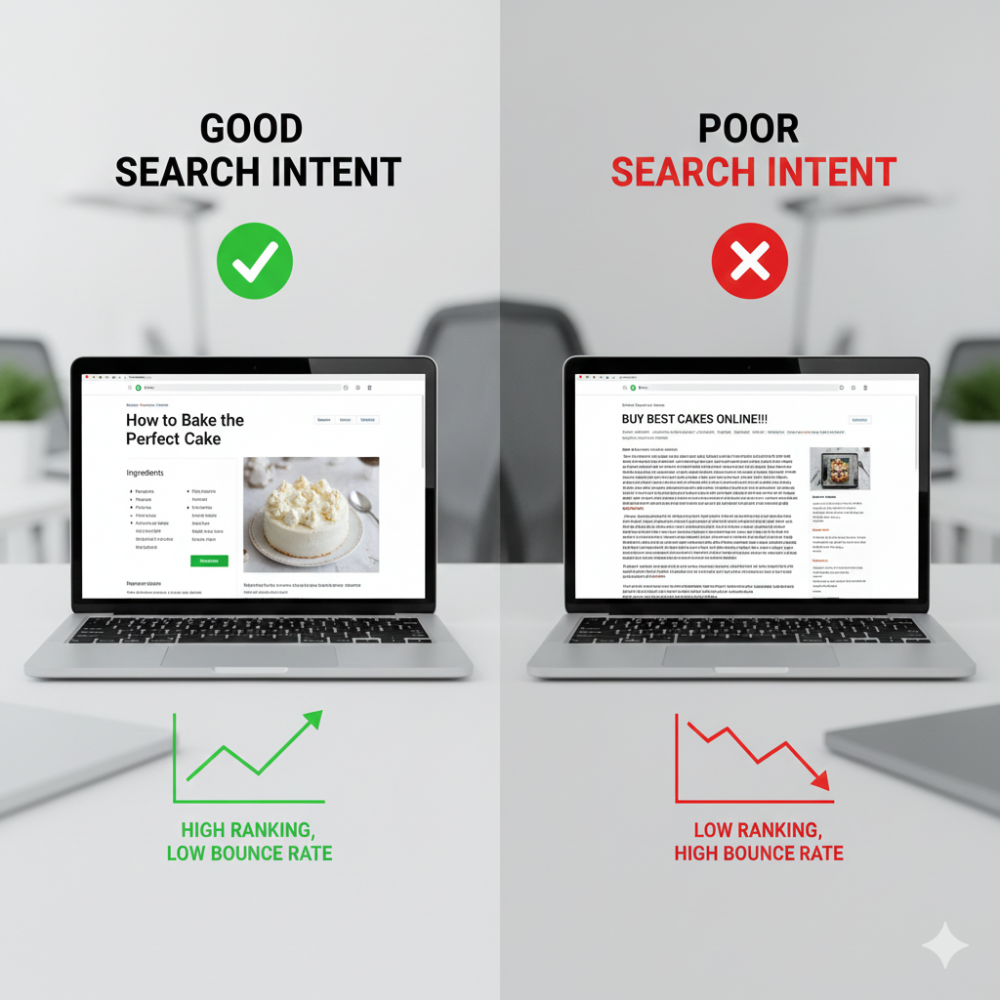
Search intent is the “why” behind a search. It is the reason a person types a word into Google. Google wants to help its users. It ranks pages that solve the user’s problem.
If you ignore intent, your traffic will drop. You can write a great post, but Google will ignore it if it doesn’t help the user. This is how the modern algorithm works. It looks for “Helpful Content” that satisfies the person searching. Many businesses use professional SEO Content Writing Services in Delhi to ensure their articles meet these strict Google standards.
Understanding the Four Types of Search Intent
Every search has a goal. You must know this goal before you write. This keeps your content relevant. A Freelance Website Content Writer India uses these types to build a real plan.
Informational Intent: The Quest for Knowledge
The user wants to learn. They use words like “how,” “what,” or “why.” They want a guide or a quick answer.
- Example: “How to bake a cake.”
- The Goal: Give a clear answer. Do not sell anything yet. Just be the expert.
Navigational Intent: Finding a Specific Site
The user knows where they want to go. They use Google as a map.
- Example: “Facebook login” or “Amazon track order.”
- The Goal: Make your brand name clear. Help them find your login page or contact page fast.
Commercial Investigation: Comparing Options
The user wants to buy something soon. They are doing research. They look for reviews or “top 10” lists.
- Example: “Best SEO tools” or “iPhone vs Samsung.”
- The Goal: Show pros and cons. Use comparison tables. Help them make a choice.
Transactional Intent: Ready to Buy
The user is ready to pay. They use words like “buy,” “price,” or “coupon.”
- Example: “Buy running shoes online.”
- The Goal: Make the page fast. Put the “Buy” button in a clear spot. Do not make them read a long story.
How Search Intent Impacts Your Website Rankings
Google tracks how people use your site. It wants to see happy users. If your content matches search intent, your rankings will climb. If there is a mismatch, your rankings will drop. Google uses specific signals to judge your page.
Why Google Prioritizes “Helpful Content”
The Google algorithm is now very smart. It does not just look for keywords. It looks for utility. In 2026, Google rewards pages that solve a problem in one visit. If a user finds their answer on your page, Google marks your content as “Helpful.”
The Relationship Between Intent and Bounce Rates
A “bounce” happens when a user leaves your site quickly. High bounce rates often mean you missed the intent. For example, a user wants to buy a product. You give them a long blog post instead. They will leave your site. This tells Google your page is not the right fit for that search.
Understanding Dwell Time and Pogo-Sticking
Dwell time is the minutes a person spends on your page. Long dwell time is a good signal. It shows your content is relevant.
Pogo-sticking is when a user clicks your link, hates it, and goes back to Google immediately. This is a major ranking killer. It proves to Google that your content did not satisfy the searcher’s task.
Improving User Experience Through Content Alignment
Good SEO is about a smooth journey. When your content matches intent, the user stays longer. They click your links. They trust your brand. This positive behavior signals to Google that your site is an authority.
A Freelance Website Content Writer India ensures every sentence keeps the user engaged. This keeps dwell time high and keeps your rankings stable.
How to Match Your Content to User Needs
You must plan your content before you write. You should not guess what the user wants. Google already shows you the answer in the search results.
Analyzing the SERP for Clues
The Search Engine Results Page (SERP) is your best tool. Type your keyword into Google. Look at the top ten results.
- Are they long guides? The intent is informational.
- Are they product category pages? The intent is transactional. If you write a blog post for a keyword that shows only products, you will not rank. You must match the format that Google already prefers.
Mapping Keywords to the Customer Journey
Every user follows a path. They start with a question. They end with a purchase.
- Awareness: They ask “Why is my site slow?”
- Consideration: They search for “Best hosting providers.”
- Decision: They search for “Bluehost discount code.” A Freelance Website Content Writer India creates content for every stage. This helps you catch the user at the start and lead them to the end.
Creating Content That Answers the Query
Do not hide the answer. If a user asks a question, answer it in the first paragraph. This is called “Front-loading.” It satisfies the user immediately.
If they get the answer fast, they trust you. They will stay to read the rest of your article. This behavior improves your dwell time. It tells Google your page is a perfect match for the intent.
Common Mistakes in Intent Mapping
Even experts make mistakes. Many sites lose traffic because they misjudge the user’s goal. Avoiding these errors will give you an advantage over your competitors.
Targeting the Wrong Keyword Stage
You must not treat all keywords the same. Some keywords are for learning. Others are for buying.
If you try to sell a product on a “how-to” page, you will fail. The user is not ready to buy yet. They want an answer. If you push a sale too early, the user will leave. You must match your message to the user’s current stage in the journey.
Ignoring “People Also Ask” Suggestions
Google tells you exactly what users want to know. The “People Also Ask” (PAA) box shows related questions. Many writers ignore these clues.
If you do not answer these related questions, your content is incomplete. A Freelance Website Content Writer India uses these boxes to find subheadings. Answering these questions keeps the user on your page. It also helps you rank for multiple searches at once.
Over-Optimizing for Bots
Do not write for the Google bot. Write for the human behind the screen. If your text is full of repetitive keywords, it feels robotic. Humans will close the tab. Google tracks this behavior. If humans do not like your page, the bot will not rank it.
How to Fix Your Search Intent Strategy
You can improve your site today. Follow these steps to align your content with user needs.
Step 1: Audit Your Top Pages
Check your Google Search Console. Find pages with high impressions but low clicks. This often means your title does not match the search intent. Change your headings to answer the user’s specific question.
Step 2: Use the “First Paragraph” Rule
Look at your introductions. Do you answer the main query in the first 50 words? If not, rewrite them. Give the user the solution immediately. This prevents them from bouncing back to Google.
Step 3: Refresh Old Content
Search intent changes over time. An article from three years ago might not satisfy users today. Update your facts. Add new “People Also Ask” questions. Ensure your Freelance Website Content Writer India keeps your blog current and relevant.
Summary for Success
Search intent is the most important part of SEO. Google does not rank the longest content. It ranks the most helpful content.
Focus on the user’s goal. Match your format to the search results. Provide clear answers. When you put the user first, your rankings will follow. You will build trust, reduce your bounce rate, and increase your conversions.