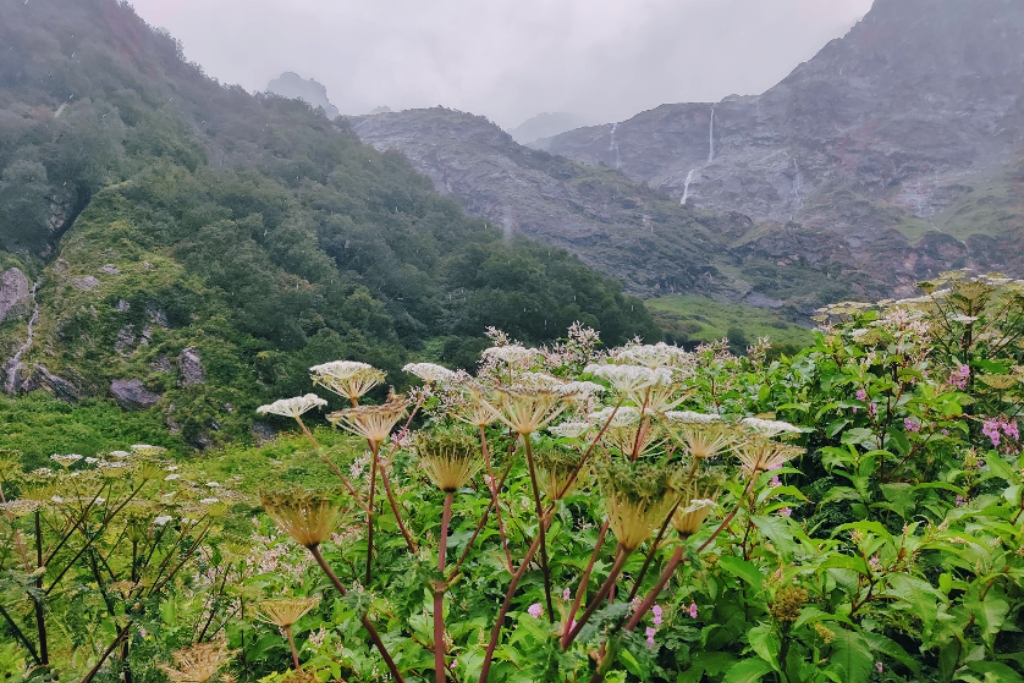
Yes, you read the title correctly. It is something that you can experience at only a few rare places on the planet. Mentioned by Frank Smythe in his book “Valley of Flowers,” it was truly described as a heaven-like garden.
Also, one of the famous mountain explorers, Bill Aitken, appreciates the beauty of the Valley of Flowers along with Ali Bedni Bugyal and the Nanda Devi Biosphere Reserve in his book “Nanda Devi Affair.”
Valley of Flowers NP Location and Accessibility
The Valley of Flowers is a national park in the Uttarakhand state of India. It covers an elevation range from 3,350 m to 3,658 m and stretches about 5 km in length and 2 km in width. It is a part of the Nanda Devi Biosphere Reserve and is accessible via a trekking trail from the Govind Ghat base point.
Jolly Grant Airport, Dehradun, is the nearest airport, located around 280 km away. Yognagari Railway Station, Rishikesh, is the nearest railway station, approximately 266 km by road from Govind Ghat. After completing the road journey to the base camp, the beautiful trekking trail begins after another short drive of 4 to 5 km to Poolna.
VOF Trail Overview and Route Details
The Valley of Flowers trek route is simple on paper but deeply rewarding once you are on the trail. The journey starts from Govind Ghat, a small town on the Badrinath highway. From Govind Ghat, a short drive of around 4 to 5 km takes you to Poolna village, which is now the official starting point of the trek.
From Poolna, the trail gradually climbs alongside the Pushpawati River, passing through dense forests, waterfalls, wooden bridges, and occasional tea stalls run by locals. The first major halt is Ghangaria, which acts as the base camp for both Valley of Flowers National Park and Hemkund Sahib.
The total trekking distance from Poolna to Ghangaria is about 9 to 10 km, and it usually takes 5 to 7 hours depending on pace and weather. The trail is well marked and stone-paved in many sections, making it friendly for first-time Himalayan trekkers, though the continuous ascent can feel tiring.
From Ghangaria, the Valley of Flowers gate is another 3 to 4 km one way, which is mostly flat to mildly ascending. Trekkers usually do this as a day hike and return to Ghangaria by afternoon.
Highlights of Valley of Flowers National Park
The biggest highlight of the Valley of Flowers is that it does not feel like a typical trek. It feels more like walking inside a living painting. The valley opens suddenly after a narrow forested section, and you are greeted with wide alpine meadows surrounded by snow-clad peaks.
Some of the major highlights include:
- Thousands of alpine flowers blooming naturally without any human intervention
- Snow patches even during peak summer months
- Glacial streams crossing the valley
- Clouds rolling in and out, changing the colors of the landscape
- Absolute silence except for flowing water and wind
Trek guides mention that the valley looks different every hour. Morning light makes it fresh and vibrant, while afternoon clouds give it a dreamy and mystical appearance.
Flowers You Can See in Valley of Flowers
The Valley of Flowers is home to over 600 species of flowers, and the exact blooms depend heavily on the time of your visit.
Some commonly mentioned flowers by forest authority include:
- Blue Poppy
- Brahma Kamal
- Cobra Lily
- Himalayan Bellflower
- Geranium
- Anemone
- Potentilla
- Daisy varieties
- Marsh Marigold
- Himalayan Rose
It’s often recommended to carry a small plant identification guide or simply ask forest guards, who are surprisingly knowledgeable about the flora. Photography lovers should note that plucking flowers is strictly prohibited, and fines can be imposed.
Best Time to Visit Valley of Flowers
Valley of Flowers National Park is open only for a limited time every year due to heavy snowfall.
Best visiting window:
- Mid July to late August for peak flower bloom
- Early September for fewer crowds and cleaner skies
June usually has fewer flowers because snow is still melting. July brings the first blooms, while August is considered the absolute best. September has fewer flowers but offers better mountain views.
Monsoon rains are common, and carrying proper rain gear and waterproof backpacks are a must.
Difficulty Level and Fitness Requirement
Valley of Flowers is generally rated as an easy to moderate trek, but that does not mean it should be taken lightly.
Things that add to difficulty:
- Continuous ascent from Poolna to Ghangaria
- High altitude around 3,600 meters
- Slippery trails during rain
- Long walking hours
Trek guides suggest that anyone with basic fitness and prior walking habits can do this trek comfortably. First-time trekkers are advised to walk slowly, hydrate well, and avoid rushing to Hemkund Sahib on the same day as Valley of Flowers.
Hemkund Sahib Visit Details
Hemkund Sahib is one of the highest Sikh pilgrimage sites in the world and is usually combined with the Valley of Flowers trip.
From Ghangaria, Hemkund Sahib is a 6 km steep uphill trek one way, gaining significant altitude in a short distance. This section is much more demanding than Valley of Flowers.
Highlights of Hemkund Sahib include:
• The glacial Hemkund Lake
• Gurudwara Hemkund Sahib
• Surrounding snow-covered peaks
• Spiritual atmosphere even for non-religious trekkers
Trek guides strongly recommend starting early in the morning if visiting Hemkund Sahib and keeping a separate day for it due to the steep climb and weather changes.
Accommodation Options
Accommodation is available only till Ghangaria, not inside the Valley of Flowers National Park.
Options include:
- Budget guesthouses
- GMVN guesthouse
- Small hotels
- Gurudwara stay at Govind Ghat and Ghangaria
Rooms are basic but sufficient. During peak season, availability becomes tight, and trek guides advise pre-booking wherever possible or reaching early in the day.
Food Availability on the Route
Food options are simple but easily available.
- Roadside dhabas at Govind Ghat
- Small eateries along the Poolna to Ghangaria route
- Vegetarian meals at GhangariaLangar at Hemkund Sahib Gurudwara
Meals typically include dal, rice, roti, sabzi, tea, and Maggi. It is suggested carrying dry fruits and energy bars for the Valley day since no food stalls are allowed inside the national park.
Permit and Entry Rules
Entry into Valley of Flowers National Park requires a permit, which is issued at the forest check post near Ghangaria.
Important permit rules:
- Valid for one day only
- Entry allowed from morning till early afternoon
- No overnight stay inside the park
- No plastic allowed
- No drones or loud music
Forest guards strictly monitor compliance, and trek guides mention that enforcement has become stricter in recent years.
Important Tips
- Start early to avoid crowds and rain
- Carry rain protection even if forecast looks clear
- Do not rush the trek, altitude sickness is real
- Keep buffer days for weather delays
- Respect the ecosystem, this place survives because of strict protection
Final Thoughts
Valley of Flowers National Park is not about conquering a summit or testing extreme endurance. It is about slowing down and witnessing nature at its most gentle and pure form.
This trek changes your definition of beauty. It is not dramatic like high passes or glaciers, but subtle, calm, and deeply satisfying.
If the Himalayas had a garden, this would be it.