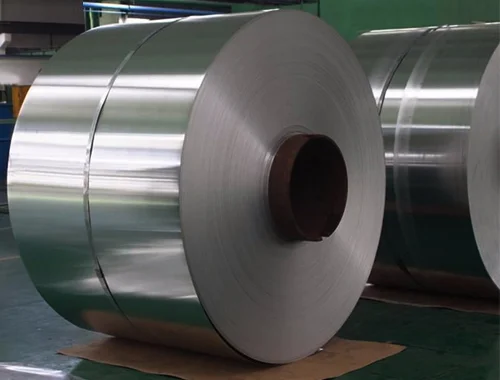
Stainless steel coils are something we see everywhere in industry, yet very few people truly understand how much work goes into producing them. Whether it is an automotive plant stamping panels, a fabrication workshop building heat exchangers, or a food-processing line that demands spotless hygiene, SS coils form the base material for all these applications. The process of making stainless steel coils is more than just technical. Stainless steel coil manufacturing goes beyond technical work. It follows precise steps where heat, pressure, and accuracy come together to create a material built to last in tough environments.
The Start:
Everything begins in the melt shop. Stainless steel isn’t a single ingredient—it’s a mixture of iron, chromium, nickel, and a few micro-additions that differ depending on the grade. These raw materials are melted inside an electric arc furnace. The operator adjusts chemistry like a chef adjusting flavours, because even a small deviation can affect corrosion resistance or strength later.
Once the melt is correct, the steel is cast into slabs. These thick blocks are the first solid form before the rolling process begins.
Hot Rolling:
he slabs are warmed until the steel is soft enough to shape, almost like clay. They are sent through a series of heavy rolls that stretch, thin, and flatten the material while it’s still glowing red. This is where the first coil is formed.
Hot-rolled coils are strong, scale-covered, and used where appearance is not the priority. Think large fabrications, tanks, heavy machinery, and structural components.
Cold Rolling:
Hot-rolled coils are sent for cold rolling when tighter thickness control or a better finish is required. The process is carried out at room temperature, making the steel stronger and more accurate in size. Cold-rolled stainless steel is often used in home appliances, architectural cladding, and polished industrial equipment. The finish is cleaner because the steel goes through pickling, skin passing, and final finishing steps.
Annealing & Pickling:
During rolling, steel becomes harder and loses some flexibility. To restore ductility, manufacturers use annealing—heating the steel under controlled conditions and allowing it to cool down slowly.
SS 304 Welded Coil Tubing: An Important By-Product
One of the most widely used products derived from SS coils today is ss 304 welded coil tubing. Industries prefer it because SS 304 remains stable under pressure, resists corrosion far better than carbon steel, and maintains a smooth inner surface—critical for fluid flow and cleanliness.
You will find SS 304 coil tubing in:
- Instrumentation lines
- Heat exchanger coils
- Chemical processing units
- Dairy and beverage plants
- Marine and offshore systems
Its performance relies heavily on the consistency of the coils from which it is produced.
Quality Checks: What Buyers Don’t See
A lot happens behind the scenes before a coil leaves the factory. Mills carry out tensile tests, flattening tests, hardness checks, corrosion resistance tests, and full chemical analysis.
Stainless steel is so versatile that its use keeps growing, even in industries that once relied mostly on mild steel.
Closing Thoughts
Making stainless steel coils takes several careful steps, and each step affects the quality of the final product. What may look like a simple rolled sheet is actually the result of precise metal mixing, accurate rolling, smooth surface finishing, and thorough testing according to standards. With the growth of industries, ss 304 welded coil tubing has become a vital product. It resists corrosion and delivers reliable performance in demanding, high-pressure conditions.