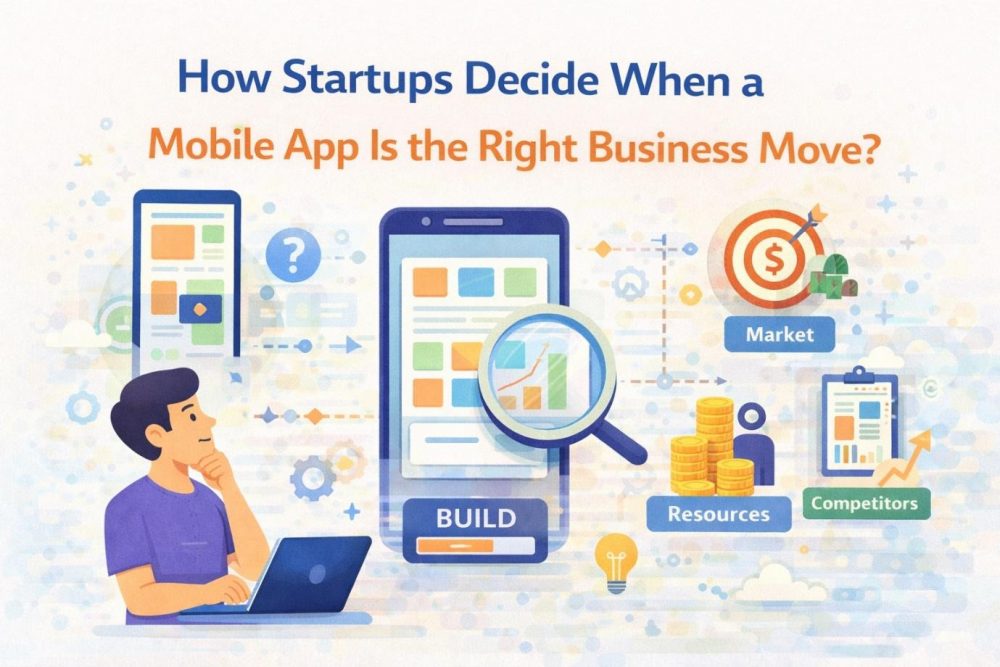
For many startups, the idea of launching a mobile app feels like a milestone. It signals growth, credibility, and ambition. Yet behind the excitement, there’s a quieter and often tougher question founders need to answer first. Is a mobile app actually the right move right now?
Plenty of startups rush into app development because competitors have one, investors expect one, or users casually ask for one. But experienced founders know that timing matters more than trends. A mobile app can unlock new possibilities, but it can also drain resources if built too early or for the wrong reasons.
The Problem a Mobile App Is Meant to Solve
The decision usually starts with clarity around the problem. Startups that succeed with mobile apps don’t begin with features. They begin with friction.
Is the existing website failing to support repeat usage?
Are users dropping off because mobile web experiences feel slow or clumsy?
Do customers need offline access, push notifications, or real-time updates?
If the answer to these questions is no, an app may not add much value yet. Many early-stage startups discover that improving their mobile website or refining backend workflows delivers better returns than jumping straight into an app.
Understanding User Behavior Comes First
Strong app decisions are grounded in real user behavior, not assumptions. Founders who study how people interact with their product often notice patterns that signal app readiness.
High daily or weekly engagement is one sign. When users return frequently and rely on the product as part of a routine, an app starts to make sense. Another signal is when users consistently access the platform from mobile devices rather than desktops.
Startups also pay attention to where friction occurs. If users abandon tasks midway on mobile browsers or complain about performance issues, those signals often point toward the need for a native mobile experience.
Growth Stage Matters More Than Idea Strength
A compelling idea alone doesn’t justify a mobile app. Timing depends heavily on a startup’s stage.
Early-stage startups are still validating assumptions. Their focus is learning fast, iterating, and conserving cash. At this stage, flexibility matters more than polish. Web platforms and no-code tools often serve better because they allow rapid change.
As startups move into a growth phase, priorities shift. User expectations rise. Performance, reliability, and convenience become central. This is where app discussions grow more serious, especially for businesses serving consumers directly.
Some founders based in competitive markets like Los Angeles often face this decision earlier, especially when user expectations align with mature app ecosystems. In such cases, mobile app development in Los Angeles becomes part of a broader strategy to match local user behavior rather than simply following trends.
Internal Readiness Is Just as Important
Even when users want an app, startups must look inward. A mobile app is not a one-time project. It introduces ongoing responsibilities.
Teams need to support updates, security patches, and platform changes. Product roadmaps become more complex. Decisions must account for iOS and Android differences, testing cycles, and store approvals.
Startups that underestimate this operational weight often struggle after launch. The most successful teams treat app development as a long-term commitment rather than a checkbox.
Cost Is More Than Just Development
Many founders evaluate app readiness through budget alone. While cost matters, it’s rarely the biggest factor.
Opportunity cost plays a bigger role. Time spent building an app is time not spent improving onboarding, customer support, or core features. Founders must ask whether an app directly supports their current goals or distracts from them.
Successful startups often delay app launches until the product direction is stable. This reduces rework and avoids expensive redesigns later.
Competitive Pressure Can Be Misleading
Seeing competitors launch apps creates pressure, but copying rarely leads to success. What works for one business may not work for another.
Smart startups analyze why competitors built apps. Was it driven by user demand, operational needs, or brand positioning? They also look at app reviews, retention patterns, and update frequency to understand real outcomes, not surface-level appearances.
This analysis often reveals that apps succeed when tied closely to business fundamentals, not because they exist.
The Right Question to Ask
The strongest founders don’t ask, “Should we build an app?”
They ask, “What will be better for users if we do?”
If the answer is clear, measurable, and tied to real usage patterns, the decision becomes easier. If the answer feels vague or aspirational, it’s usually a sign to wait.
In the end, building a mobile app is less about ambition and more about alignment. When user needs, business maturity, and internal readiness intersect, the move stops being risky and starts being logical.