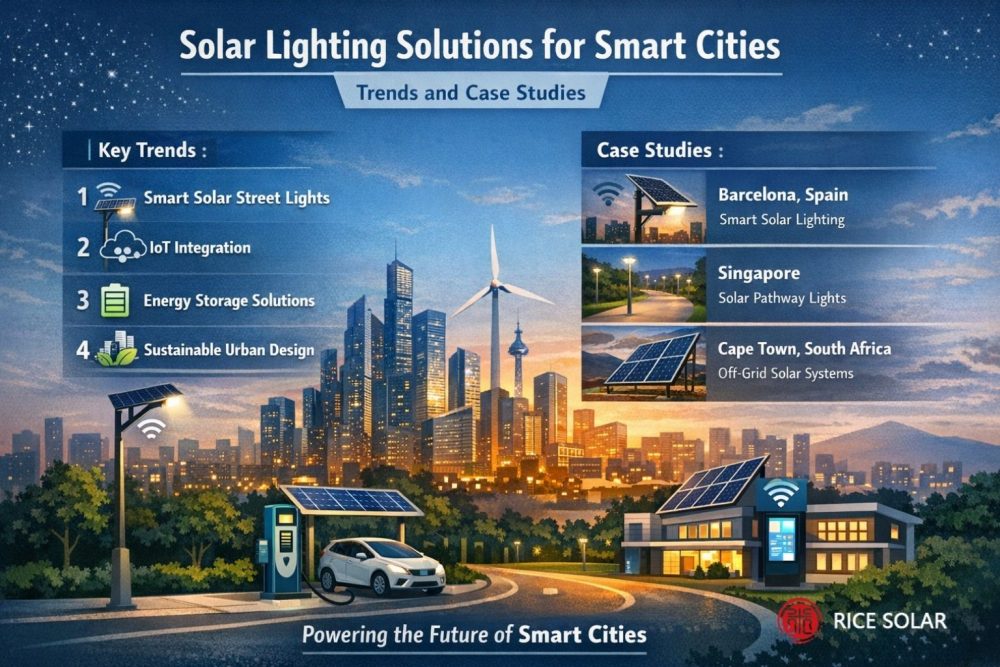
Solar lights are rapidly changing smart cities through the integration of sustainability, energy efficiency, and smart city design. Solar-powered streetlights and smart urban lighting systems are becoming part of the infrastructure as cities are working to lower carbon footprints and improve their safety.
The article is focused on the most recent trends in the field of solar lighting that can be used in smart cities and outlines practical examples of how it has proven effective.
Understanding Solar Lighting in the Context of Smart Cities
Solar lighting helps smart cities use clean energy while improving urban lighting efficiency and control.
What Are Smart Cities?
Smart cities use technology to enhance urban life. Their core principles are sustainability, energy efficiency, and connectivity. IoT devices, data analytics, and renewable energy sources play a critical role in making city environments efficient and livable.
Role of Solar Lighting in Urban Sustainability
Solar lighting reduces energy costs and carbon emissions while improving public safety. Solar streetlights are well-designed and enhance urban aesthetics while fitting seamlessly into smart city environments.
Components of a Smart Solar Lighting System
- Solar Panels: Capture sunlight and convert it into electricity.
- Batteries: Store energy for night-time use. LiFePO₄ and lithium-ion batteries are popular for durability.
- LED Lights: Provide energy-efficient illumination.
- Smart Sensors: Motion, ambient light, and IoT-enabled monitoring for energy optimization.
- Connectivity: Enables real-time monitoring, remote control, and predictive maintenance.
Key Trends in Solar Lighting for Smart Cities
New technologies are making solar lighting smarter, more efficient, and easier to manage in modern cities.
Integration with IoT and Smart Sensors
Intelligent solar lamps can detect motion. The lights increase in brightness when cars or individuals pass by. When no one is present, they dim the light to save power. City teams can also monitor and control the lights using computers or centralized systems
Use of High-Efficiency Solar Panels and LED Technology
Improved solar panels capture more sunlight during the day. Mono-crystalline panels are better than the regular panels. LED lights consume less electricity and have a long lifespan, so cities do not need to replace them frequently.
Battery and Energy Storage Innovations
Solar lights store energy in batteries for night-time use. The new batteries have a longer lifespan and can function during cloudy days this ensures the lights function reliably on most nights.
Sustainable Urban Design and Smart Street Lighting
Solar lights are suitable for modern urban areas. Cameras or Wi-Fi devices can also be installed on some light poles. Installing solar lights in parks and walkways makes cities safer and more environmentally friendly.
Data-Driven Energy Management
Smart lights analyse usage patterns. This helps cities address issues early and prevent energy waste. Lighting may be automatically switched on or off according to real requirements.
Benefits of Solar Lighting Solutions in Smart Cities
Solar lighting offers cities a cost-effective and eco-friendly way to improve public lighting systems.
Solar lighting helps cities save money by lowering electricity bills. Because these lights use sunlight, cities do not need to rely heavily on the power grid.
Solar lighting also helps protect the environment. It minimizes carbon emissions and promotes clean energy initiatives, which make the cities cleaner and healthier.
Solar lights enhance safety and security by enhancing the lighting on streets and parks as well as in public areas. City spaces are also made more attractive and welcoming with well-lit spaces.
Solar lighting systems are scalable and ready to deal with the future. With the increasing needs, it is easy to add more lights or to upgrade them with new technologies in the cities.
Case Studies: Smart Cities Using Solar Lighting
Many smart cities around the world are already using solar lighting to improve safety and reduce energy costs.
Case Study 1: Solar Spot Light Install for Trees – Singapore
Rice Solar was engaged to install solar floodlights in Singapore to light up garden lawns under buildings. The solution provided 180 lumens of light and turned spaces into colorful night-time spaces, being both efficient in energy consumption and appealing to the eyes.
Case Study 2: 40W Solar Street Light – Spain
Solar post-top lights with high brightness, which are mounted on 6-meter poles in a parking lot. The system had LiFePO₄ batteries and Philips LED chips which provided quick charging and long duration of illumination which improved the energy efficiency and safety of the system.
Case Study 3: Astra AIO Solar Street Light – Thailand
More than 120 units were placed on country roads and urban streets. The 60W all-in-one solar street lights enhanced visibility during night, pedestrian safety and sustainability because of its contribution towards the local sustainability objectives.
Case Study 4: Solar Garden Lights – Malaysia
The parks and villa areas had durable die-cast aluminium alloy lights installed. The lights were designed with a weather-proof design, Philips LEDs and provided reliable illumination to the tropics, which was both energy-efficient.
Challenges and Considerations
Even though solar lights have numerous advantages, installation, maintenance, and compatibility of the system are also important factors that need to be considered by the city.
- Solar lighting systems are expensive at the start.
- Lithium-ion battery lifespan and performance in harsh conditions.
- Incorporation issues with the current urban infrastructure.
- Need to hire skilled professionals to supervise and administer systems.
Future Outlook of Solar Lighting in Smart Cities
Solar lighting will play a greater role in the development of smart cities as technology keeps getting advanced.
- AI integration to predictive energy management.
- Wi-Fi-enabled, EV-charging, and lighting multi-purpose smart poles.
- Stable and versatile community-based lighting.
Conclusion
Smart cities are taking a new form with solar lighting solutions. These systems are important in making urban development sustainable, whether in terms of energy efficiency, or in terms of improved urban safety. Solar lighting has been shown to have practical advantages and versatility as evidenced by case studies in Singapore, Spain, Thailand, and Malaysia. The cities which are interested in smart solar lighting systems and want to reduce pollution and excessive expenses, should think about installing these systems with the assistance of such companies as Rice Solar.
FAQs
Q. What is solar lighting in smart cities?
Solar lighting in smart cities means using solar-powered lights to brighten streets, parks, and public areas in an energy-efficient way.
Q. How does solar street lighting help smart cities?
Solar street lighting helps cities save electricity, reduce pollution, and improve safety in public spaces.
Q. Are solar street lights reliable for city use?
Yes, modern solar street lights are reliable and designed to work well in different weather conditions.
Q. Do solar lights work on cloudy days?
Yes, solar lights can still work on cloudy days because they store energy in batteries.
Q. What is the future of solar lighting in smart cities?
Solar lighting will become smarter with better batteries, smart controls, and advanced technology.