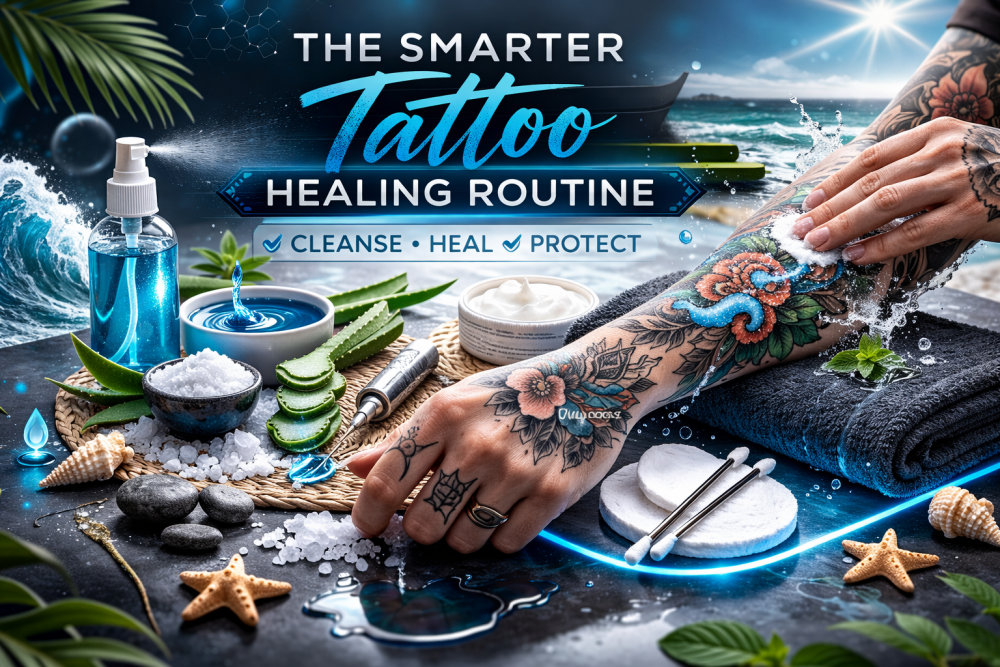
A new tattoo doesn’t just change how your skin looks; it temporarily changes how your skin behaves. The moment the needlework is complete, your body begins repairing itself. Redness, mild swelling, tenderness, and light peeling are all part of that natural process.
In 2026, tattoo aftercare has become less about complicated routines and more about understanding how skin heals. The smartest approach today focuses on balance: keeping the tattoo clean, lightly hydrated, and protected without overwhelming it.
Understanding What’s Happening to Your Skin
Tattooing creates thousands of tiny punctures in the skin to deposit pigment into the dermis. While the result is artistic, the skin still recognises the process as trauma.
Healing typically happens in stages:
- Inflammation phase (first few days) – redness and sensitivity
- Peeling phase (days 4–10) – flaking and light itching
- Settling phase (weeks 2–4+) – surface appears healed, deeper layers continue recovering
A smarter healing routine supports each phase rather than interfering with it.
The Foundation: Gentle Cleansing
Keeping a tattoo clean is essential, but over-cleansing can be just as problematic as neglect.
Harsh antibacterial soaps, alcohol-based solutions, or strong disinfectants may dry the area and irritate freshly tattooed skin. Modern aftercare advice favours mild cleansing that removes buildup without stripping the skin barrier.
Consistency matters more than intensity. Cleaning the area gently and regularly is more effective than aggressively scrubbing it.
This shift toward purpose-designed tattoo care products reflects a broader awareness of skin health.
Hydration Without Suffocation
Moisture plays an important role in tattoo recovery. When skin feels tight or excessively dry, discomfort increases. However, applying thick layers of heavy ointment can trap sweat and restrict airflow.
The smarter approach emphasises:
- Applying a thin layer
- Reapplying only when needed
- Avoiding overly greasy textures
The goal is comfort and balance, not saturation.
Why Simplicity Works Best
In the past, tattoo aftercare routines often included multiple products layered throughout the day. In 2026, minimalism has taken over.
Many artists and experienced collectors now recommend sticking to a simple, steady routine:
- Clean gently
- Lightly moisturize
- Avoid friction
- Let the skin breathe
Complicated routines increase the likelihood of mistakes, irritation, or inconsistency.
Sea Salt–Based Care in Modern Tattoo Healing
Sea salt solutions have long been associated with cleansing properties. Within tattoo aftercare, they are used to gently cleanse the area without introducing unnecessary harshness.
Brands such as H2Ocean’s tattoo aftercare incorporate sea salt–based formulations into their tattoo care lines. Rather than relying on homemade mixtures, pre-formulated options offer controlled consistency and ease of use.
This reflects a broader shift in tattoo aftercare, moving from improvised remedies toward structured, purpose-built solutions.
Lifestyle Factors That Affect Healing
Healing doesn’t happen in isolation. Daily habits influence how smoothly a tattoo recovers.
Some overlooked factors include:
- Tight clothing rubbing against the area
- Sweat buildup after workouts
- Direct sun exposure
- Friction from bags or equipment
- Skincare products transferring onto the tattoo
A smarter routine accounts for real-life movement. For active individuals, maintaining cleanliness without over-handling the tattoo is especially important.
Common Mistakes That Slow Healing
Even with better access to information, certain habits remain common:
Overwashing
Cleaning too frequently may irritate sensitive skin.
Picking or Peeling
Flaking is part of the process. Removing peeling skin prematurely can affect the final appearance.
Over-Moisturizing
Excess product can clog pores and trap heat.
Sun Exposure Too Soon
UV exposure can impact pigment stability in early stages.
Smarter healing focuses on patience. Skin recovery cannot be rushed.
Clean Doesn’t Mean Chemical-Heavy
Another noticeable trend in 2026 is ingredient awareness. Consumers increasingly prefer products without unnecessary additives or aggressive chemicals.
The emphasis is now on skin-compatible formulations that support recovery rather than overpowering it.
Purpose-designed tattoo care products, including those from brands like H2Ocean, are part of this evolution toward more mindful skincare practices.
Long-Term Tattoo Care
Healing doesn’t fully stop after the first month. Maintaining tattoo vibrancy over time requires ongoing attention to skin health.
Long-term care includes:
- Regular moisturization
- Daily sun protection
- Avoiding chronic dryness
- Supporting overall skin barrier health
Healthy skin helps maintain the clarity and depth of tattoo pigment.
What Makes a Routine “Smarter” in 2026?
A smarter tattoo healing routine is not about adding more steps. It’s about understanding what truly supports the skin.
It means:
- Choosing gentle, targeted products
- Avoiding unnecessary irritation
- Keeping the routine consistent
- Allowing natural healing to unfold
As awareness grows, tattoo aftercare continues to evolve toward simplicity and balance.
Whether someone chooses sea salt–based formulations, lightweight moisturisers, or minimal cleansing routines, the goal remains the same: support the skin so the artwork can settle properly.
A well-healed tattoo is the result of steady, thoughtful care, not aggressive treatment.