Let’s be real for a second. There is nothing more stressful than walking onto a renovation site with a set of blueprints that are older than you are. You unroll the paper, squinting in the dim light, and look at the wall. They just don’t match. The drawing says there’s a column at ten feet; your eyes tell you it’s at twelve.
It’s a classic construction headache.
For years, we just dealt with it. We’d grab tape measures, crawl around dusty floors, and pray we didn’t miss anything huge. But the industry is finally waking up. We are ditching the guesswork and seeing a massive shift toward scan to BIM services to handle these retrofit nightmares. It’s not just a fancy tech buzzword anymore; it’s basically the only way to guarantee you aren’t going to lose your shirt on a project. It’s about taking the actual, physical reality of a building and forcing it into the digital world so we can actually control it.
The Challenge of Retrofitting Older Structures
Here is the problem we are all trying to solve: the expensive gap between “As-Designed” and “As-Built.”
Design drawings are perfect and idealistic. The lines are straight, the angles are sharp ninety degrees, and the pipes never hit the beams. But construction? Construction is messy. Contractors make on-the-fly decisions. Maybe they shifted a duct two feet to the left because a wrench dropped in the wrong spot. Maybe the building settled over fifty years. Who knows?
Relying on those 2D drawings is a gamble. I’ve seen it happen too many times. You order expensive steelwork, the crew shows up, the crane is running, and… clunk. The steel doesn’t fit because the concrete slab was three inches higher than the drawings said. Suddenly, you’re burning cash. You’re paying guys to stand around while you figure out a fix. It’s the uncertainty that kills renovation projects. You just don’t know what you don’t know until it’s too late.
How Scan to BIM Services Transform the Workflow
So, how do we stop the bleeding? We stop using tape measures and start using lasers.
It sounds like science fiction, but the workflow is grounded. You set up a laser scanner in the middle of that chaotic room. You hit start. It spins around, shooting out millions of laser beams a second. It touches the peeling paint, the warped floor, the hidden pipes in the ceiling-everything. It doesn’t assume anything. It just captures the truth.
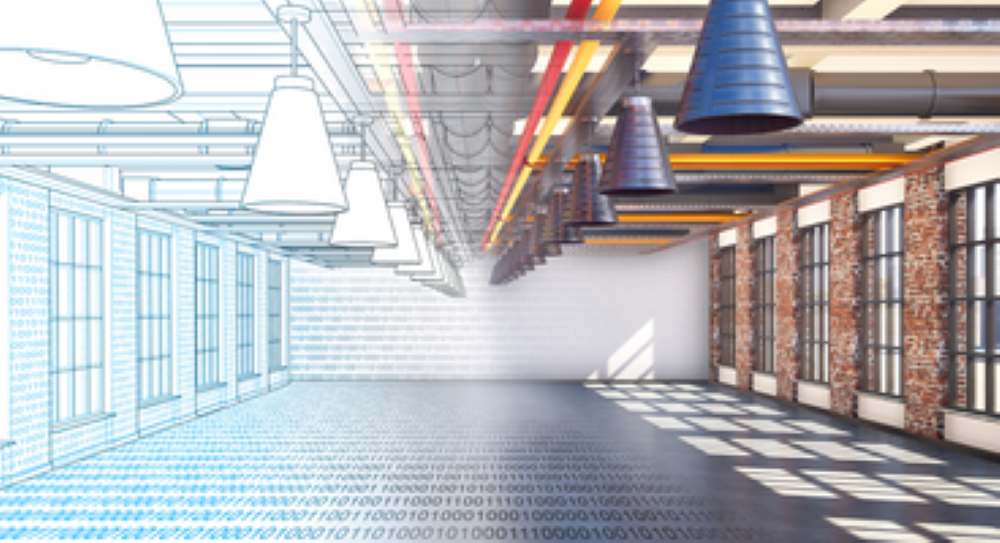
What you get back is a “point cloud”-a ghostly, pixelated 3D replica of the building on your screen. When you turn that into a BIM model, the game changes. Now, you aren’t guessing if the new HVAC system will fit. You see it. You can fly through the model and say, “Hey, that duct is going to hit that beam,” and fix it right there. No welding torches needed. You solve the problems in the office months before a contractor ever steps on site. It’s faster, cleaner, and honestly? It saves you from those panic attacks halfway through construction.
Key Applications in Upgrade Projects
The real value shows up when things get complicated.
Take facade work. If you’ve ever tried to put a new, sleek glass skin on an old, lumpy concrete building, you know the pain. That concrete isn’t straight. It never is. If you order standard panels based on a straight line, none of them will fit. You’ll be on scaffolding, cursing the day you took the job. But with a scan? You map every single bump. You can actually design the brackets to account for the weirdness of the existing wall before the glass even leaves the factory.
Then there is the nightmare of MEP (Mechanical, Electrical, and Plumbing). Retrofitting AC into an old building is like playing Tetris on “Hard” mode. The ceiling voids are tight, filled with fifty years of random pipes and wires. Trying to squeeze modern ductwork through those spaces blindly is a recipe for disaster. The scan data lets you see the squeeze points. You can spot that one fire sprinkler pipe that’s going to block your main route and design around it. It’s the difference between a smooth install and a screaming match on the site.
Choosing the Right Implementation Partner: Nextsynergy
But-and there is always a “but”-here is the catch.
Getting the laser scan is the easy part. You just set up the tripod. The hard part is what comes next. A raw scan file is huge, heavy, and honestly? It’s kind of dumb. It’s just millions of dots floating in black space. It doesn’t know that this cluster of dots is a wall and that cluster is a window.
Someone has to translate that mess into a clean, usable BIM model.
It is tedious work. It takes hours, sometimes weeks, of staring at a screen, tracing points, and filtering out the noise. Most architects don’t have time for that. They want to design, not trace dots. That’s where you need a partner who actually enjoys this stuff. This is where Nextsynergy fits into the puzzle. Think of them as the translators.
They take that massive, raw data file and scrub it. They turn the noise into signal. By handing the grunt work off to Nextsynergy, you aren’t just saving time; you’re clearing your desk so you can focus on the actual design work. You send them the raw chaos, and they send back a clean, structured model you can actually use.
Conclusion
Look, the construction industry is slow to change. We like our old ways. But we are moving into an era where we don’t have to fear the “unknowns” of an old building anymore. We don’t have to cross our fingers and hope the drawings are right.
We can know for sure.Moving from manual surveys to digital capture isn’t just about cool tech. It’s about peace of mind. It’s about knowing that when the steel arrives, it fits. It’s about knowing the budget isn’t going to explode because of a surprise column in the wall. Whether you are fixing up a historic landmark or just trying to modernize a tired office block, the tools are there. It starts with a scan, gets polished by folks like Nextsynergy, and ends with a project that actually finishes on time. The tech is ready. We just have to be willing to turn it on.