The construction industry is moving toward smarter, more digital ways of working. Today, projects demand high accuracy, fewer errors, and faster delivery. Whether it’s a renovation, retrofit, extension, or even a new construction project, teams need to know the exact condition of the site before they begin designing.
However, depending on old drawings, manual measurements, or assumptions often leads to errors. These mistakes turn into costly rework, design delays, and unexpected site challenges.
This is where Scan to BIM becomes extremely important.
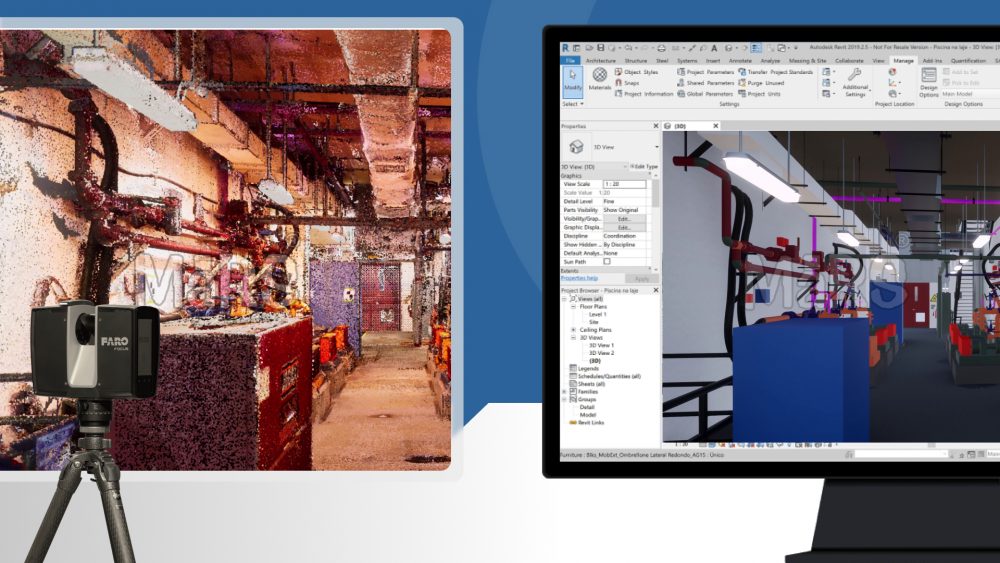
Scan to BIM is a modern technique where high-tech laser scanners capture the real-world conditions of a building or site and convert them into a precise 3D BIM model. This gives architects, engineers, MEP teams, and contractors a clear and accurate digital representation of the building.
From project planning to design development and construction coordination, Scan to BIM helps teams work more confidently and avoid risks. Because of these benefits, Scan to BIM Services is becoming a must-have for today’s construction industry, where accuracy and speed play a key role.
Key Reasons Scan to BIM Is Becoming Essential
Below is a detailed, easy-to-read explanation of every key reason:
Accurate As-Built Documentation
One of the strongest benefits of Scan to BIM is the ability to capture real, exact, and high-precision as-built information. Using 3D laser scanners, millions of data points are captured within minutes. These points form a point cloud modeling, which is then converted into a detailed BIM model.
This gives teams a true picture of the existing site conditions, including:
- Wall thickness
- Floor levels
- Column positions
- Roof structures
- MEP systems
- Irregular shapes
- Hidden or hard-to-access areas
Traditional methods like manual tape measurements or outdated drawings—cannot match this level of accuracy.
Why this matters:
Accurate as-built models help avoid design errors, eliminate assumptions, and ensure every decision is based on verified site data, not guesses.
Faster Project Planning and Turnaround
Scan to BIM significantly speeds up the early stages of a project. Traditional surveys may take days or weeks and still miss important details. Laser scanning is fast, efficient, and highly detailed, capturing the entire site in a short time.
The fast turnaround gives design teams a major advantage:
- They can begin design work sooner
- They can make quicker decisions
- They no longer wait for multiple site visits
- They avoid slow manual surveys
When the base model is accurate and ready early, the entire project timeline becomes more efficient. For contractors and architects working under deadlines, this speed is extremely valuable.
Reduces Rework and Cost Overruns
Rework is one of the biggest reasons construction projects go over budget. When incorrect information is used in drawings or models, mistakes happen on-site. These mistakes cost time, labor, and money.
Scan to BIM helps reduce these problems by providing:
- Accurate building geometry
- Early clash detection
- Clear visibility of conflicts
- Correct alignment of structural and MEP elements
Teams can identify issues before construction begins, such as:
- A duct clashing with a beam
- A pipe that cannot fit in the available space
- A wall thickness mismatch
- Wrong ceiling height assumptions
By catching these issues early, Scan to BIM helps save money, time, and materials, resulting in smoother project execution.
Improves Coordination Across Teams
Construction projects involve multiple team’s architects, structural engineers, MEP engineers, contractors, and facility owners. Coordination becomes difficult when teams use different drawings or inaccurate information.
Scan to BIM solves this by providing one central, accurate BIM model that everyone can rely on.
This improves:
- Communication
- Collaboration
- Clash detection
- Decision-making
- Understanding of site conditions
When all stakeholders work with the same data, the project becomes smoother, more predictable, and less risky.
Supports Renovation and Retrofit Projects
Renovation and retrofit projects depend heavily on understanding the exact condition of an existing building. In many cases, older buildings have drawings that are missing, outdated, or inaccurate. Even small measurement errors can create major design and construction issues later. Scan to BIM solves this problem by capturing the real geometry of the structure, including uneven surfaces, old modifications, and complex shapes that may not be visible through traditional surveys.
With a detailed BIM model created from the scan, architects and engineers can plan renovations with confidence. They can clearly see how new elements will fit into the existing layout, what structural limitations exist, and where adjustments are necessary. This reduces unexpected surprises during demolition or construction and ensures a smoother workflow for even the most complex renovation or remodeling projects. Scan to BIM also plays a key role in creating digital twins, which help in long-term facility management, future renovation planning, and energy optimization.
Enhances Facility Management
Once construction or renovation is complete, the Scan to BIM model continues to offer value far beyond the building phase. Facility managers use the accurate 3D model as a reference for day-to-day operations, maintenance planning, and asset management. Instead of searching through paper files or outdated drawings, they can simply explore the digital model to locate mechanical rooms, electrical panels, piping networks, HVAC systems, and equipment details.
This makes it much easier to plan maintenance activities, track equipment life cycles, and manage space efficiently. When issues arise, the facility team can quickly understand what systems are affected and what components need attention. The BIM model also helps plan future upgrades or layout changes without disturbing ongoing building operations. In short, Scan to BIM offers a reliable digital foundation that supports the entire lifecycle of the building, not just its construction.
Applications of Scan to BIM in Construction
Renovation & Retrofit Projects
Scan to BIM is widely used in renovation and retrofit work because it offers a clear and accurate understanding of the existing building. During renovation projects, every detail matters—from the thickness of walls to the alignment of beams and the placement of MEP systems. Laser scanning captures these elements with high precision, giving design teams a model that perfectly reflects real site conditions. This allows architects and engineers to design modifications without guessing or relying on old drawings. As a result, renovation plans become more accurate, safer, and better aligned with the building’s structural capacity.
Historical and Heritage Buildings
Historical and heritage buildings are often difficult to document using traditional methods because their layouts are complex and contain delicate architectural elements. These structures cannot be altered or damaged during surveying, which makes manual measurement risky. Scan to BIM provides a completely non-contact and non-invasive way to capture the building’s exact shape, details, and decorative features.
The resulting BIM model becomes a valuable digital record for preservation teams, helping them understand the building’s condition and plan restoration work more effectively. It also allows conservation experts to visualize the structure in 3D, identify areas that need stabilization, and document the architectural style for future generations. By combining technology with preservation, Scan to BIM supports the long-term protection of culturally significant buildings.
Industrial Plant Upgrades
Industrial plants have dense and complicated environments filled with pipes, machinery, steel structures, and electrical systems. Mapping these areas manually is time-consuming and often unsafe. Scan to BIM makes this process much easier by capturing the entire industrial space in a highly accurate point cloud and transforming it into a detailed 3D model.
Engineers can then use this model to study equipment layout, analyze safety risks, plan system upgrades, or add new machinery without disturbing existing operations. Scan to BIM also helps reduce downtime by enabling teams to plan shutdowns more efficiently, since they already know the exact layout and can anticipate potential clashes. This level of clarity is especially important in industries like oil and gas, manufacturing, and power generation where precision and safety are crucial.
Infrastructure Modernization
Large infrastructure such as bridges, tunnels, airports, highways, and railway stations require accurate as-built information before any maintenance or modernization work begins. Traditional surveying can be slow, expensive, and disruptive to public services. Scan to BIM offers a fast and reliable alternative by capturing the structure’s geometry and conditions without affecting daily operations.
The detailed model helps engineers analyze structural health, plan repairs, and schedule upgrades without guesswork. It also supports long-term asset management by providing a digital record of the infrastructure’s condition. This reduces risks and ensures safer and more efficient development, especially in projects that involve public transportation and urban mobility.
MEP System Redesign
MEP (Mechanical, Electrical, and Plumbing) systems are often complex and tightly packed within a building. When redesigning or upgrading these systems, teams need precise information about existing pipes, ducts, conduits, and equipment. Scan to BIM provides an accurate model that reveals the true position and routing of all MEP components.
With a clear understanding of the current layout, MEP engineers can plan new systems with minimal clashes and better spatial coordination. This reduces installation errors, prevents costly rework, and ensures that new systems fit seamlessly into the building. Whether it’s upgrading HVAC systems, replacing electrical lines, or redesigning plumbing networks, Scan to BIM helps achieve better accuracy and smoother execution.
Advantages Compared to Traditional Survey Methods
Traditional surveying methods rely heavily on manual measurements, paper drawings, and repeated site visits. These approaches often lead to inconsistencies, human errors, and incomplete details—especially in complex or hard-to-reach areas. In contrast, Scan to BIM offers a much more accurate, efficient, and reliable way to capture building data. Laser scanners quickly collect millions of points that represent every corner, surface, and detail of the structure. This means the resulting model is far more precise than any manual method can achieve.
Another major advantage is the speed of data collection. Traditional surveys may take several days and still require repeated visits to fill in missing information. Scan to BIM, however, captures everything in a single session and produces a detailed digital model that teams can revisit virtually anytime. This eliminates unnecessary trips to the site and reduces interruptions to ongoing operations. Additionally, the 3D nature of Scan to BIM gives architects, engineers, and contractors a better understanding of spatial relationships, helping them visualize problems and plan solutions more effectively. The overall process becomes faster, more accurate, and better aligned with modern digital workflows.
Why the Construction Industry Must Adopt Scan to BIM Now
The construction industry is rapidly moving toward digital transformation, and Scan to BIM plays a central role in this shift. As projects become more complex, there is an increasing need for precise as-built data, efficient coordination, and better risk management. Scan to BIM supports all of these goals by giving teams highly detailed models that eliminate guesswork and reduce the chances of costly mistakes. This makes projects more predictable and allows teams to make smarter decisions from the very beginning.
Another reason adoption is rising is the growing demand for BIM-based workflows. Governments, private developers, contractors, and engineering firms are now expecting BIM-ready models for planning, approvals, and facility management. Scan to BIM helps meet this requirement by providing accurate digital models that fit seamlessly into BIM processes. It also supports advanced technologies like Digital Twins, IoT integrations, and AI-driven construction analysis—making it a future-ready investment.
Finally, companies that adopt Scan to BIM gain a competitive advantage. They can work faster, deliver higher-quality designs, reduce rework, and offer more reliable project outcomes. With increasing pressure to improve efficiency and reduce costs, Scan to BIM is no longer just a useful tool—it is becoming a necessity for staying relevant in the modern construction industry.
Conclusion
Scan to BIM has quickly become one of the most powerful tools in modern construction. By providing accurate as-built models, improving design quality, and enabling better coordination, it helps teams plan and execute projects with much greater confidence. Whether it’s a renovation, new construction, industrial upgrade, or infrastructure development, Scan to BIM ensures that every decision is based on real data rather than assumptions.
As the industry continues to embrace digital workflows and smarter technologies, Scan to BIM stands out as a key solution for achieving cost savings, reducing risks, and improving overall project performance. Adopting Scan to BIM today means setting the foundation for more efficient, accurate, and future-ready construction tomorrow.