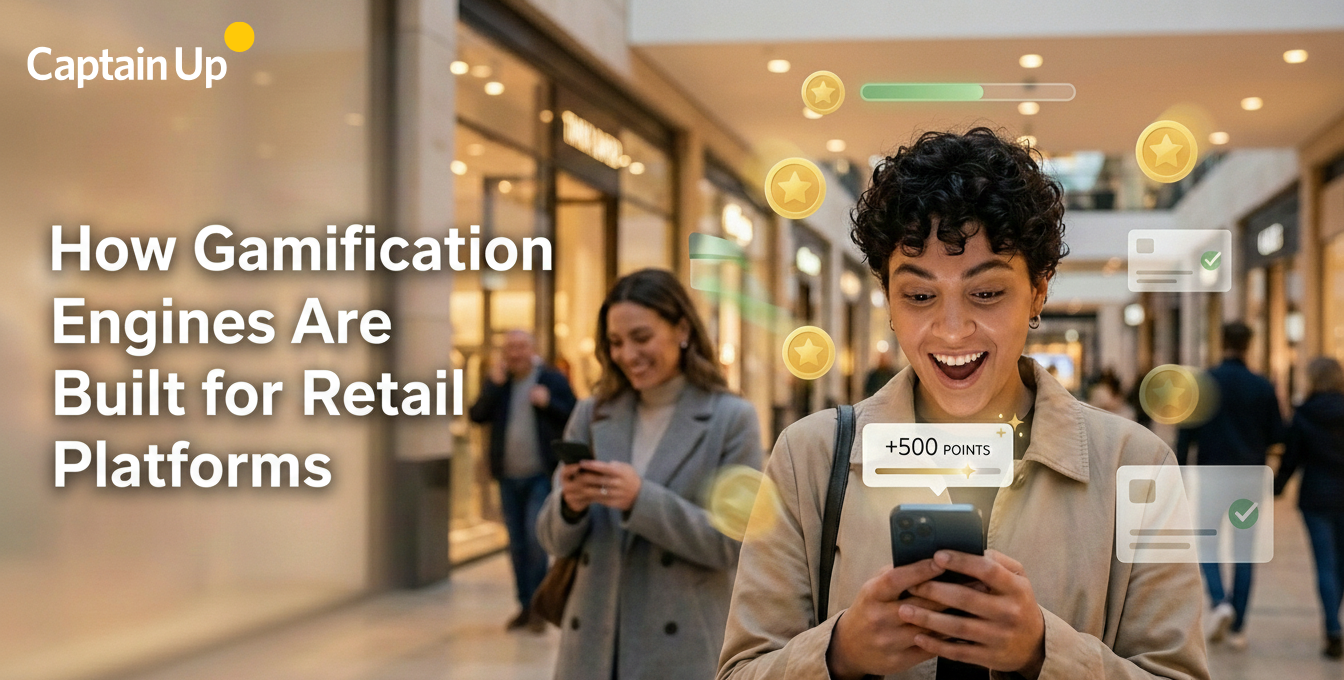
A retail gamification engine is not just about points or rewards. It is the system that decides what happens when a customer takes an action. Clicks, purchases, visits, referrals. All of it flows through one core system.
In simple terms, a gamification engine for retail watches customer behavior and reacts in real time. It powers Retail Gamification by connecting actions to outcomes that feel fun, useful, and rewarding. Nothing fancy. Just smart logic working behind the scenes.
At the center of every modern retail gamification platform is one clear goal. Keep shoppers active and coming back. This is where Retail Store Loyalty Programs and Retail Rewards Programs move beyond basic points and turn into living systems.
What a Gamification Engine Means for Retail Platforms
A gamification engine is the system that turns shopper actions into outcomes. In retail, that means every click, purchase, visit, or referral triggers a response. This response can be points, progress, or access to rewards.
A retail gamification engine works as the brain of a retail gamification platform. It connects behavior with motivation using customer engagement mechanics and clear loyalty program logic. It runs quietly in the background, yet it shapes the entire shopping experience.
Loyalty Tools vs Gamification Engines in Retail
Traditional loyalty tools focus on one thing. Points for purchases. That’s it. They power basic Retail Store Loyalty Programs, but they stop there. No depth. No interaction.
A gamification engine for retail goes much further. It supports Retail Gamification by adding missions, progress, and smart triggers. It enables full Retail Rewards Programs with a real rewards and challenges system, not static points.
Here is the difference at a glance:
- Loyalty tools reward spending only
- Gamification engines reward behavior
- Loyalty tools react slowly
- Gamification engines work in real time
This is why gamification in retail platforms now replaces basic loyalty setups.
Why Retail Platforms Need Purpose-Built Engines
Retail platforms deal with fast-moving data. Orders, visits, carts, apps, stores. A generic system cannot keep up. A Retail Engagement Platform needs an engine designed specifically for retail behavior.
Purpose-built engines support:
- Real-time decisions for shoppers
- Retail loyalty gamification across channels
- Gamification software for retail platforms at scale
- Real-time gamification for ecommerce and in-store use
They also apply behavioral incentives in retail while adapting to user habits using retail personalization technology. The result feels personal and timely, and it drives action.
Core Components That Power Retail Gamification Engines
Every retail gamification engine is built from a few core parts. Each part has a clear job. Together, they power a complete retail gamification platform that reacts fast and stays flexible.
These components help Retail Gamification feel smooth across apps, websites, and stores, while supporting modern Retail Engagement Platform needs.
Rules Engine
The rules engine is the decision-maker. It defines what should happen when something happens. A purchase, a login, a referral.
In a gamification engine for retail, rules control loyalty program logic. Buy twice in a week and earn bonus points. Miss a visit and lose a streak.
Reward Logic
Reward logic decides what the customer gets. Points, badges, discounts, or access to offers. This logic powers Retail Rewards Programs.
A good system supports a full rewards and challenges system, including instant rewards, delayed rewards, and tier-based benefits.
Event Tracking Layer
The event tracking layer listens to everything. Page views. Purchases. Cart actions. App opens. In-store scans.
This layer feeds data into the customer engagement engine for retail. It is the backbone of gamification software for retail platforms.
By capturing real actions, it supports behavioral incentives in retail and accurate customer engagement mechanics.
User State Management
User state management tracks where each shopper stands. Points balance. Level. Progress. Active challenges.
This helps Retail Store Loyalty Programs feel personal and supports retail loyalty gamification across sessions and devices.
How User Actions Are Tracked in Retail Systems
Tracking user actions is the starting point of every retail gamification engine. If the system cannot see what shoppers do, it cannot react.
A gamification engine for retail collects actions in real time and feeds them into the retail gamification platform. This data powers Retail Gamification, Retail Rewards Programs, and smart engagement flows.
Purchase Events
Purchase events are the most valuable signals. Orders, repeat buys, basket size, and frequency all matter.
When a purchase happens, the customer engagement engine for retail records it instantly. This triggers loyalty program logic and activates the rewards and challenges system. Points may be added, tiers updated, or missions unlocked.
Browsing and Cart Behavior
Not every shopper buys right away. Browsing still counts. Product views, searches, wishlists, and cart actions all feed into customer engagement mechanics.
A strong Retail Engagement Platform tracks these signals to support retail loyalty gamification. Repeated cart activity or category interest can trigger targeted rewards or challenges.
In-Store and Omnichannel Actions
Retail is not only online. Stores and apps matter. QR scans, POS data, check-ins, and receipts all flow into the same system.
A modern retail gamification engine architecture supports omnichannel tracking. Online and offline actions connect into one profile, enabling real-time gamification for ecommerce and physical retail at the same time.
Reward Logic and Rule Configuration Explained Simply
Reward logic is the part of a retail gamification engine that decides what the shopper earns and when. It uses clear rules tied to clear actions. Inside a retail gamification platform, reward logic keeps Retail Gamification running smoothly. It connects actions to outcomes using loyalty program logic and proven customer engagement mechanics.
Points, Levels, and Badges
Points are the base layer of most Retail Rewards Programs. Every action adds value. Purchases, visits, and reviews all count.
Levels show progress over time and power Retail Store Loyalty Programs that reward consistency. Badges add recognition for milestones.
Together, these elements form a core rewards and challenges system inside any gamification engine for retail.
Conditional Rewards
Conditional rewards depend on rules. Do this, get that. Skip it, no reward.
Examples include:
- Buy twice in a week to earn bonus points
- Complete a challenge to unlock a reward
- Reach a level to access special offers
This setup drives retail loyalty gamification and supports behavioral incentives in retail. It also powers a flexible customer engagement engine for retail that adapts fast.
Time-Based and Behavior-Based Rules
Time-based rules reward consistency, such as daily visits or weekly purchases. These rules are key to real-time gamification for ecommerce.
Behavior-based rules focus on how shoppers act. Browsing habits, category interest, and repeat actions support retail personalization technology and targeted customer engagement mechanics.
Personalization Layer Inside Retail Gamification Engines
Personalization is what makes Retail Gamification feel human. Without it, rewards feel random and flat. With it, every action feels noticed.
Inside a retail gamification engine, the personalization layer shapes how each shopper experiences the retail gamification platform. It applies retail personalization technology to turn data into timely responses.
User Segmentation
User segmentation groups shoppers based on behavior. New visitors. Repeat buyers. High spenders. Inactive users.
A gamification engine for retail uses these segments to apply the right loyalty program logic. One segment might earn fast rewards. Another might receive longer challenges. This supports Retail Store Loyalty Programs and Retail Rewards Programs without extra effort.
Real-Time Triggers
Real-time triggers fire the moment something happens. A purchase. A cart update. A return visit.
These triggers power the customer engagement engine for retail and enable real-time gamification for ecommerce. Rewards arrive instantly and progress updates without delay.
Behavior-Based Rewards
Behavior-based rewards focus on patterns, not just spending. Browsing habits, visit frequency, and category interest still count.
This approach uses behavioral incentives in retail and advanced customer engagement mechanics to guide shoppers naturally.
By combining behavior data with gamification software for retail platforms, brands build smarter experiences and strengthen the full Retail Engagement Platform.
Real-Time Data Flow in Gamified Retail Platforms
Real-time data flow keeps Retail Gamification responsive. Without it, rewards arrive late and progress feels broken.
A strong retail gamification engine moves data fast. It listens, processes, and responds in seconds. This flow powers the retail gamification platform and supports modern Retail Engagement Platform needs.
Event Ingestion
Event ingestion is the entry point. Every action enters the system here. Purchases, page views, app opens, and store visits.
A gamification engine for retail collects these events from ecommerce platforms, POS systems, and mobile apps. This step fuels gamification in retail platforms and supports accurate customer engagement mechanics.
Processing Pipelines
Once events enter the system, processing pipelines apply loyalty program logic, check rules, and decide outcomes.
These pipelines are core to retail gamification engine architecture. They allow gamification software for retail platforms to scale without slowing down.
Instant Feedback Loops
Instant feedback loops close the cycle. The shopper acts and the system responds. Rewards, progress, or messages appear right away.
This is where real-time gamification for ecommerce maintains engagement and supports behavioral incentives in retail.
Gamification Engine Integration with Retail Tech Stack
A retail gamification engine cannot live alone. It must plug into the tools retailers already use. Clean integration keeps systems connected and reliable.
A solid gamification engine for retail fits neatly into the retail gamification platform and supports the full Retail Engagement Platform. Data flows in and rewards flow out.
Ecommerce Platforms
Ecommerce platforms are usually the first stop. Product views, carts, checkouts, and payments all happen here.
By integrating with ecommerce systems, gamification software for retail platforms enables real-time gamification for ecommerce. Points update instantly and challenges progress after checkout.
POS Systems
POS systems bring in-store actions into the picture. Purchases, returns, scans, and receipts all matter.
When POS data connects to the retail gamification engine architecture, online and offline journeys merge. This supports Retail Gamification and full retail loyalty gamification across channels.
Mobile Apps and CRM Tools
Mobile apps capture daily habits such as logins, browsing, and notifications.
CRM tools add history and context, including past purchases, preferences, and engagement levels. Together, they feed the customer engagement engine for retail.
This integration powers advanced customer engagement mechanics, smarter loyalty program logic, and deeper retail personalization technology, keeping the rewards and challenges system aligned with real behavior.
Security, Scalability, and Performance Considerations
A retail gamification engine must do more than reward users. It must stay stable, safe, and fast, even when traffic spikes. If the system slows down or breaks, trust drops.
A well-built gamification engine for retail supports growth while protecting data. It keeps the retail gamification platform reliable during busy hours and everyday use.
Handling Peak Traffic
Retail traffic is never steady. Sales, festivals, launches, and weekends bring sudden spikes.
Modern retail gamification engine architecture is built to scale. Events are processed in parallel and rewards are triggered without queues. This ensures real-time gamification for ecommerce even during peak load.
Fraud Prevention
Where rewards exist, abuse follows. That’s why fraud checks matter.
A strong customer engagement engine for retail includes limits, validation rules, and behavior checks. Repeated actions, fake accounts, or unusual patterns are flagged early.
These controls protect retail loyalty gamification and keep behavioral incentives in retail fair for real shoppers.
Data Privacy Basics
Retail systems handle sensitive data such as emails, IDs, and purchase history. Privacy cannot be an afterthought.
A secure Retail Engagement Platform follows clear data rules. Access control, encryption, and minimal data storage are essential. This protects users and strengthens customer engagement mechanics built on trust. It also keeps gamification software for retail platforms compliant and dependable.
Common Retail Gamification Use Cases in Production
Most Retail Gamification ideas sound great on paper. Only a few work well in real stores and live platforms. The difference is execution. A retail gamification engine makes these use cases practical, repeatable, and easy to scale.
Below are the most common setups used across a retail gamification platform and full Retail Engagement Platform environments.
Purchase Streaks
Purchase streaks reward consistency, not just spending. Buy again within a set time and the streak continues. Miss it, and it resets.
This use case relies on clean loyalty program logic and fast processing inside the gamification engine for retail. It supports Retail Store Loyalty Programs and modern Retail Rewards Programs without manual tracking.
Product Discovery Challenges
Product discovery challenges push shoppers to explore. Visit new categories. View featured items. Try something different.
A customer engagement engine for retail tracks these actions using customer engagement mechanics and triggers rewards through a rewards and challenges system. Exploration still counts, even without a purchase.
Loyalty Tiers and Missions
Loyalty tiers create long-term goals. Bronze, Silver, and Gold. Each tier unlocks better rewards and access.
This setup depends on strong retail gamification engine architecture and accurate user state tracking. Progress must be clear and instant, supported by real-time gamification for ecommerce.
Build vs Buy: Choosing a Retail Gamification Engine
Choosing how to set up a retail gamification engine is a big call. Some teams consider building everything from scratch, while others choose a ready retail gamification platform. Both paths exist, but the outcomes are very different.
This choice affects speed, cost, and how fast your Retail Engagement Platform starts bringing traffic and leads.
Custom Build Risks
Building a custom gamification engine for retail sounds flexible. In reality, it comes with risk.
Custom builds require time, engineering resources, testing, and constant updates. Rules change. Rewards change. Behavior changes. Keeping Retail Gamification current becomes ongoing work.
Common risks include:
- Long development cycles
- Bugs during high traffic
- Weak retail gamification engine architecture
- Slow support for real-time gamification for ecommerce
Many custom systems struggle with gamification in retail platforms once scale increases.
Platform-Based Approach
A platform-based approach uses proven gamification software for retail platforms. The engine is already built, tested, and optimized.
This option supports Retail Store Loyalty Programs, Retail Rewards Programs, and retail loyalty gamification immediately. Rules, rewards, and triggers are configurable without code.
Platforms also include built-in customer engagement mechanics, fraud controls, and retail personalization technology, allowing teams to focus on growth instead of infrastructure.
Time-to-Market Comparison
Time matters, especially when the goal is traffic and leads.
Custom builds often take months before launch. Platform-based engines can go live in days or weeks, allowing brands to act faster on how gamification engines work in retail.
Faster launch leads to:
- Earlier user engagement
- Faster data learning
- Quicker ROI from the customer engagement engine for retail
For most retail teams, buying delivers results faster with less overhead.
How Captain Up Builds Gamification for Retail Platforms
Captain Up builds gamification with one clear aim: help retail brands drive traffic, engagement, and leads without heavy technical effort. At the core is a flexible retail gamification engine that fits into any Retail Engagement Platform. It supports Retail Gamification, Retail Store Loyalty Programs, and Retail Rewards Programs from day one.
The modular setup lets teams activate only what they need, such as points, missions, challenges, and segmentation. Real-time reward logic ensures instant feedback across online and in-store journeys. A retail-focused design applies behavioral incentives and personalization to match how shoppers actually behave.
Want to see it in action? Book a demo with Captain Up today.
FAQs
1. What is a gamification engine in retail?
A gamification engine tracks user actions and applies rules to trigger rewards, progress, or challenges inside retail platforms.
2. How does a retail gamification engine work?
It captures events like purchases or visits, evaluates rules, and instantly delivers rewards or feedback.
3. Is gamification different from loyalty programs?
Yes. Loyalty focuses on points, while gamification adds challenges, progress, and real-time motivation.
4. Can gamification engines work across online and offline retail?
Yes, modern engines support ecommerce, apps, POS systems, and in-store interactions.
5. What data does a gamification engine use?
Purchase history, browsing behavior, visit frequency, engagement actions, and timing.
6. Are gamification engines scalable for large retailers?
Yes, when built with real-time processing and modular architecture.
7. How long does it take to implement a retail gamification engine?
With a platform-based solution, setup can take days instead of months.