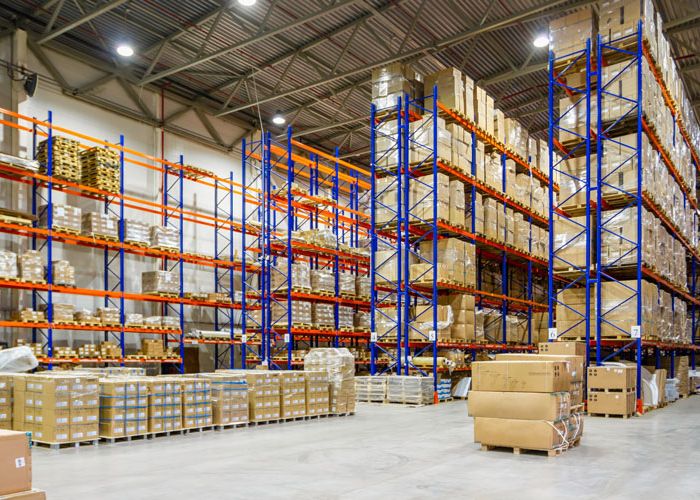
Labor remains one of the highest expenses in large and small warehouses. Across multiple industries, companies have noticed that a high percentage of workforce hours is spent searching for items, correcting picking errors, handling miscounts, and managing delayed restocking. This raises an important question — can warehouse and inventory management actually reduce labor cost without compromising service quality or productivity? The answer is yes, and the savings are driven by optimization rather than workforce reduction.
How Operational Accuracy Reduces Time Waste?
Warehouse tasks such as product identification, bin location, packing, order picking, and dispatch should ideally run in a predictable sequence. When they don’t, workers spend more time than necessary navigating errors and bottlenecks, creating hidden labor expenses. Strong systems improve stock visibility, eliminate duplicates, and support faster decision-making.
With real-time tracking and automated notifications, staff no longer need to manually verify stock levels or check storage sections repeatedly. This reduces the number of touchpoints per task, helping teams spend more time on productive functions rather than repetitive manual checks.
Automation Strengthens Workforce Efficiency
The goal of optimization is not to replace workers but to reassign their effort through smarter workflows. Automated inventory systems can generate pick lists, suggest packing sequences, and update stock levels instantly.
Moreover, automation decreases the probability of fulfillment errors, which typically require additional labor for corrections. When fewer workers are tied up fixing avoidable issues, more labor hours become available for higher-value responsibilities such as quality control, planning, and on-floor supervision.
Optimized Storage Layout Contributes to Labor Savings
In many buildings, the warehouse layout determines whether picking is systematic or chaotic. A poorly organized storage zone means more walking time, more reshuffling, and more handling effort. When data insights are used to reposition fast-moving and seasonal products closer to dispatch areas, physical strain and worker time reduce immediately.
This same concept applies to industries storing assembled kitchen cabinets, oversized materials, and fragile goods. Efficient layout and labeling prevent excessive labor in managing heavy inventory and minimize handling risks. Therefore, a structured approach protects both the workforce and the business’s bottom line.
Cross-Functional Strategies for Industry-Specific Warehousing
While optimization is universal, its execution varies depending on the nature of the items stored. For example, warehouses supporting carpentry and millwork often deal with custom products, varying lengths, and bulk shipments. These variations can cause frequent rearrangement and unplanned forklift usage if not supported by proper digital mapping and stock grouping.
Combining digital systems with an updated warehouse infrastructure improves order repeatability. Workers no longer need to rely on memory or long search cycles because everything is tagged, categorized, and associated with a workflow. The outcome is measurable — faster throughput and reduced labor stress.
Lean Workforce Management Becomes More Practical
Many businesses historically measured productivity only by the number of workers present on the floor. However, when optimization is introduced, the measurement shifts toward output per worker. This transition enables companies to offer the same — or higher — productivity with stable labor numbers rather than constant recruitment.
In addition, streamlined workflows support predictable staffing. Peak hours, seasonal rushes, and maintenance breaks no longer require panic scheduling because real-time stock visibility ensures better workload forecasting.
Training Becomes Easier and Shorter
A well-managed warehouse allows faster onboarding. Clear processes, visual indicators, and digital task assignment reduce learning curves dramatically. New employees adapt quicker, make fewer errors, and require less micromanagement.
This has a direct financial outcome: reduced training hours, fewer retraining cycles, and smoother shift transitions. When a business can train workers efficiently, labor costs decrease without affecting morale or production quality.
Long-Term Financial Advantages of Smarter Management
While initial system improvements require planning and investment, the return is cumulative and ongoing. Optimized operations reduce unnecessary labor, under-utilized overtime, and reactive staffing decisions.
Furthermore, businesses unlock the potential to scale without needing proportional workforce expansion. Instead of adding workers for each phase of growth, companies progress through strategy, forecasting, and technological support.
Conclusion
The evidence consistently shows that smart systems can reduce labor expenses without sacrificing worker value. When businesses focus on warehouse and inventory management, efficiency strengthens every department — picking, packing, dispatch, receiving, and planning. By introducing workflows that support storage logic and automation, companies gain the long-term benefit of a highly productive workforce at a lower operational cost.