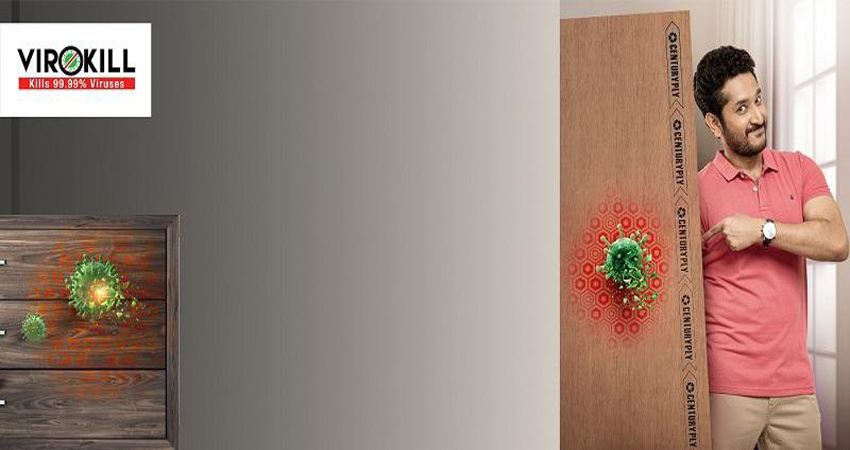
Most surfaces in your home look clean after they are wiped. But what stays behind is not always visible. Germs do not show up as stains or streaks. They stay on plywood sheets used in cupboards along with drawers and worktops.
These surfaces are touched repeatedly across the day. Every touch brings in something new. The furniture does not clean itself between those moments. That is how risk builds slowly.
This is not a problem of poor hygiene. It is a gap in material behaviour. Regular plywood does not resist contact transfer. It holds what is given.
It carries germs that live longer than most people realise. These invisible risks become part of your everyday environment. That is where Virokill Technology changes the equation.
Daily touch points become long-term carriers.
Every time you open a cabinet or place items on a surface, there is contact. Some of that contact involves moisture. Some brings warmth from hands or objects.
All of it creates small changes on the surface. Regular plywood sheets do not respond to this. They accept and absorb what is left behind.
That includes germs that settle on the surface. Once there, they remain active. This means the next person who touches that surface interacts with what the plywood was holding. In a shared space, this cycle repeats across family members and guests.
Virokill Technology breaks that cycle before it begins
Virokill plywood does not accept this form of contact. It does not allow surface microbes to stay active. The surface resists growth from bacteria and viruses.
This is not achieved by polishing or outer layering. It is part of the plywood sheet itself. The surface works every day without being told to.
Once installed, the plywood performs in the background. It handles daily use. It responds to every touch. It prevents germs from using furniture as a carrier.
Protection is embedded, not applied.
Most surface disinfectants depend on frequent use. They are applied after cleaning. Their effect fades over time. If you forget to use them, the surface goes back to being unprotected. This is not a long-term solution. It increases dependence on routine.
Virokill Technology avoids that problem. The protection is added during the making of the sheet. It does not fade. It does not depend on reminders. That is how you solve for daily risk in a way that does not rely on memory or timing.
Furniture stays clean even between cleaning rounds
Your home may be cleaned once or twice a day. But furniture is used far more often. That means surfaces carry touch-based contact long before they are cleaned again. This is the space where Virokill plywood helps most. It fills the hours between cleaning. It keeps the surface active even when no one is watching.
This reduces contact-based transfer. It allows people to use furniture without wondering when it was last wiped. That is how surface hygiene becomes more consistent across your home.
No change in look or handling
Virokill plywood sheets behave just like regular panels. They can be cut, finished and installed without extra steps. Carpenters do not need to change tools. Designers do not need to adjust drawings. Homeowners do not have to accept visible coatings or bulky panels.
The protection works without affecting the outer look or structure. That means furniture can stay minimal and clean while also being hygienic in function.
Useful in high-traffic and high-touch spaces
Some areas in the home are used more than others. Kitchen cabinets are touched during every meal. Wardrobes are opened in the morning and evening. Work desks are used throughout the day. These are the areas where surface hygiene matters more than most people realise.
Virokill plywood helps in exactly these places. It works without depending on reminders. It does not slow down your routine. It just continues doing its job as the day goes by.
Five reasons to use Virokill plywood sheets in daily-use furniture
- Active surface protection against germs that transfer through hands or objects
- Embedded antiviral and antibacterial resistance that does not fade over time
- Compatible with all finishes and furniture designs across rooms and layouts
- Removes the need for chemical reapplication or added surface coating
- Keeps furniture hygienic between cleaning cycles without added effort
These are not design upgrades. These are functional improvements. You use the furniture the same way. The plywood does something new. It responds instead of staying silent.
The problem is invisible, but the solution is active
Furniture does not get replaced every year. The plywood sheet inside your cabinet will stay for a long time. If that sheet does not resist microbial growth, it will remain a passive risk. No matter how often you clean, that risk will build over time.
Virokill Technology gives plywood a way to respond. The surface does not stay neutral. It works every day with every touch. That is how you build furniture that supports hygiene from the inside out.
That is how CenturyPly’s Virokill Technology solves the problem you never see.