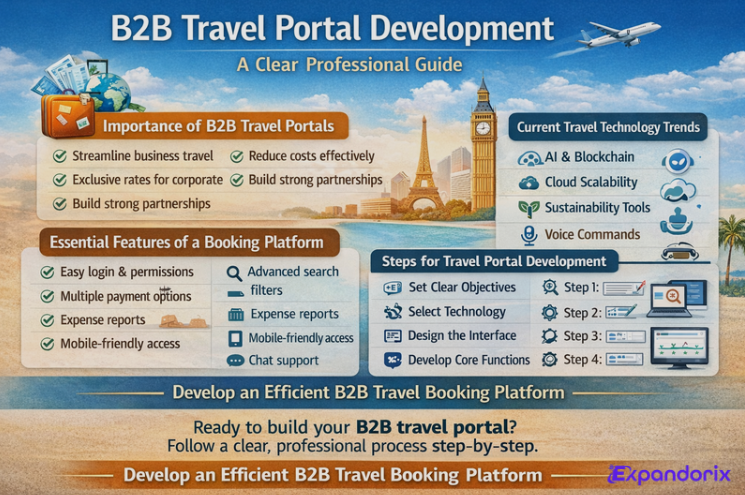
A B2B travel portal is a secure online system for business travel bookings. Travel Portal Development makes the process simple and smart. The guide explains every step clearly. Learn why these portals save time and money. Discover must-have features and the latest travel technology trends. See real examples of success. Get tips to build your own travel booking platform. Whether you lead a team or plan tech projects, this resource fits your needs perfectly. This guide explainstravel portal development in a straightforward way. It uses simple steps for professionals and beginners alike.
The Importance of B2B Travel Portal Development
Business travel supports meetings, conferences, and client visits. A portal simplifies these tasks. It helps control costs effectively. For example, companies set budgets for flights. The system blocks high-priced options. This reduces expenses. It also improves efficiency. Bookings take just minutes instead of hours. No need to spend your time on lengthy emails or phone calls. Hotels provide exclusive rates to corporate clients. This creates strong partnerships.
Essential Features of a Travel Booking Platform
A reliable travel booking platform includes key tools such as:
- Log in fast with one click; no passwords needed each time.
- Special rules let only the right people see info. Managers view reports. Staff just book trips. This keeps data safe.
- Search functions filter by price, time, and location.
- Maps display nearby hotels.
- Payment options support corporate cards and invoices.
- Reports track spending by department.
- Mobile access works on phones and tablets.
- Chat support resolves issues quickly.
Additional features include eco-friendly filters and personalized recommendations.
Current Travel Technology Trends
Travel technology trends drive innovation. Artificial intelligence predicts user needs accurately.
Blockchain ensures secure transactions. Data analytics identifies booking patterns. Cloud systems allow easy scaling. Sustainability tools measure environmental impact. Voice commands enable hands-free bookings. Virtual reality previews destinations. These trends enhance portal performance.
Steps for Travel Portal Development
Develop the portal with a clear plan. Follow these seven professional steps for best results.
Step 1: Set Clear Objectives
First, list your users. Think of managers who approve trips and employees who book them. Set smart goals. Write these down in a simple document. This keeps everyone on track.
Step 2: Select Technology
Choose tools that work well together. Pick modern frameworks for the front end. It makes screens fast and pretty. They grow as your business does.
Step 3: Design the Interface
Start with wireframes. These are basic sketches of each screen. They show where buttons go and how pages flow. Focus on mobile first. Most bookings happen on phones. Keep buttons big and text clear. Add colors that do not tire eyes.
Step 4: Develop Core Functions
Build in short phases, like two-week blocks.
- Phase one: login and user profiles.
- Phase two: search and booking tools.
- Phase three: payments and reports.
Always add strong security. Use encryption for data and checks against hackers. Test each part before moving on.
Step 5: Conduct Testing
Check for bugs and ease of use. Run three types of tests: small parts, full flows, and busy times. Fix issues right away. Create fake busy days to test speed. This stops problems at launch.
Step 6: Launch Strategically
Roll out in stages. Start with one small team of 50 people. Gather their feedback for one month. Share short videos and guides. Set up a help desk for questions.
Step 7: Maintain and Update
Watch daily stats like login speed and error rates. Fix small issues fast. Plan big updates every three months. Add new trends like AI helpers. Survey users yearly. This keeps the portal fresh and useful.
A skilled team includes designers, developers, and testers. Designers create user-friendly layouts. Developers code the functions. Testers verify quality.
Cost Considerations for a Travel Booking Platform
A basic travel booking platform’s starting costs are approximately $50,000 in the beginning. Advanced versions range from $300,000 upward. The breakdown includes design (10%), development (50%), integrations (20%), and testing (10%). Ongoing maintenance starting price is $5,000 monthly. Cost-effective options use offshore teams or pre-built solutions starting at $10,000. Also, returns on investment appear quickly through savings.
Common Challenges and Solutions
Building a travel portal brings some hurdles. Here are the main ones and clear fixes.
Data Privacy Risks
Sensitive info like passports needs protection. Hackers could target it.
Solution: Use strong encryption. Add a two-step login. Run regular security checks.
System Reliability Issues
Portals crash during busy times like holidays. This frustrates users.
Solution: Set up backups and extra servers. Test under high load. Use cloud services that auto-scale.
Cluttered Interface
Too many buttons confuse people. Users quit fast.
Solution: Keep design clean. Limit choices to 5 per screen. Add search bars. Test with real users.
Regulatory Compliance
Rules differ by country, like GDPR in Europe. Fines hurt.
Solution: Build flexible rules into the system. Hire legal experts. Update yearly. Track changes automatically.
Face these early. Your portal will run smoothly and be trusted.
Future Directions for Travel Booking Platform
- Advancements include virtual reality for previews and biometric personalization.
- Digital wallets simplify payments.
- Sustainability reporting becomes standard.
- Advanced analytics optimize routes precisely.
- Promote through professional emails and webinars.
- Offer free trials. Optimize for search terms and form strategic partnerships.
Conclusion
Implementing B2B Travel Portal Development positions your organization for long-term success. Ready to build your own B2B travel portal? Visit Expandorix for expert development services tailored to your needs. Start your project today and transform business travel. The system enables organizations to achieve their goals through three essential elements: compliance and sustainability and scalability.
The businesses that choose to spend money on their operations today will obtain a competitive advantage. The first step requires you to identify your requirements, followed by selecting the right partners who will help you start your project successfully. Your operations will improve for multiple years because of the advantages brought by the system.