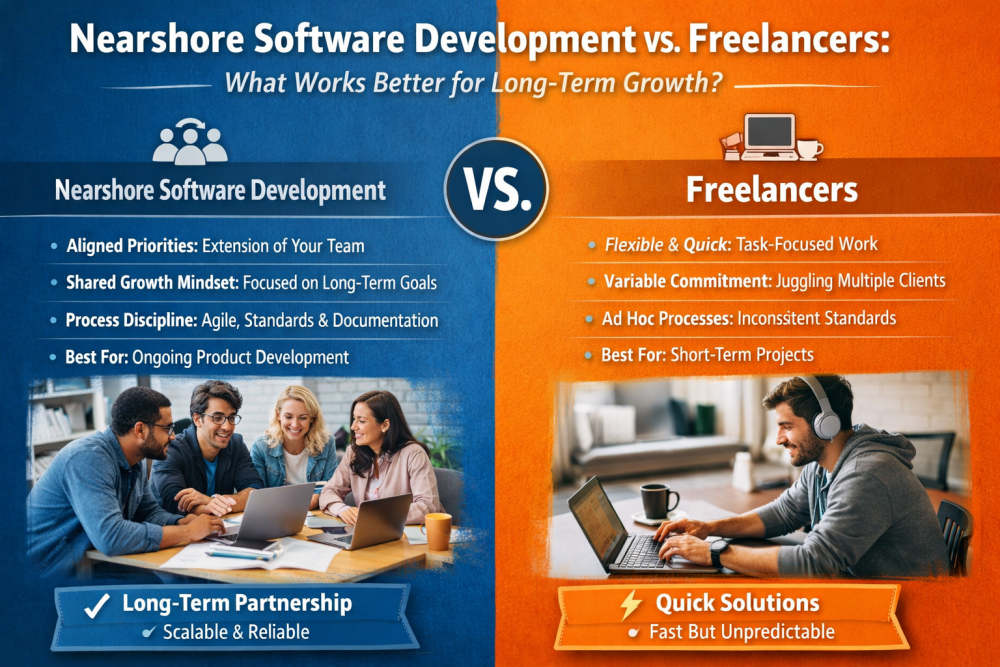
Good product creation isn’t just about being tech-savvy. You need stuff delivered when promised, a team that sticks together, and everyone on the same page about what the business wants. In the beginning, freelancers can be rad for filling holes. But as your product gets bigger, you need speed and someone to *own* the design. Many companies evaluating growth options favor nearshore software development Colombia. It’s cheaper, but you still get a solid, stable team for the long haul. You gotta see how nearshore teams stack up against freelance software devs if you wanna grow smart and plan your resources the right way. This article breaks down how each works for long projects, so leaders can pick the best road to lasting growth.
Can’t Grow Your Team? Check Out Nearshore Development
For leaders sweating sustainable growth, nearshore software development isn’t just a cheaper option. It’s a way to build out your team in a structured way. Nearshore setups usually mean you get a dedicated team, working full-time, with clear management. That’s what you don’t get, sticking with freelancers. Teams are in time zones that are close to each other (basically the same time), so you can chat in real-time, have daily check-ins, and fix problems fast.
Nearshore groups use methods that deliver predictably, with quality assurance, DevOps, and product managers working alongside the core coders. This helps avoid confusion and keeps the team moving fast, which is great for long-term plans and keeping tech debt under control.
Why nearshore development teams rock:
- Everyone’s on the same page: Easier to sync up with business goals.
- Deep bench: You can pull from talent with skills in cloud, AI, mobile, and DevOps without a hiring headache.
- Scalable: You can grow or shrink the team on the fly as needed.
If you’re doing projects with a bunch of phases or constant releases, nearshore teams usually offer more long-term reliability than a bunch of freelancers.
Need Things Done Quick but Dealing with Hiccups? How Freelance Devs Actually Work
Freelancers are great when you have projects with clear rules, deliverables that are easy to handle, and deadlines that are fast. Loads of product teams snag freelance software devs to take care of specific jobs. Think sprucing up the front-end UI, adding APIs, creating prototypes, or automating little tasks. Freelancers are affordable and are often gurus in areas like UI/UX, API stuff, or mobile features.
Thing is, freelancers usually juggle a bunch of clients and don’t have a structured way of working. Without project management, feedback takes forever, expectations get screwed up, and you end up wasting time onboarding people. If it’s brief, you might deal with it. But for long-term projects or systems that are tied together, these problems can cause quality issues and require you to redo stuff.
What you give up when working with freelancers:
- Less accountability: Hard to set standards.
- Takes time to get them up to speed: Setting the scene for new folks slows things down.
- Hard to get everyone to own the project: Keeping the design consistent across a bunch of freelancers is tough.
Freelancers are awesome at quick tasks, but rarely give you the dependability you need for products that you’re constantly improving.
Getting Mixed Signals? A Clear Comparison of Nearshore Teams vs Freelancers
When leaders compare nearshore versus freelancers, they need to consider more than just the hourly rate. Freelancers might *seem* cheaper at first, but the total cost – with all the coordination, getting everyone on the same page, and fixing mistakes – often goes over budget on those never-ending projects.
Comparison across key dimensions:
| Dimension | Nearshore Teams | Freelancers |
| Delivery Structure | Integrated teams with PM oversight and performance SLAs | Independent contributors with varied commitment levels |
| Communication | Daily syncs and live collaboration in overlapping hours | Often asynchronous, limited overlap |
| Quality & Consistency | Standardized code hygiene, retained knowledge | Varies, may require frequent refactoring |
Example: A finance product dealing with regulatory updates every few months can keep things smooth with nearshore teams. Using different freelancers all the time just makes it more likely something will be missed or things will be late.
Worried About Your Product Staying Solid? Which is Best for Growth?
Long-term software development teams – no matter if they’re nearshore or in-house – are valuable because they stick around and take design ownership. They also see the return on investments in improving how they work. Nearshore teams make it possible to:
- Spot possible problems before they happen through looking at the code
- Keep product knowledge within the team
- Change direction fast based on what the data tells you
These things mean fewer tech problems, and things are more likely to go as planned over time. With freelancers, you have to keep spending time onboarding and getting everyone aligned, which eats away at any gains you make.
Why nearshore teams are good for long-term stability:
- Less time teaching new people the ropes: Everyone already knows the product.
- Design stays consistent: Shared knowledge helps the system stay on track.
- Lower risk: Less chance of delays because someone left.
For companies growing across platforms or selling in more places, sticking with it for the long haul affects how fast you can launch and how happy your customers are.
Looking for the Hottest Nearshore Spot? Why Latin America Rocks, Especially Columbia
Latin America has become a key area for nearshore software dev. It’s affordable, culturally similar to the US, shares time zones, and speaks solid English, which makes working with North American and European teams way easier.
Specifically, Colombia is gaining ground as a nearshore spot because it has a growing tech scene, strong schools, government support, and a lot of coders with experience. The rates of your average coder are lower than in the US, but they’re still excellent and work great with agile methods.
Why Colombia is crushing it:
- Coders are solid with cloud, mobile, and data systems
- Good English skills and similar business culture to the USA
- Investing in the resources the industry needs to grow fast
All this makes Colombia a great pick for companies that want a stable, long-term group that’s also cost-effective.
Conclusion: Making the Right Choice for the Future
Picking between nearshore and freelance software devs hinges on where your product is at and what your grand plan is. Freelancers can help you get specific stuff done quickly. But nearshore teams bring structure, growth potential, and continuity. They mean integrated collaboration, better accountability, and ownership of the tech, which is what you need to kill it in the long run. For leaders thinking about making a product that iterates, nearshore teams often mean better return on investment, solid tech, and being able to be agile and respond to changes in the market.