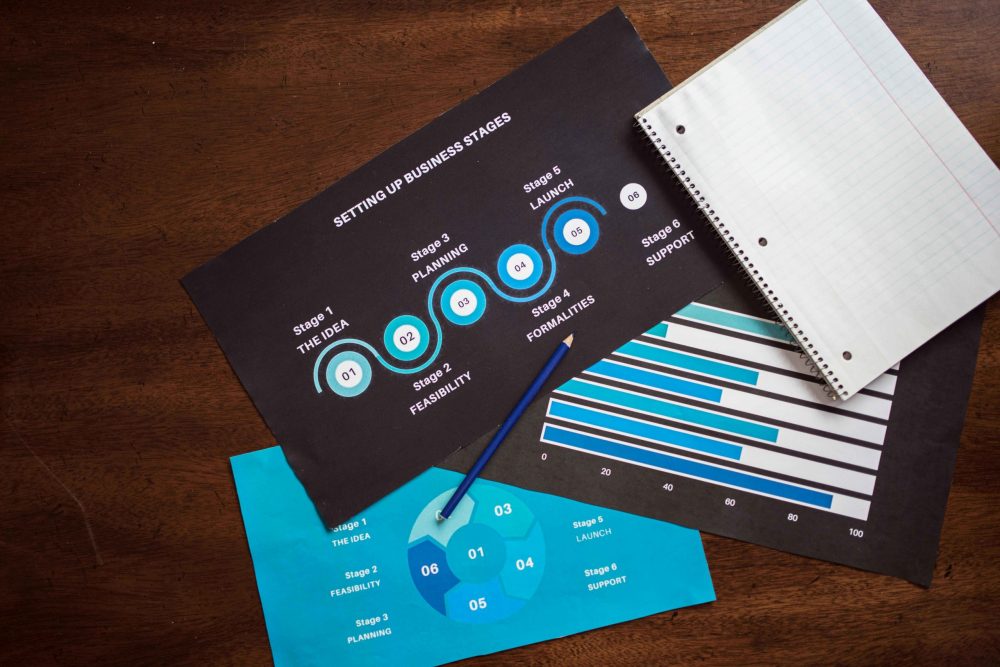
Today, product managers operate under intense pressure to build and deliver solutions that not only differentiate but also deliver immediate value. Yet many of them fail because their research may lack the right strategy and market understanding.
This emphasizes why modern product companies are investing in MVP developments.
The foundation of this concept is user feedback and data-driven insights. Additionally, it does not require months of development effort. Here, teams build a functionally minimal version of the product that can be tested in the market. This makes MVP an insightful iterative product development process that combines the power of analytics, customer feedback, and A/B testing capabilities.
Overall, this process is highly result-driven and can be made foolproof by consulting MVP development services. These professionals help teams with market research and ensure that the right product features are not missed.
That being said, MVP development ensures delivering products with speed, precision, and adaptability. With that in mind, this article explores how rapid MVP developments can be considered an ideal defense against product failure in today’s competitive landscape.
Understanding MVP Development
In essence, MVP (Minimum Viable Product) development is a strategic approach used by product teams to build a simple version of the product, offering its core values.
Instead of launching a fully developed solution, teams here focus on conducting a thorough market study to understand what their users want.
But why do companies build only the basic functions of their product and put it to a market test?
It helps enterprises in the following ways:
- It is easier to communicate the product’s functional value this way.
- This approach guides further developments in the product.
- It also saves the cost, time, and effort of teams.
Additionally, market research is strongly integrated into this process, which helps in building the right product. Hence, this development, facilitated by MVP development services, keeps the teams and the management aligned on what they are building and why.
Key Reasons Products Fail in Competitive Markets
Many products fail not because teams lack talent or effort, but because critical risks go unnoticed during the development cycle. So, to build market-ready solutions, leaders need a clear understanding of what must be done, while also grasping what needs to be avoided to ensure product success.
Hence, this section highlights the key factors that often lead to product failures in competitive markets and why addressing them early is necessary.
Poor market fit
In many cases, development teams make decisions based on guesswork rather than real user insights. This results in teams not fully understanding what their users want.
And eventually, the final product ends up being built differently. So, without continuous market testing, even well-designed features may turn out to be irrelevant in the market.
Overbuilt features
Development teams sometimes try to build the product with too many features. However, this may not be what their users are expecting.
As a result, it drains company budgets and teams’ time and effort. In competitive markets, this slows a company’s development process and hampers its potential for success.
Lack of early validation
Today, many enterprises rely on initial user feedback to proceed with the product development process.
Without this testing, teams don’t know whether the concept truly works in real-world conditions. Hence, this is a main concern that can lead to product failure and costly redesigns.
High development costs and long time-to-market
Traditionally, teams spend months building a full-scale product. This resulted in longer and costly cycles and less flexibility.
So, to effectively overcome these issues, leaders focus on MVP to make the process smarter, faster, and rooted in user feedback.
Inability to differentiate or adapt fast enough
As markets evolve rapidly, products need to adapt faster. And if it cannot do so, it may lose its relevance.
Hence, slow responsiveness is a common pitfall that must be avoided, or else the customers may quickly move to better or more innovative alternatives.
Comprehensively, these challenges also reflect why modern businesses increasingly rely on MVP development.
How MVP Development Reduces Product Failure Risks
Moving from understanding risks to calculated risk resolution, MVP is a dynamic development process. It is catching on as it helps validate ideas early, saves costs, and enables faster launches.
In this view, this section explores how it guides businesses toward smarter product-market fit analysis and successful launches.
1. Early Market Validation
A key element in MVP’s development approach is early market validation. This is offered by many app development services, ensuring that the MVP interacts with initial users in a controlled environment.
This means that businesses can measure user feedback prior to investing in full-scale development. It significantly lowers the risk of building features that users do not value.
Overall, this offers key values like:
- Identifying what users actually need
- Validating the core product early in the product lifecycle
- Understanding user intent and behavior
- Spotting potential flaws in the MVP
Hence, it ensures that every decision made is backed by data, and not by guesswork.
2. Faster Time-to-Market
In competitive markets, timing is an important factor driving product success. Here, the idea is to capture the market quickly before your competitors.
That being said, this development approach helps build and test the basic product faster. This speed helps engage users early by focusing on the elements like:
- Feature prioritization
- Early product launch cycles
- Gathering initial market traction
- Making rapid adjustments based on feedback
Many companies also trust experienced MVP development services to improve their workflows. This dramatically reduces development time and enables businesses to enter the market weeks earlier than a traditional development approach.
3. Continuous User Feedback Loop
An MVP adds immense value to the product development process due to its real-time feedback cycle. This enables teams to study user interactions, collect their individual insights, and combine them to refine the product continuously.
In this manner, this ongoing loop is essential for building solutions that evolve with user expectations and the dynamic market behavior.
Technically, the feedback loop improves:
- Feature relevance and usability as per the users
- Product design and navigation patterns, and
- Assists in bug detection
In this process, many app development services integrate analytics tools, heatmaps, and structured feedback pipelines to ensure continuous progress. Fundamentally, this leverages the power of data to help take smarter product decisions and provide a product that is a better market fit.
4. Lower Technical and Operational Risks
Overall, building a product involves many risks. The modern MVP development approach covers them by identifying them early and ensuring that the product architecture is technically and functionally sound.
Essentially, the key risks it targets are as follows:
- Technology integration mismatch
- Performance bottlenecks
- Underlying security vulnerabilities
- Product-related API failures
Here, companies rely on experienced engineers to validate the technical framework of the MVP. This is further tested to assess scalability, security, load handling, and operational workflows.
Mainly, all these factors help enterprises create a result-oriented product development roadmap, ensuring that the final product is going to be a market success.
Strategic Advantages of MVP in Competitive Markets
MVP development certainly gives businesses the strategic agility that they need to compete in fast-moving markets. Mainly, this approach not only reduces the chances of failure but also critically analyzes the process to ensure its success.
This section closely looks at how it adds value to the enterprises.
- Leveraging lean experimentation and agile decision-making in the MVP framework ensures the development of smarter products and faster innovation cycles.
- It allows businesses to avoid unnecessary complexity and build products that stand out.
- In a product where early user input shapes the product, there is a higher sense of ownership and trust. This serves as a foundation for long-term loyalty and high customer retention.
Final Thoughts
For enterprises, MVP development offers far more value than just building good products. It means developing the business capability to innovate with precision. Additionally, it also implies lower risks and smarter products that can attain success in the market.
Moving ahead, the process can be streamlined by partnering with the right MVP development services provider that can simplify this journey for businesses. They offer technical guidance, expertise, and insights that may add value to the firms in the context of their ongoing product development projects.
Hence, this approach ensures that the products deliver measurable value, both in the short term and the long term.