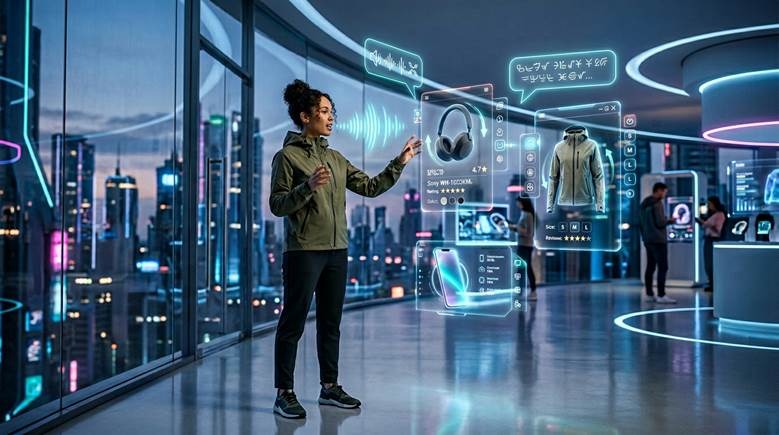
In the past decade, digital retail has changed dramatically. Where businesses once built simple websites and basic checkouts, now eCommerce companies have evolved to use sophisticated digital ecosystems driven by data, personalization, and seamless customer journeys. However, not every e-commerce business is as prepared for what is next.
Many businesses operate stores that are modern in appearance (i.e., modern design, mobile-responsive, and simple checkouts), but how modern are they behind the scenes? Are they ready for the future of digital commerce? Are they not only modern but also adaptable, intelligent (data-driven), and able to shift with the evolving technology/internet customer experience?
There are rapid advancements and the convergence of technologies that will continue to impact how e-commerce businesses operate. The gap between modern and future-ready retail will continue to expand, and those who recognize this gap quickly will be at the forefront of the new wave of digital commerce.
Let’s take a closer look at what defines a modern eCommerce store vs a future-ready eCommerce platform.
The Evolution of Digital Retail Expectations
Consumers want an online shopping experience that goes beyond aproduct listing on the website and doesn’t include broken checkout pages anymore. Digital experiences have evolved from mostly transactional to conversational and highly personalized service from their favourite brands.
Most of the time, established online retailers meet these foundational expectations:
- A mobile-friendly shopping experience
- Available, secure payment options
- Product recommendations
- Fast page loading times
- Integrating multiple channels for marketing via email, SMS, print, etc…
These features have become standard among today’s online retailers and no longer give those retailers a competitive advantage; instead, they are baseline expectations.
To maintain a competitive advantage, future-ready businesses are focusing on longer-term, innovative solutions that anticipate customer needs before customers even express them. Businesses use predictive technologies, AI-driven insights, and seamless communication to create shopping experiences that are easy and natural for their customers.
So, the line between retail stores that simply react to their customers’ actions and those that proactively understand their customers is blurred.
Technology Infrastructure That Enables Growth
A successful digital retailer possesses a technology stack designed to support ongoing innovation. The technology infrastructure found in most online retailers today is designed mainly to provide stability and reliability; this means it lacks flexibility for adapting as needed moving forward.
In contrast, future-ready technology platforms are created with both scalability and flexibility top of mind.
Key Features:
- Composable architecture: allows organizations to easily swap out tools and/or service providers without having to build new systems from scratch.
- Cloud-native technologies: offer global performance and fast deployment times; they also help reduce latency due to the physical distance between consumers and retailers.
- AI Analytics: deliver more comprehensive insight into customers’ purchase behavior and preferences.
- Automation Layers: decrease the manual effort businesses exert when carrying out operational activities.
The flexibility of the architecture allows any company to learn about new technologies and experiment with them in an isolated manner, with little or no impact on the rest of the commerce ecosystem.
Providers who view their technology infrastructure as a living, breathing system are positioned well to respond to the changing landscape of modern commerce.
Customer Experience Moves from Clicks to Conversations
Traditional e-commerce used to be based primarily on how easy it was to get from one place or product category to another through clicking. Customers clicked through product category pages, filtered results, and searched manually for the items they wanted to buy.
However, digital retail’s future will be focused more on people interacting with technology in a natural way through conversational interfaces.
Innovative online retailers are now trying out new ways to interact with consumers via voice and chat interfaces that simulate human-to-human conversations; this enables them to experience technology in a way that feels very natural and intuitive.
Supportive technologies include, but are not limited to, the following:
- Conversational AI assistants
- Natural language searches for product information
- Voice-enabled shopping experiences
- Real-time customer support automation.
Retailers who use a voice AI platform can create their customers’ shopping journey based on the customer’s voice commands, thus providing their customers an easy and fast way of searching for what they want without having to go through numerous complicated menus or options.
All of this is having a large effect on the shopping experience of customers and changing how quickly, conveniently, and personally people shop, especially those who are using their mobile devices or are using new devices that rely primarily on voice to interact with technology.
Personalization Becomes Predictive
Currently, most modern retail platforms utilize some form of personalization, such as product recommendations and targeted email marketing. However, successful companies of the future will go beyond simply being responsive with their personalization efforts.
They will begin to utilize predictive intelligence.
Rather than waiting for a customer to click or make a purchase, these predictive systems will continuously evaluate an individual’s behavior to determine what that individual will need in the future.
Examples of predictive personalization include:
- Dynamic store layouts that are diverse for each visitor
- Predictive inventory recommendations
- Personalized pricing strategies
- AI-driven bundles of products
With predictive personalization at work, the customer journey will become easier, smoother, and more relevant with each interaction they have.
This will give customers the feeling that the platform understands their own personal style and needs, resulting in a more rewarding and satisfying experience.
Seamless Commerce Across Every Channel
Consumers in today’s world frequently use more than one touchpoint to engage with brands; for example, they look at products on their mobile devices, research on laptops, and make purchases through apps or voice assistants.
Most online retailers operate with many channels and keep them isolated from one another.
Retailers of the future are working towards integrating all channels into one cohesive connector or ecosystem.
This includes:
- Their product data is across platforms with real-time synchronization.
- A complete customer profile, in one location.
- Inventory is visible to customers across channels.
- Support interaction has been integrated across all channels.
When all touchpoints of a brand or retailer communicate with one another, the customer experience is perceived to be a continual rather than fragmented one.
Voice and AI Are Redefining Digital Shopping
One of the clearest indicators of future readiness is the ability to integrate emerging interaction technologies.
Voice-based buying (voice commerce) is quickly starting to be one of the biggest contributors to driving digital engagement. Customers can now request products using their voice instead of having to search for them on a website using typing or complicated navigation.
Retailers using Voice AI for E-commerce are starting to see the positive effects of using this technology in their customer service and sales strategies.
Some of the positive results retailers are seeing include, but are not limited to:
- Quicker product discovery
- Less friction in the customer support process
- More access to diverse groups of people
- A better overall experience when using mobile devices to shop
By using voice assistants and conversational AI, businesses that take advantage of this technology early-on will be able to create experiences for their customers that feel like nothing they have ever experienced before, effortless.
Using voice means not only convenience, but it also radically changes the way that customers interact with digital stores.
Data-Driven Decision Making
Future-ready businesses treat data as a strategic asset rather than a reporting tool.
Advanced analytics platforms allow companies to monitor every stage of the customer journey, uncover behavioral patterns, and optimize operations in real time.
Important capabilities include:
- Customer journey analytics
- Behavioral segmentation
- Predictive demand forecasting
- AI-powered marketing optimization
Organizations that invest in intelligent data systems gain the ability to make faster, more informed decisions.
Instead of reacting to market changes, they anticipate them.
Building a Culture of Continuous Innovation
There is no way for technology to create readiness for the future of business without a corresponding mindset.
Several businesses at the forefront of commerce in the next generation of commerce have adopted a culture that heavily relies on ongoing experimentation and evolution.
The specifics of how this is accomplished include:
- Quickly testing new ways for customers to experience your product
- Iterating upon product development
- Using data to make decisions
- Getting all disciplines (marketing, technology, operations) involved in the process
When innovation is part of the organization’s culture, it will be able to adjust more easily to changes in trends.
Conclusion: The Gap Between Modern and Future-Ready
If you look at most digital retailers today, they have very similar features. They have nice-looking websites, smooth checkout processes, and established marketing channels.
The real difference is under the surface.
Today’s online retailers focus on efficiency and design, whereas future-oriented platforms focus on adaptability, intelligence, and human-like interaction. Future-oriented retailers anticipate future changes versus reacting to those changes.
As commerce continues to move to conversational interfaces, AI-driven personalization, and integrated multi-channel experiences, retailers investing in the types of advances that forward-thinking retailers are implementing today will help shape the future of digital commerce.
The future of retail will not simply be faster or smarter.
It will be more intuitive, more connected, and more human.
FAQs
1. What defines a future-ready e-commerce store?
A future-ready e-commerce store is designed with scalable technology, artificial intelligence-driven insights, conversational interfaces, and cross-channel integration to keep pace with changing customer behaviors.
2. How are modern e-commerce platforms different from future-ready ones?
Modern e-commerce platforms are built with a focus on design and function, while future-ready e-commerce platforms offer predictive personalization through automation and other new technologies, e.g., voice commerce.
3. Why is conversational commerce becoming important?
Conversational commerce simplifies interactions by allowing customers to search, ask questions, and complete purchases through natural language rather than traditional navigation.
4. How does AI improve the online shopping experience?
AI improves online retailing by enabling retailers to analyze customer behavior throughout their shopping experiences; allows retailers to make predictions of customer preferences; assists retailers in automating their service center activities; assists retailers in customizing product recommendations for customers; and assists retailers in optimizing their e-commerce marketing strategy.
5. What technologies are shaping the future of digital retail?
The primary technologies include: Artificial Intelligence, Conversational User Interfaces, Predictive Analytics, Cloud Computing, and Voice-Driven Commerce systems.