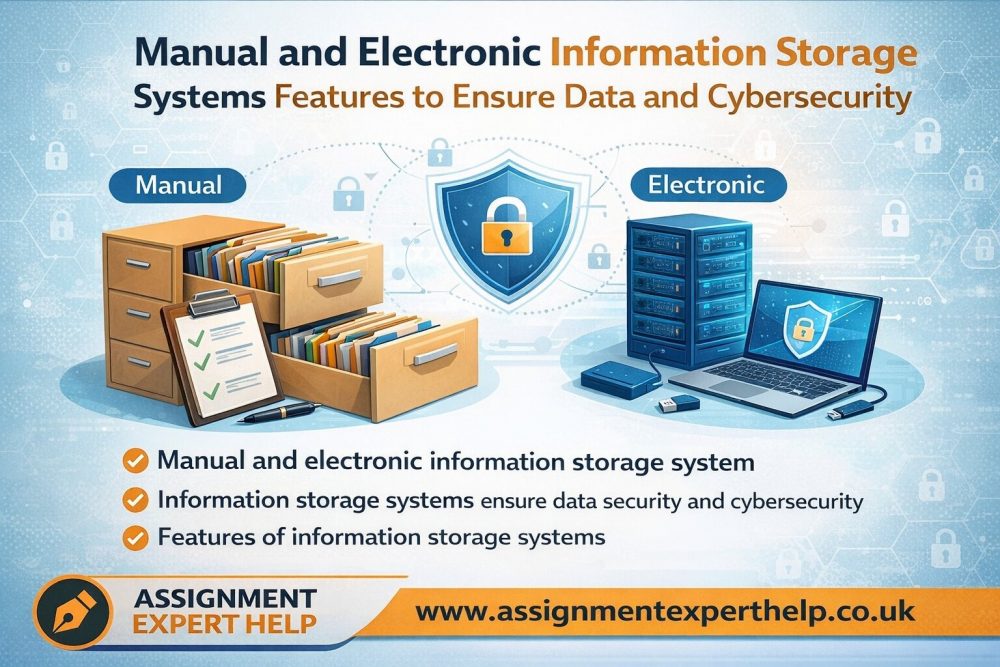
In the computer science field, the most necessary task is to secure the data from unauthorized access, theft, loss, or damage. To ensure data security and cybersecurity, there are manual and electronic storage systems that help to prevent sensitive data loss. It is important to understand the features of both information storage systems to ensure the security of data. This field offers many written assignments to students that are very time-consuming. Students who have busy schedules and lack knowledge require help from the experts. In a search for assistance, you can take guidance from a computer science assignment, as Fundamentals and principles of computers are basically critical and confusing for students. To know more about the clarification of computer concepts, you can take help and get quick responses with clear communication and in-depth research on your computer science topic. Our professionals can ease your burden if you’re having trouble writing clean and efficient code for assignments.
What do you mean by a manual and electronic information storage system?
Manual information storage systems are the systems that manage, organise, and store sensitive or confidential information by using physical methods that are done manually. These are the information storage systems that depend on people for collecting, storing, and fetching the relevant information without any electronic systems. This includes paper files, stored documents, folders, and secure cabinets. Manual information storage systems focus on securing the data through a locked system and access logs. These can be difficult as they are limited by space and efficiency that could cause physical damage or loss of data. The only way a manual system can be saved is by keeping physical backups, like copies of important documents that are kept in cabinets with a log. Manual information storage systems are less prone to cyberattacks and are very simple for daily needs compared to electronic storage systems. Although these storage systems have benefits but also have some cons, they are very time-consuming, causing physical loss or damage, and requiring a physical space to store the data.
Electronic information storage systems store, collect, manage, and organise the protected information in a digital format using technologies and processes over the internet. These storage systems consist of various diverse hardware and software such as servers, hard disk drives, cloud platforms, database management systems, and much more to store the confidential data over the internet, ensuring fast access, secure, and cost-effective systems. These storage systems do not require any physical storage systems, locks, or secure cabinets for storing the data securely. They use several security measures to make sure that the data is safe and protected from unauthorised access.
How do these information storage systems ensure data security and cybersecurity?
Protecting sensitive data from unauthorised access refers to data security, which focuses on providing the confidentiality, integrity, and availability of data by securing the information where data is stored to ensure that the data is secure, accurate, and whenever they need the data, it is available. Whereas cybersecurity focuses on securing data, including all digital systems. It ensures the safety and protection of the device or systems in which the data is stored from being stolen, threatened, and cyberattacks. Both data and cybersecurity provide benefits to people, such as preventing data breaches, building trust in customers, and providing them access to data whenever they need.
Manual systems depend on physical security, such as locks, cabinets, and secure locations, whereas electronic systems use digital software to protect their information from unauthorised access. They use multi-factor authentication, encryption methods, firewalls, and much more as safeguards to protect the systems. Also, in case the data is lost from the device or systems, they keep their systems updated and ready for backups to provide data confidentiality, integrity, and availability to the users
Features of information storage systems
Manual
1. Access control
Manual information storage systems provide access control to the privileged user only to prevent data from unauthorised access. It uses physical controls such as physical barriers like locks, biometrics, or physical keys to gain access to the authorised person only. Secure cabinets, locks, and CCTV cameras are applied to protect the hardware where data is stored, so that the person who has passwords or access to the systems can get the data and prevent risk from theft and loss.
2. Training
Training staff and employees to handle and secure important and confidential documents by themselves and not giving access to third parties ensures awareness and leads to data protection. Disposing of the document or sensitive records that are of no use and are no longer needed is also a method of storing physical data
3. Secure backups
Secure and physical backups of sensitive and private documents, by creating physical copies and storing them in a private and separate area in an offsite secure location so that no one can access them physically.
Electronic
1. Authentication
Electronic information storage systems provide authentication to ensure data security by implementing multi factor authentications, biometrics, and strong passwords. Also, it allows access to the user who has the privilege to get access by following identity and user access management based on their role privileges.
2. Encryption
Encrypting data means it scrambles the plaintext when it is at rest and in transit into unreadable text so that it cannot be accessed by an unauthorized party and can be readable to the authorized users only with a unique key.
3. Antivirus softwares
By implementing antivirus software on your devices, you can prevent malicious and malware attacks. Also, regularly updating your devices can reduce system vulnerabilities that can be caused by attackers. Regular updates and antivirus softwares helps in ensuring cybersecurity.
Wrapping it up
In conclusion, manual and electronic information storage systems both prevent and mitigate risks such as theft, loss, damage, and unauthorised access to data. These are important to understand for excelling in their academic field and enhance theoretical knowledge in real-life situations. For more guidance, you can seek professional help from assignments experts.