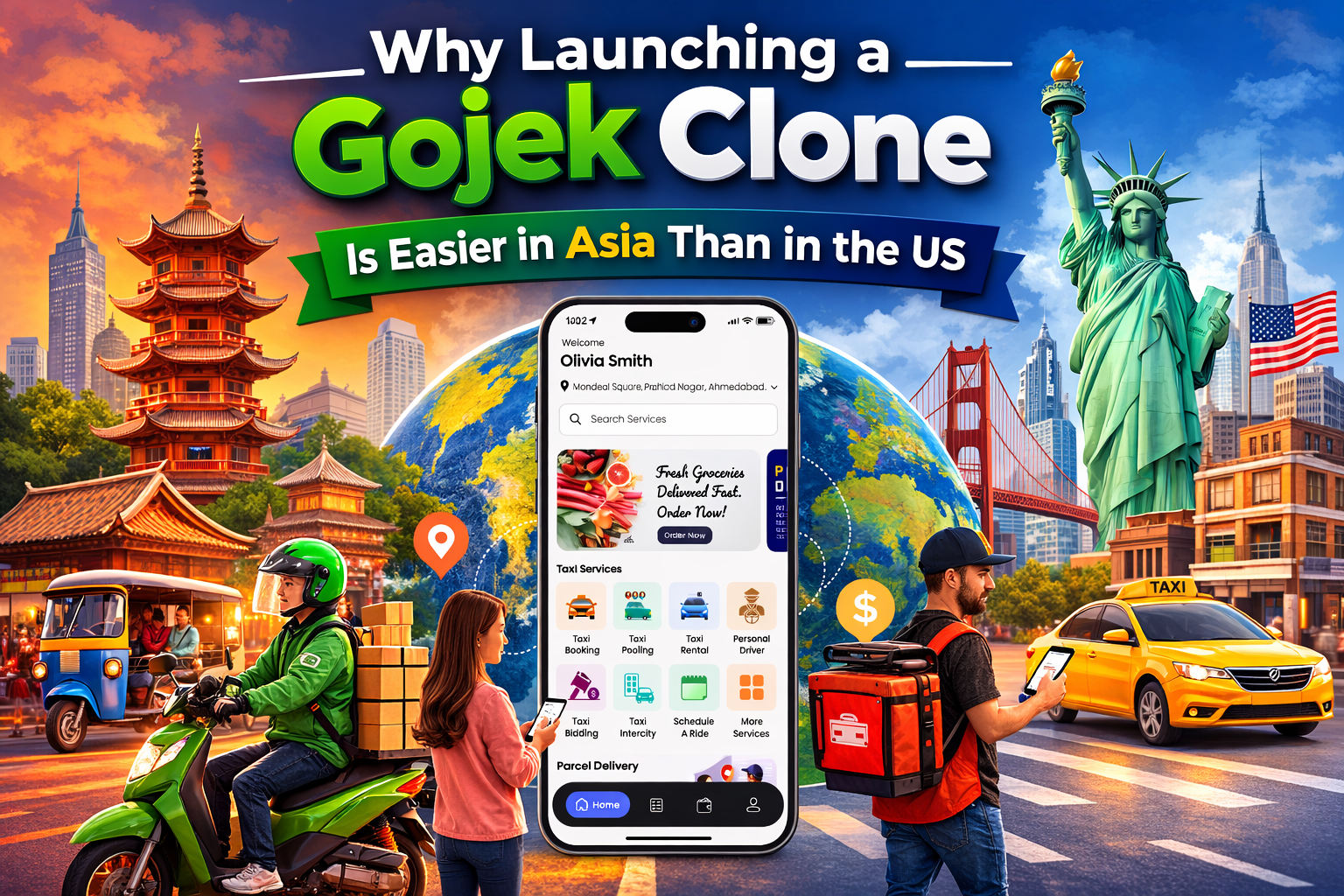
Super apps have dominated in South-East Asia and Gojek, which is one of the mainstream revolutionary super app, has been performing great in Indonesia Stock Exchange. Apps like Gojek are a testament that Asians & Americans have structural differences shaped by the different models. While Asia easily adapts to multi-service apps, Americans are having a hard time adapting to these systems.
The reason behind this does not solely line in the psychological barrier, but in reality the ecosystems are different in general, this is why you see a lot of Gojek clones struggle in US. While the Asia Pacific region has service readiness, USA has anti-trust laws which do not let you monopolize any market, especially more than one market. Look at Alibaba, their ecosystem is strong in china, payments through Alipay, order everything from Alibaba, and offer local blue collar services at one tap. But as soon as it entered US markets, most of its ecosystem failed because of Amazon and eBay, except the Alibaba e-commerce platform, which only worked out for wholesale buyers due to price efficiency.
This is where the core differences lie. In this blog, let’s understand these differences in detail and understand the future of Super apps in US economy.
What is a Super App?
First things first. Let’s understand the basics to be on a same page. A Super app is a platform that combines many different on-demand services in one. That includes ride-hailing, payments, deliveries, and many more services. Gojek is a super app which originated in Indonesia, has been a powerful multinational player, dominating the South-East Asia region.
Today super app developers make Gojek Clone Scripts which provide 18 niche components in one. They are as follows:
- Ride-Hailing
- Parcel Delivery (logistics)
- Store Deliveries (Includes food to pharmacy everything)
- On-demand services
- Delivery Runner/Genie
- Pet care
- Car care
- Health care
- Roadside assistance
- Buy, sell, and rent (general items)
- Buy, sell, and rent (real estate)
- Buy, sell, and rent cars
- Bid for services online
- Car pool (ride-sharing)
- Beauty services
- Nearby businesses
- Track employees & family
- Online consultation
Why Super Apps Became So Successful in Asia-Pacific
The Asia-Pacific was a fragmented market since history, when internet and mobiles came to the market, the demands were clear, the pain points were accessible, and the world saw an IT boom. With regards of SEA, Indonesia, India, and China came out as global tech mainstreams and mobile penetrated countries. This was the exact opportunity which Gojek launched to solve, first Taxi, then logistics, then deliveries, and then 20+ services in one platform. The ecosystem was built in the last decade and the expansion happened in the current one.
Today they are a perfect case study of how tech can thrive. Let’s understand it deeply
Mobile First Internet Users
Many Asian countries skipped the desktop era and smartphones were the first global tech product they got familiar with. Look at Vietnam and Indonesia, their adoption rate for technology surged after 2010, when smartphones by Xiaomi, OPPO, & Samsung launched. This was when internet scaled throughout the Asia Pacific region and people started using low-cost internet which was a boon to the super apps. Gojek started with bike taxis, then penetrated other services slowly because internet was already available in abundance.
Fragmented Service Infrastructure
Transportation, payments, and logistics control the supply chain in every economy. Asia had it fragmented which increased costs, created shortages, and most importantly, every industry faced consequences of this fragmented behavior. With Gojek and Grab, this whole economic fragmentation got a breakthrough. First transport was organized, then logistics, and soon Payments as well. It was a testament which created low-risk and high trust environment for many small businesses in SEA, and it helped in dominating every niche.
Integrated Digital Payment Ecosystems
One of the core reasons why it’s harder for Asians to get out of any super app is its invisible fintech layer which dominates their psychology. In US, people can’t help but use PayPal and Apple pay for convenience, same with Asia. Gojek’s Go Pay is one of the largest payment platforms in the SEA region. This is where super apps win the market, in the consumers’ mind. They use this fintech layer to market the app and secure a strong market presence.
Why Gojek Clones Struggle in USA?
Understanding the Asian preferences, many people launch Gojek clones in USA, but with no preparation. This is when they find that strong single-service apps already dominate, privacy and data concerns are bigger than connectivity which doesn’t let super apps sustain in the market. Let’s understand it in detail.
Single-Service Domination
The US laws have single category giants and it creates a near monopoly barrier which is invisible. Take a glance at US Regulatory laws: insurance, gig economy maintenance, and legal compliance takes more than half of the working capital in most services. These conditions do not let anyone dominate multiple markets at once. And single-service industries are already harder to crack due to entrenched players.
Local players already dominate the market.
- Uber: ride-hailing
- DoorDash: food delivery
- PayPal: payments
These are just popular, Gojek clones have more than 18 niches and 101+ services and each service has their own king.
Privacy and Data concerns
Laws give you another whip when it’s about the user data. Just how strict GDPR rules are in EU, every state in USA has their specific rulebook, For example, California Consumer Privacy Act (CCPA), Federal Trade Commission Act (FTC Act), Colorado Privacy Act (CPA), etc. That means as you scale, compliance costs also scale. On top of it, many regions don’t allow using the User data to show any advertisements on the app, and consider it as a misuse of data.
What’s changing for Super Apps in 2026?
Today, this infrastructure is slowly fading. With Uber’s Food Delivery Segment, Uber Eats, Elon Musk’s Vision to turn X into a super app, Super apps have a hope to succeed in USA. On top of it, Super apps are getting more downloads than ever due to a widely reported reason: App fatigue! While Canada already has some local Super Apps, white-label firms have ready-made solutions to grab this opportunity. Gojek Clone is a go to option for developing your own app in 2026.
Conclusion: Capitalize Shift in User Behavior
The success of super apps in Asia shows how market conditions shape digital ecosystems. Platforms like Gojek thrived in mobile-first, fragmented markets, while the US remains dominated by specialized platforms such as Uber, DoorDash, and PayPal.
Still, growing app fatigue and demand for convenience suggest opportunities for integrated platforms. For businesses exploring this model, structured solutions like a Gojek Clone can provide a practical way to experiment with the super app concept without building everything from scratch.
Note: Gojek clone provides compliance ready tech, not compliance documentation. So, investing in legal compliance is necessary for every platform may it be single-service or multi-service apps.