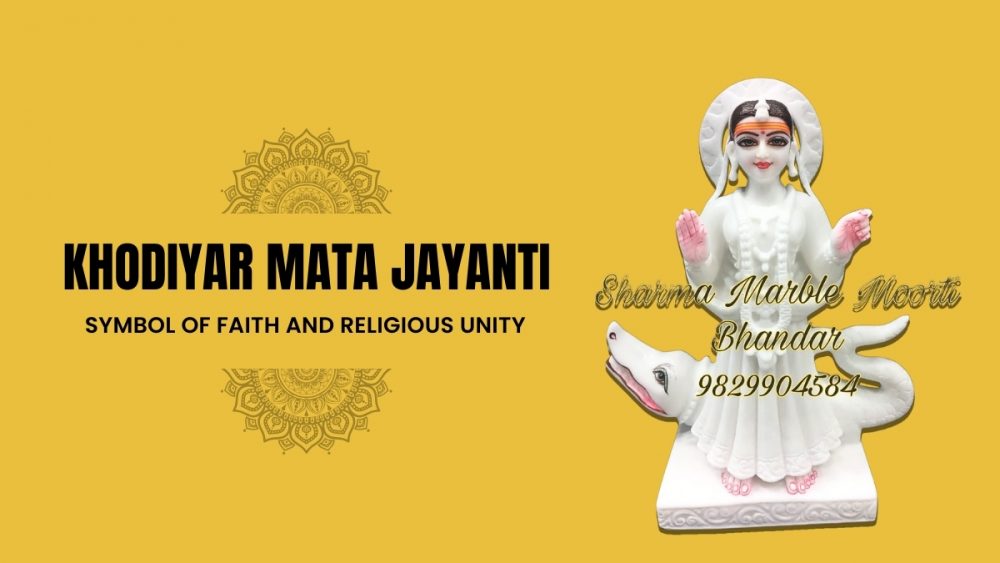
Khodiyar Mata Jayanti is a religious festival that implies faith, unity, and devotion. The followers worship Mata in order to gain power, protection, and moral guidance. The festival unites individuals through prayers and rituals. It reminds everyone that spiritual belief and cultural traditions create harmony and inner peace.
Who is Khodiyar Mata?
Maa Khodiyar is a powerful manifestation of divine Shakti. The cultural folklore states that she was formed based on local mythology to restore moral order and protect the oppressed. She is typically riding a crocodile, which symbolizes fearlessness and control over destructive power.
The cult of Maa Khodiyar has been so popular for centuries that she is now regarded as the spiritual leader of individuals seeking greater power, stability, and divine assistance in their personal and community lives.
Spiritual Importance of Khodiyar Mata Jayanti
Khodiyar Mata Jayanti holds deep spiritual significance for devotees. This promotes inner holiness, collective devotion, and moral strength through sacred rituals, prayer, and disciplined spiritual practices.
Key spiritual aspects include:
- Strengthening inner faith through praying, fasting, and meditation.
- Trust in the removal of harmful energies and barriers.
- Combined praying enhances spiritual vibrations.
- Moral values such as courage and truth were strengthened.
- Promoting peace, harmony, and spiritual discipline.
Auspicious Timing and Sacred Observance
Khodiyar Mata Jayanti is observed on the day of Magh Shukla Ashtami, which is one of the most holy days in the Hindu lunar calendar. Ashtami is believed to send strong spiritual vibration. Hence, it is good to be worship, meditate, and seek inner purification. The believers believe that it is a very auspicious day to attract the blessings of Maa Khodiyar, ensuring safety, courage, and power.
The vast majority of its followers rise early before sunrise to participate in rituals and begin praying in a peaceful and disciplined manner. Fasting is a ceremony performed mainly as a symbol of sanctity and austerity, and the act of gift-giving, such as flowers, incense, and signifies faith and thankfulness.
Rituals, Devotional Practices, and Celebrations
Khodiyar Mata Jayanti is characterised by historical practices and emotional worship, which unite the community.
- Abhishek rituals and prayers are held in early mornings in temples.
- Flowers, incense, and sweets are offered to deity as appreciation.
- Singing worship songs create a sacred atmosphere.
- Religious processions are held to bring devotees together.
- Social and spiritual relationships are strengthened through These traditions make the day a valuable spiritual journey, rather than a ceremonial holiday.
Importance of Khodiyar Mata Idol Worship in Devotion
Idol worship plays a crucial role in spiritual practice, offering a focused path to devotion. This enables worshipers to relate to the divine power by form, symbolism, and a rigorous spiritual system.
Key devotional beliefs include:
- The Marble deity statue placement promotes spiritual balance.
- Positive energy flow is improved through proper positioning.
- The visual concentration helps in concentrating during the prayer.
- The holy environment promotes frequent worship.
- Inner calm and devotion are cultivated in a peaceful environment.
Sacred Value of Mata Marble Statues
Marble-made Khodiyar Mata idols possess profound spiritual meanings due to their innocence, power, and eternal beauty. Marble is believed to absorb and emit positive energy, which can have a soothing and spiritual effect on prayer and meditation. The texture smoothness and stability make it suitable for prolonged devotion usage.
The Khodiyar Mata marble statue creates an atmosphere of calm and elegance, allowing worshipers to be attentive. In addition to being aesthetic marvels, the marble idols represent a symbol of durability in religious beliefs. This enhances spiritual discipline, preserves culture, and fosters the commitment of devotees to the divine being.
Traditional Murtis as Cultural Expression
Conventionally used Khodiyar Mata murtis combine art and worship. They maintain faith with the help of divine craft.
Their cultural and artistic significance includes:
- Represents divinity.
- Murti design has a religious symbol and significance.
- Cultural flow is promoted through religious art.
- Craftsmanship does justice to devotion by visual reverence.
Conclusion
Khodiyar Mata Jayanti is a significant event that celebrates loyalty, solidarity, and heritage. It is observed on Magh Shukla Ashtami and unites devotees to have collective faith and reverence towards Maa Khodiyar. Devotees keep her divine presence alive through prayers, traditions, and the installation of the Khodiyar Maa marble murti with its proper placement. Most importantly, the Jayanti teaches us that unity, righteousness, and unwavering faith are the true essence of our spirituality.