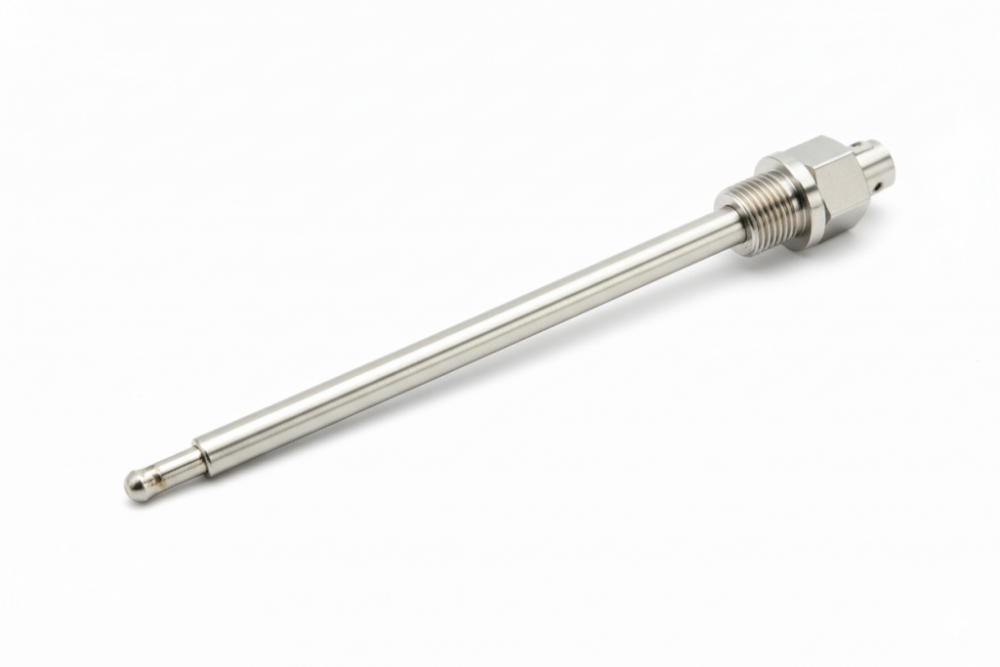
If you are in the process industry then you know how important it is to maintain the exact temperature readings. With the standard thermometer you face the problem because it might not perform at high temperature or does not provide you with the accurate readings.
In the world of industrial heat, the K-type thermocouple is the acknowledged heavy hitter. Many choose this tool since it handles many tasks well, stands up to rough use, yet costs little. But stepping into a store without understanding your needs might lead you wrong, matching its power to what you actually do matters most.
Check Your Temperature Range
- Hot conditions matter right away. A typical K, type thermocouple handles heat well when used every day. Made usually from chromel and alumel, it works reliably under normal industrial demands. Up to 1,000C can be managed without pause. Brief exposure? It might survive moments at 1, 200C. Toughness shows best when stress is short.
- When dealing with intense heat, like near a kiln or furnace, a regular model won’t hold up. Instead, look for one built to handle extreme conditions. These versions use ceramic materials, standing strong even at 1, 250C. Heat that high would ruin standard types, but this kind stays intact. Material choice makes all the difference when things get this hot.
Think About the Environment
- Where you put the temperature sensor is one of the main factors. The skin or insulation of the thermocouple matters just as much as the wires inside.
- For high-heat air: Ceramic sensors are your best bet.
- For tight spots or vibrating machinery: Perhaps a mineral insulated thermocouple would work well here. It’s tough and flexible.
- For oily or wet conditions: Be sure to find a Teflon (PTFE) or thin film coating.
- For simple situations with dry heat: Fiberglass wires are good for simple situations with dry heat.
3. Consider How Fast You Need a Reading
- One of the biggest selling points of the K-type is its fast response time. When heat shifts happen fast in your setup, staying ahead means getting updates without delay. A slow signal might mean trouble before you even know it. These sensors hook up smoothly with today’s control systems, sending instant feedback the moment anything changes. Quick response keeps everything balanced, right when it matters most.
4. How Will You Mount It?
- You can’t just dangle a wire into a vat of molten metal and hope for the best. You need to think about the physical connection. Do you need a bayonet style mount that twists into place? Or perhaps a compression fitting that creates a liquid-tight seal?
- Start here if your routine means quick scans now and then, grab a portable surface tool instead. When engine work fills your days, think about probes made only for exhaust heat, ones that fight wear from piping hot gases.
5. Don’t Forget the Accessories
- A sensor is only as good as the wire connecting it to your display. Make sure you use the correct K-type extension cable. If you use the wrong type of wire, your temperature readings will be wrong. Also, consider the plugs, mini connectors are great for handheld devices, while ceramic connectors are better if the plug itself is going to be sitting near a heat source.
Summary
Whatever material fits your setting matters most when picking a K, type thermocouple. Start by checking how hot it might get, what kind of coating handles those conditions, also the form needed to fit your equipment. Even so, after choosing correctly, its strength and low price often make it last longer than other tools nearby. If you are looking for a cheaper alternative for analogue or digital temperature controller then this is the best suitable option.