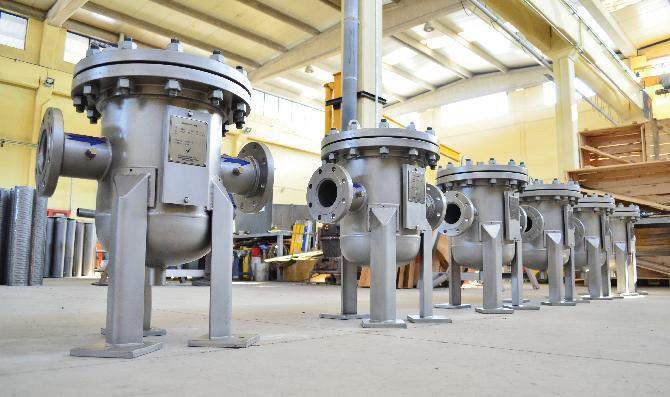
Maintaining efficiency, lowering wear, and preventing expensive downtime depend on industrial fluid systems’ keeping of waste and particles out of downstream equipment. Basket strainers fit in there. Designed to filter out particles from moving liquids or gases, they work via a perforated or mesh filtering component. Not all basket strainers, however, are made equal; Inline and Y-Type strainers meet various requirements; selecting the appropriate Basket strainer manufacturer must have several advantages for various elements.
The main distinctions between Inline and Y-Type basket strainers, their benefits, drawbacks, and recommendations for selecting the ideal one for your needs are covered in this blog, so keep reading!
Inline Basket Strainers: Simple and Easy
Installed in a straight pipe segment, inline basket strainers, also known as straight-through strainers, enter the strainer from one end and exit straight out the other end; the fluid flows simply and linearly.
Advantages of Inline Basket Strainers:
- They are easy to install in straight pipelines without any angle changes.
- The straight shape reduces pressure loss and turbulence over the strainer.
- Perfect for uses with high flow rates and few space limits.
- Many designs include a bolted lid or quick-release for rapid access to the strainer basket.
Drawbacks:
- Larger Footprint: Inline strainers usually need more room because of their elongated design.
- A small basket size will likely require frequent cleaning due to the large amount of debris in debris-heavy systems.
Y-Type Basket Strainers: Versatile and Flexible
Y-Type basket strainers are built in a Y-shape, with the strainer leg running downhill from the main pipeline. Often utilized in systems with limited space or when installation must be done at an angle, they are more compact.
Advantages of Y-Type Basket Strainers:
- Small design: Ideal for setups with limited space.
- Versatile Orientation: The versatility of the Y Shape Basket Strainer allows it to be installed in either a horizontal or vertical orientation (with legs down).
- The arrangement of the debris at the bottom of the strainer enables it to take advantage of gravity and assists in capturing and collecting debris to allow for easy removal of solids.
- Usually cheaper than big inline strainers, particularly for lower pipe diameters.
Drawbacks:
- There is increased Pressure Drop. Also, the angled design may cause more turbulence, resulting in a somewhat larger pressure loss.
- Basket strainers are designed in many shapes and sizes. Different-shaped basket strainers find application in various industries and water treatment plants.
Factors need to be considered while choosing an Inline or Y-type stainer
When choosing between an Inline or Y-Type basket strainer, keep the following points in mind:
1. Required Flow Rate
An Inline basket strainer is typically more appropriate if your system handles high flow rates or large quantities of fluid, as it has a higher surface area and reduced flow resistance. For moderate to low flow applications, Y-Type strainers are ideal.
2. Limitations on Space and Orientation
Y-Type strainers provide additional flexibility in confined installations or when the pipe has to negotiate around obstructions. Often smaller, they may be installed at different angles. Although larger, inline strainers are more appropriate for systems with many straight pipe lines.
3. Easy Maintenance Access
Inline strainers usually provide simpler access to the basket for cleaning or replacement, which may save maintenance time. Y-Type strainers, on the other hand, may provide simpler debris collection in systems where regular maintenance is anticipated because of their downward angle.
4. Tolerance of Pressure Drop
Inline strainers are usually the best option if your system’s performance depends on keeping a low pressure drop. Their straight-through flow route provides better flow dynamics and reduced resistance.
5. Filtration Level and Type of Debris
An Inline basket strainer with a bigger surface area will lower the cleaning frequency if your application handles larger or more regular solid impurities. A Y-Type could be enough for lesser debris loads or more delicate filtering.
Bottom Line
To sum up, we must say that we must choose the right Y-type Basket Strainers. For this, several factors need to be considered, like optimized design, higher efficiency, and non-rusty materials for straining fluids or mixtures. Not only this, but we must also ensure the load-bearing capacity and industry-specific requirements for manufacturing high-quality Y-type basket strainer in manufacturing units.